




Crystal Cage Chandelier
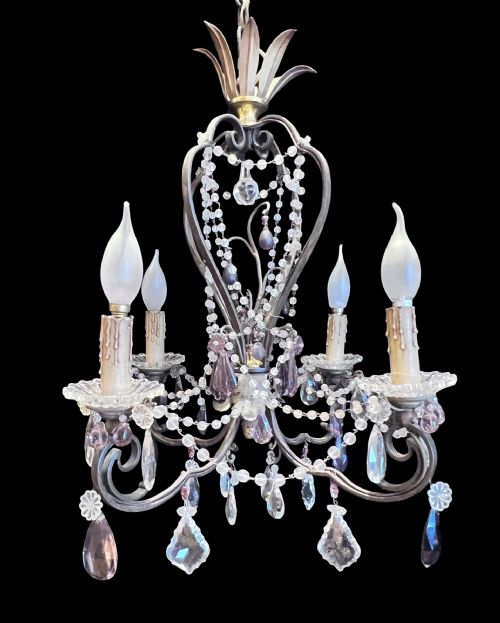
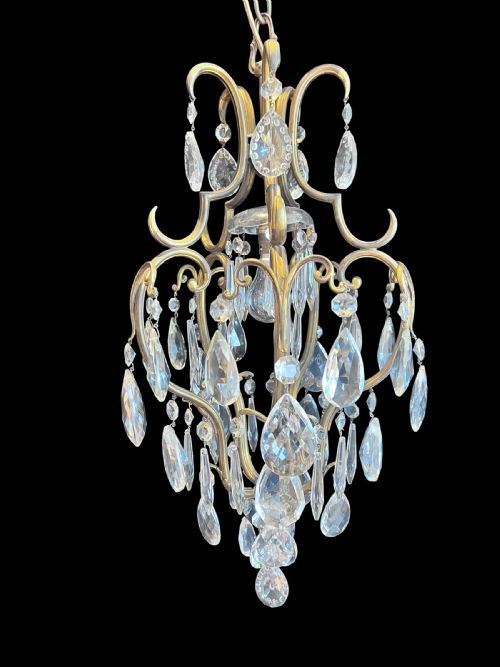
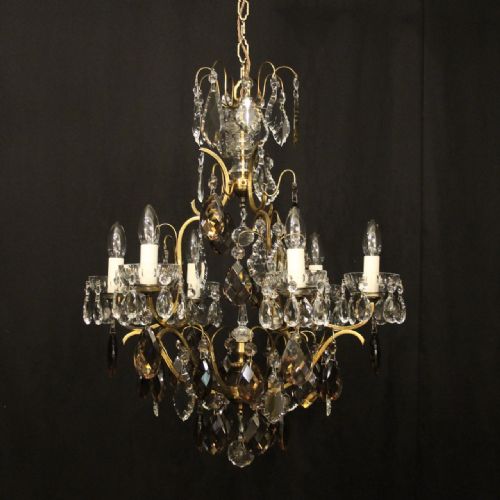
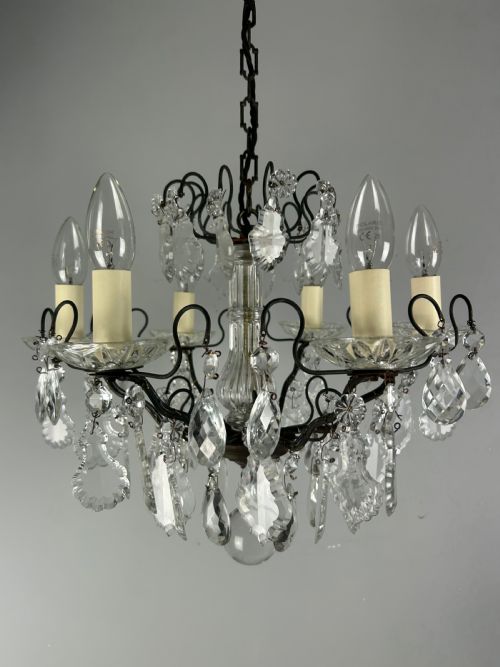
When you examine a crystal cage chandelier, you find an intricate metal framework dense with glass drops designed to refract candlelight or early electric illumination across a room.
Crystal Cage Chandelier
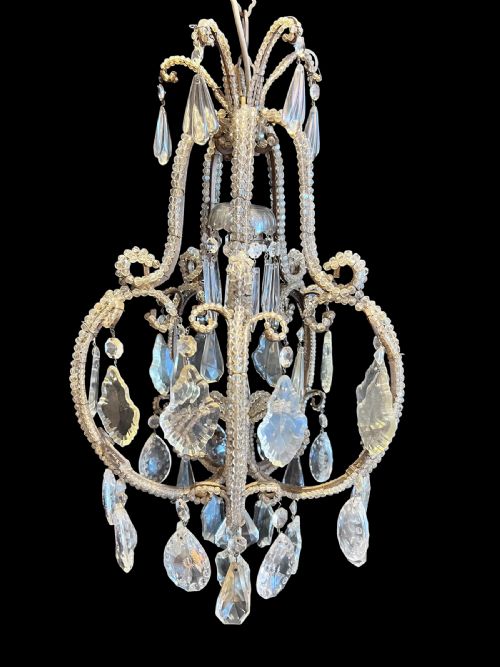
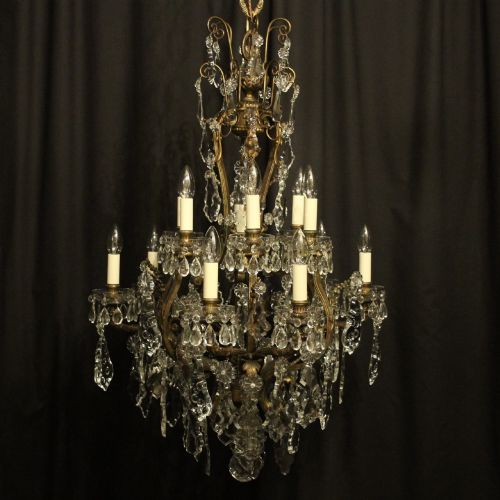
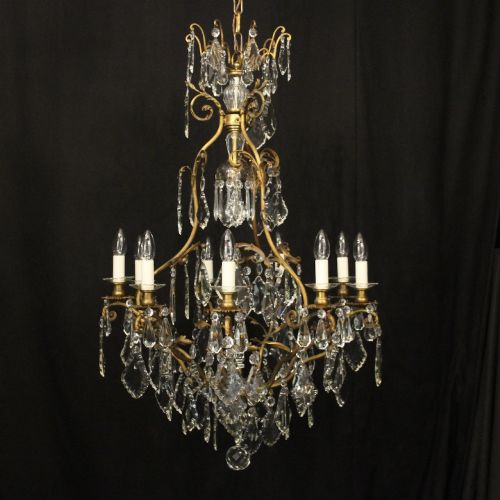
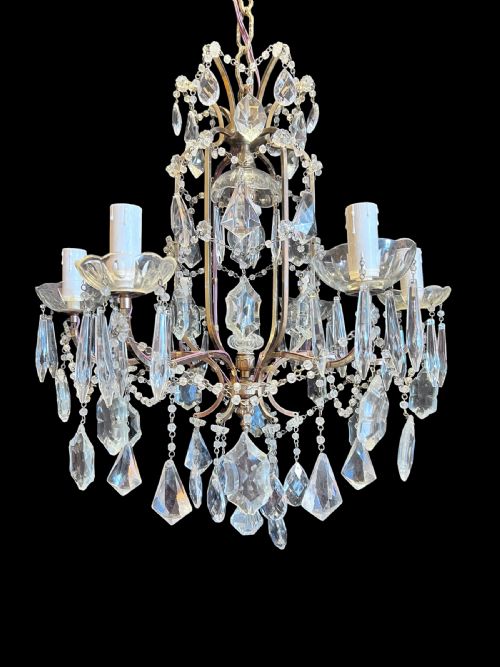
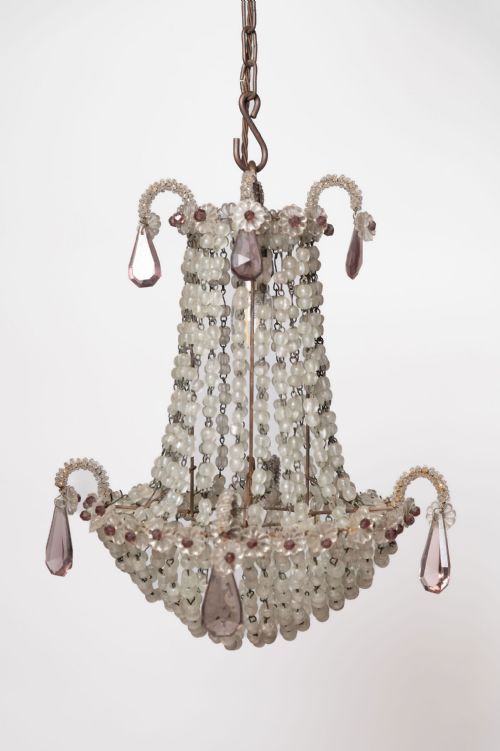
A crystal cage chandelier presents a distinct structural silhouette formed by metal ribs that curve upward to enclose or support central tiers of glass drops and beads. These fixtures appear primarily in French and Italian designs spanning the nineteenth century through the early decades of the twentieth century, including Edwardian iterations.
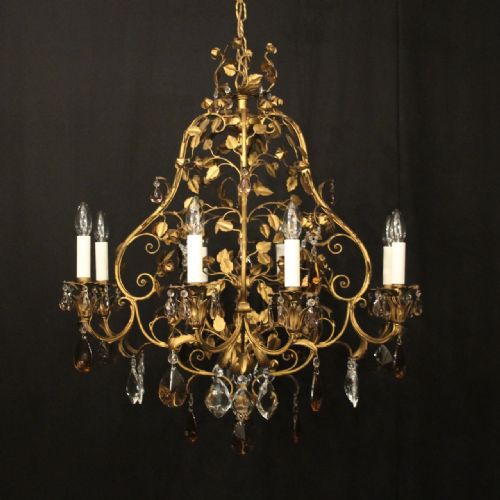
The format ranges from diminutive single light pendants to expansive multi arm installations carrying twelve or more lights. Pieces frequently incorporate stylistic elements drawn from Rococo, Classical and Florentine traditions, often pairing gilded bronze or brass with coloured fruits and prisms.
How They Were Made
Makers constructed the skeletal framework using cast or forged metals, predominantly brass, bronze, iron and gilt metal, sometimes applying silver or gold gilt finishes to the surface. Metal armatures were shaped into curved birdcage profiles to hold arrays of drilled glass and crystal components.
Individual glass elements, including cut crystal drops, beads and coloured fruits, were suspended from the metal frame using fine wire links. This modular assembly allowed light to pass through faceted surfaces and cast patterned reflections across surrounding walls.
Listings show these fixtures spanning the nineteenth century through the 1930s, utilising brass, bronze, iron and crystal.
What Varies in Quality
Quality rests upon the density and purity of the glass components, where deeply cut crystal and uniform glass drops create sharper refraction than simpler pressed glass. The metal armature itself demonstrates craftsmanship through the crispness of bronze casting and the durability of the underlying brass or iron frame.
The integration of the design determines the visual coherence of the fixture, visible in how completely the metal cage balances the volume of suspended drops and arms. Finer examples maintain structural symmetry and retain original gilding that has aged evenly across the entire metal surface.
The Crystal Cage Chandelier Glossary
- Cage chandelier
- A lighting fixture featuring a curved metal framework designed to enclose or support rows of crystal drops. This format creates a rounded or ovoid silhouette.
- Gilded bronze
- Metal cast into decorative forms and coated with a thin layer of gold or gold coloured alloy. This material resists corrosion while providing a bright reflective surface.
- Cut crystal
- Glass containing lead oxide that has been shaped using cutting wheels to produce faceted surfaces. These facets maximise the dispersion of light.
- Prism
- A triangular or multi faceted piece of glass hung from a chandelier to refract light into spectral colours. Prisms swing freely from the metal frame.
- Birdcage
- A specific structural sub type where metal ribs curve like the bars of a cage around the central stem. This configuration concentrates glass drops within a defined central volume.
Crystal Cage Chandelier: Frequently Asked Questions
How do I clean a crystal cage chandelier?
Maintenance involves wiping individual glass drops and the metal frame with a soft cloth dampened in a mild solution of warm water and gentle soap. Avoid harsh chemicals that can strip gilt finishes from the brass or bronze armature.
Take care to support each crystal drop from underneath while cleaning to prevent strain on the wire connectors. Allow all components to dry completely before restoring power to the fixture.
Where should I hang a crystal cage chandelier?
These fixtures suit dining rooms, entrance halls and high ceilinged living spaces where their vertical proportions and reflective qualities can be fully appreciated. Ensure the ceiling height accommodates the drop of the chandelier and the reach of any multi arm spread.
Position the fixture centrally within the room or directly above primary furniture groupings to anchor the spatial arrangement. Consider the weight of bronze and brass frames when planning ceiling anchor points.
How do I date a crystal cage chandelier?
Dating relies on examining the metal casting techniques, screw threads, wire fixings and the specific style of glass cutting employed in the piece. Nineteenth century examples frequently feature heavier cast bronze frames and hand cut crystal drops with irregular drill holes.
Pieces from the Edwardian era and the 1920s often incorporate lighter brass frames and machine finished components alongside traditional birdcage silhouettes. Documentation or known lineage can provide additional chronological context.
Are these chandeliers suitable for modern wiring?
Most antique fixtures require professional rewiring to meet current electrical safety standards and accommodate contemporary lamp bulbs. A qualified electrician can replace aged internal wiring while preserving the external metal and crystal components.
Rewiring often includes adapting sockets to standard bulb sizes and ensuring the internal channels within the central stem can safely house modern electrical cable.