


Crystal Bowl Pendant
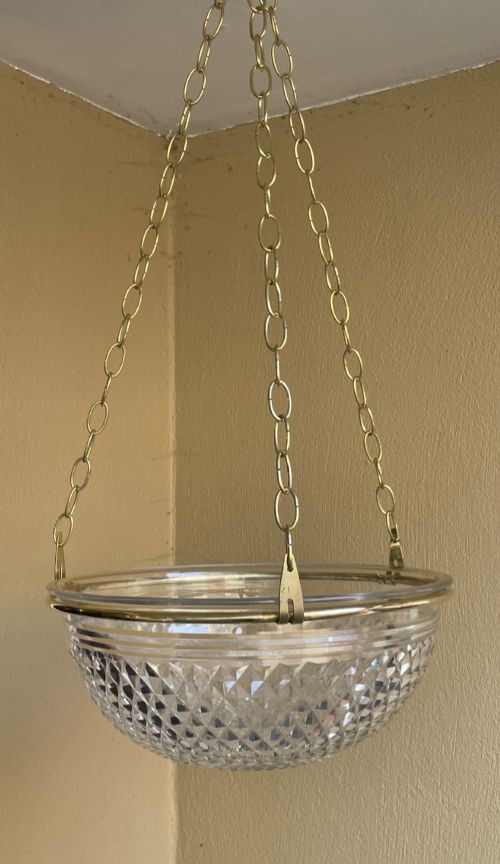
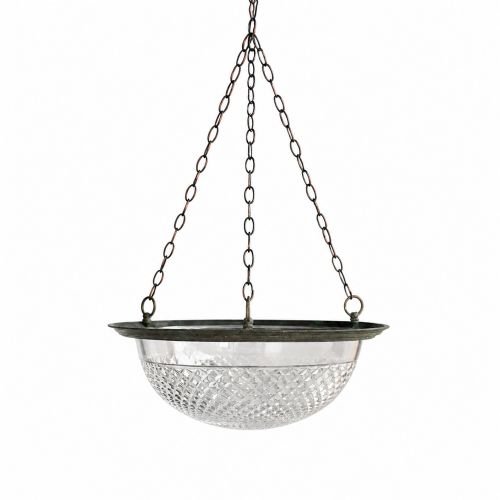
A crystal bowl pendant hangs close to the ceiling, diffusing overhead light through cut glass and metal mounts.
Crystal Bowl Pendant
A crystal bowl pendant provides direct overhead illumination through a suspended glass vessel or dish. These fixtures appear across Victorian, Edwardian, and Arts and Crafts periods, bringing historical lighting into modern rooms.
Most examples on this page date from the nineteenth and early twentieth centuries, spanning the Victorian era through the 1920s. They take the form of plafonniers, dish lights, and bowl chandeliers designed to sit near the ceiling.
Makers utilised brass, bronze, silver plate, and metal mounts to hold the glass bowls securely. The glass itself ranges from clear cut crystal to frosted finishes shaped into acorns and simple bowls.
How they were made
Glassmakers shaped heavy crystal and glass into bowls, dishes, and specialised acorn forms using traditional blowing and cutting techniques. Craftsmen then applied deep facets and patterns to catch and refract light.
Foundry workers cast bronze and brass components, while others plated base metals with silver to create structural bands, suspension chains, and decorative rims for the glass vessels.
Early twentieth century makers specifically moulded glass into hanging acorns to catch the evening gaslight.
What varies in quality
The crispness of the glass cutting defines the upper tier of these pendants, where deep, sharp facets create distinct light refraction. Softer edges and simpler mouldings appear on more utilitarian examples.
Metalwork quality shows in the weight and finish of the bronze, brass, or silver plate supporting the bowl. Thicker cast mounts and heavier suspension hardware distinguish finer pieces from lighter commercial fittings.
The Crystal Bowl Pendant Glossary
- Plafonnier
- A ceiling light fixture with a bowl or dish that sits close to the ceiling rather than hanging on a long drop. This French term appears frequently in nineteenth and early twentieth century lighting.
- Acorn
- A decorative glass shape moulded to resemble the seed of the oak tree. Edwardian lighting designers often used this botanical motif for hanging bowl shades.
- Silver plate
- A thin layer of silver applied to a base metal such as brass or copper. It provides the appearance of solid silver on structural mounts and chains.
- Arts and Crafts
- A design movement valuing handcraftsmanship and simple forms over mass production. Pieces from this style often feature robust metal framing around the glass bowl.
Crystal Bowl Pendant: Frequently Asked Questions
How do I hang a crystal bowl pendant?
These fixtures suspend from the ceiling using chains or metal rods attached to the original brass or bronze mounts. They work best in rooms with standard ceiling heights where a flush or semi-flush drop is required.
Electrical wiring runs through the central suspension to power the internal lamp holder. Professional installation ensures the weight of the glass and metal is supported safely.
How do I date a crystal bowl pendant?
Dating relies on stylistic details and materials seen across the Victorian, Edwardian, and Arts and Crafts periods. Edwardian and 1910s pieces often feature crisp cut glass and silver plated or brass mounts.
Victorian and mid nineteenth century examples tend to use heavy bronze fittings alongside deep hand cut crystal bowls. Comparing the mounting hardware and glass thickness helps place the fixture in its correct era.
What rooms suit a crystal bowl pendant?
Pendant bowl lights suit hallways, bedrooms, and reception rooms where ambient overhead lighting is preferred. Their shallow drop keeps walkways clear while distributing soft light downward.
Dining spaces and studies also accommodate these fixtures, as the glass bowl softens the glare from the bulb. The historical aesthetic complements both period interiors and neutral modern spaces.
How do I clean a glass bowl pendant?
Cleaning involves removing the glass bowl from its metal mounts when possible to wash it in warm soapy water. This removes dust accumulated inside the dish without straining the antique fixings.
Metal components require a dry cloth or specialised metal polish appropriate for brass, bronze, or silver plate. Avoid harsh chemicals that could damage the antique surface finishes.