

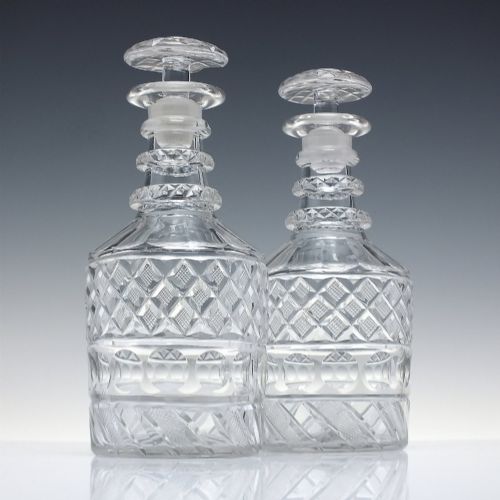
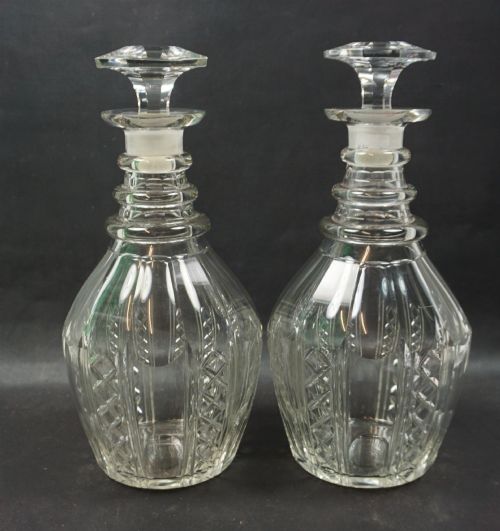
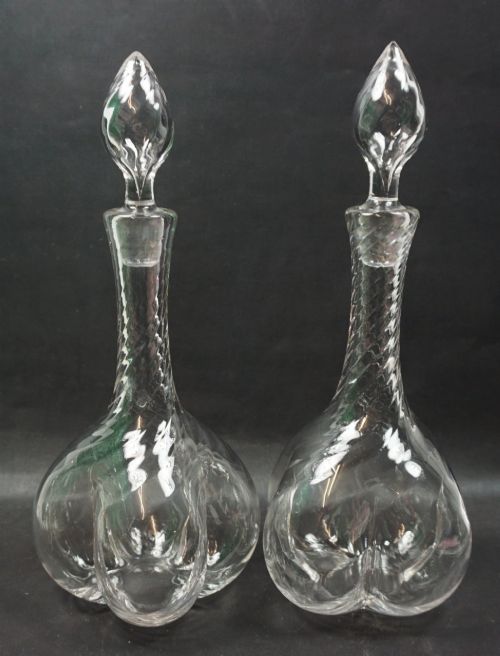
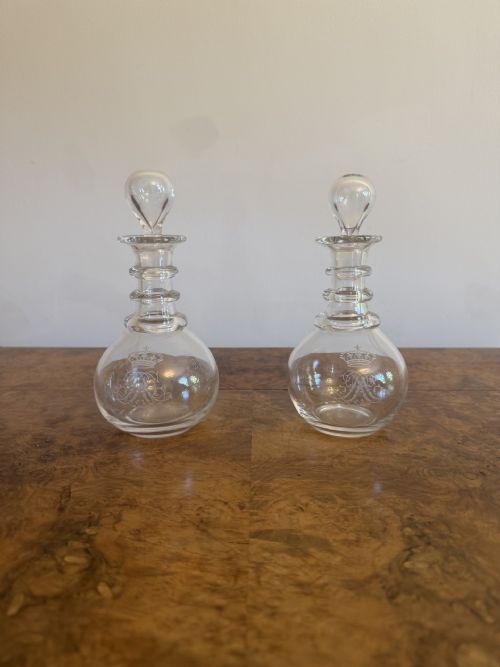
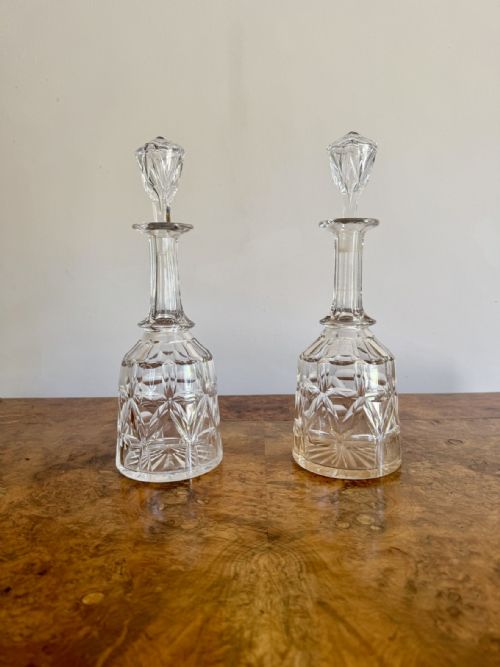


Crystal Bottle Pair
A crystal bottle pair brings symmetrical brilliance to a sideboard, offering matched vessels for spirits, scent or ink.
Crystal Bottle Pair
When searching for a crystal bottle pair, buyers encounter matched sets designed for practical use and display on tables or desks. These vessels serve various functions, spanning large spirit decanters for brandy and whisky alongside smaller receptacles intended for perfume and ink.
The version most commonly met on this page is the Edwardian or Victorian spirit decanter, often shaped with cut glass bodywork and fitted with matching stoppers. Alongside these drinkware sets, the listings include vanity items such as silver-collared scent bottles and heavy inkwells.
Origins stretch across English, French and general European workshops, with forms changing from Georgian shaft and globe profiles to sleek Art Deco geometric designs. Mid-century and Regency examples also appear, showing how symmetry remained central to domestic table arrangements over successive centuries.
Cut glass, lead crystal and silver mounts
Makers shaped these items using lead crystal, standard glass, and cut glass, often applying optical blowing techniques to achieve clarity and uniform thickness. Surface patterns were then hand-cut into the material, creating faceted designs that catch light from every angle.
Many examples incorporate sterling silver collars, mounts, and bottle tops, sometimes combined with enamel work. These metal elements were fastened securely to the glass necks, providing both structural reinforcement and decorative contrast.
Crystal Bottle Pair Retail Price Guide 2026
Typical asking prices for crystal bottle pair among the pieces listed under this phrase on Sellingantiques today, from the lower quarter to the upper quarter. They describe what is for sale here now, not the wider market.
Some decanters come with built-in excuses, featuring direct glass engravings that politely tell guests whether they are pouring whisky or brandy.
Depth of cutting and matching mounts
The distinction between ordinary and superior pieces rests on the crispness of the glass cutting and the weight of the crystal used. Deep, sharp facets demonstrate greater skill from the glasscutter than shallow or rounded pressing.
When silver collars or stoppers are present, quality shows in the harmony between the two matching vessels and the integrity of the hallmarks. Pairs where both stoppers match the original bases and fit securely indicate higher initial manufacture and careful preservation.
James Powell·Karl Palda·George Unite·Mappin & Webb
The Crystal Bottle Pair Glossary
- Lead crystal
- Glass containing metal oxide that increases weight, refractive index, and clarity. This material allows for deeper and sharper facet cutting.
- Decanter
- A vessel used for holding and serving liquids such as wine or spirits. Matched pairs often bear engraved labels identifying specific contents.
- Sterling silver collar
- A band of high-purity silver fitted around the neck of a bottle or decanter. It frequently bears hallmarks indicating the assay office and year.
- Stopper
- A glass or metal plug designed to seal the neck of a bottle and preserve contents. Original matching stoppers are specific to each individual vessel.
- Optically blown
- A glassblowing method that incorporates ribs or patterns into the vessel wall while shaping. This technique creates subtle visual distortion within the transparent material.
Crystal Bottle Pair: Frequently Asked Questions
What is a crystal bottle pair?
A crystal bottle pair consists of two matching glass containers designed for serving drinks or holding vanity items like perfume. They share identical shapes, cutting patterns and stoppers.
These sets were traditionally kept together on trays, dining sideboards or dressing tables to provide symmetrical balance and coordinated utility.
How were these bottles used?
Larger pairs functioned as spirit decanters for drinks like brandy and whisky, while smaller editions held scents or ink upon writing desks.
Owners utilised them to transfer liquids from bulk containers into presentable vessels for guests or personal daily routines.
How do I date a glass pair?
Dating relies on stylistic shifts, cutting depths, and any associated metal mounts such as silver collars bearing identifiable hallmarks.
Georgian and Regency examples tend toward simpler, heavier forms, whereas Victorian and Edwardian pieces frequently showcase intricate, overall cut glass patterns.
Are original stoppers important?
Original stoppers that match the glass type and cutting style are essential for maintaining the integrity of the set.
Because stoppers were easily misplaced or broken over generations, finding a pair retaining their original matching elements is particularly valued.