





Crystal Biscuit Jar
These crystal biscuit jar pieces are heavy glass vessels designed for the drawing room, offering a tactile touch of formality.
Crystal Biscuit Jar
A crystal biscuit jar, often styled as a biscuit barrel or box, sits as a domestic glass container designed to hold dry goods on a sideboard or table. The examples seen here span from the Georgian era through to the 1930s, encompassing Victorian, Edwardian, and George V periods.
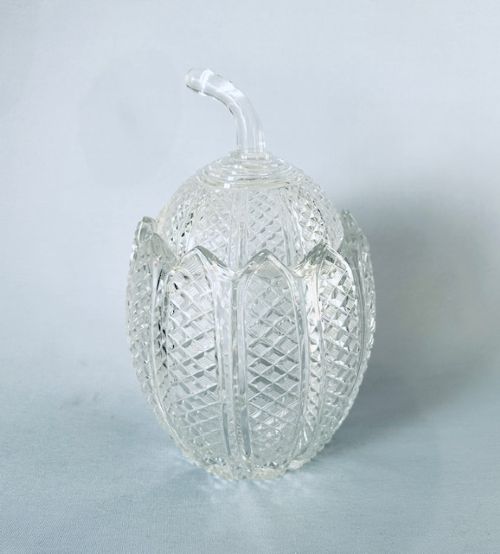
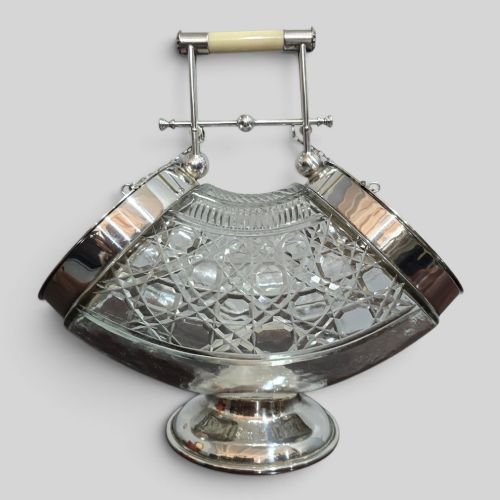
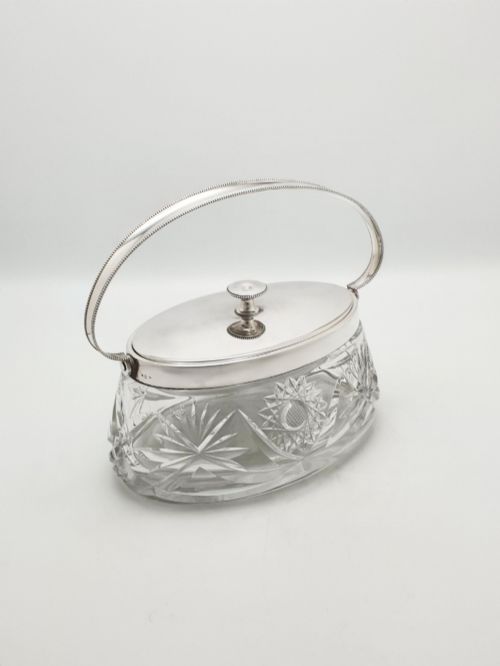
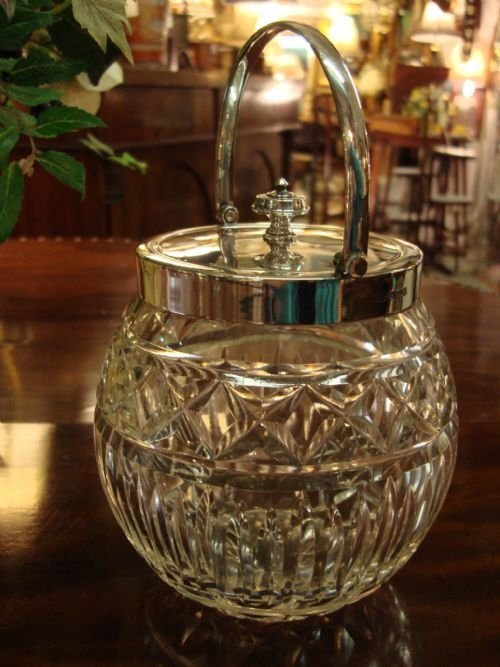
Most pieces encountered on this page belong to the Victorian and Edwardian eras, executed in forms such as cut glass novelty melon shapes or standard cylindrical bodies. Makers utilise metal mounts, swing handles, and hinged lids in silver plate, sterling silver, or Jugendstil German metalwork to finish the vessel.
How they were made
The body of each piece relies upon heavy lead crystal or cut glass, shaped by blowing or moulding before craftsmen applied deep wheel-cut decoration such as hobnail patterns. This meticulous cutting creates the brilliant facets characteristic of the material.
Metal components, including rims, lids, and heraldic dragon finials, are fashioned from sterling silver or silver plate, sometimes by prominent firms such as Walker & Hall, WMF, and James Dixon and Sons. These metal mounts are secured directly to the glass rims or fitted with swing handles.
Crystal Biscuit Jar Retail Price Guide 2026
Typical asking prices for crystal biscuit jar among the pieces listed under this phrase on Sellingantiques today, from the lower quarter to the upper quarter. They describe what is for sale here now, not the wider market.
Materials recorded across the inventory include cut glass, lead crystal, sterling silver, and silver plate.
What varies in quality
Quality rests in the crispness of the glass cutting and the weight of the crystal, where deeper and sharper facets catch the light more effectively than shallow press-moulding. Novelty forms, such as melon shapes or pieces featuring cast heraldic dragon finials, represent a higher tier of design.
The metalwork also dictates value, distinguishing unmarked silver plate from fully hallmarked sterling silver mounts produced by recognised silversmiths. Integrated mechanisms, such as automated or hinged lids with robust handles, show superior workshop execution.
WMF·Walker and Hall·James Dixon and Sons
The Crystal Biscuit Jar Glossary
- Lead crystal
- Glass containing a high percentage of lead oxide, which increases weight, clarity, and the refractive index for deeper light dispersion. This material forms the heavy bodies of these jars.
- Hobnail cut
- A sharp, faceted geometric glass-cutting pattern resembling the hobnails on sturdy boots. It provides substantial texture and sparkle across Victorian and Edwardian examples.
- Silver plate
- A base metal foundation coated with a thin layer of silver through electroplating or older techniques. Many Victorian and Jugendstil biscuit barrels utilise this method for their mounts and handles.
- Finial
- The decorative knob or ornamentation fixed to the top of a lid. Pieces in this category occasionally feature figural examples like heraldic dragons.
- Jugendstil
- The continental European manifestation of Art Nouveau, characterised by flowing organic lines. It appears on German metal-mounted boxes from around nineteen hundred.
Crystal Biscuit Jar: Frequently Asked Questions
What is a crystal biscuit jar?
A crystal biscuit jar is a lidded glass container traditionally used in British homes to keep dry baked goods fresh in the drawing room or dining room. These vessels combine heavy cut glass bodies with metal mounts and handles.
They emerged as prominent dining accessories during the Victorian period and continued evolving through the Edwardian era and the early twentieth century.
How were these jars used?
Hostesses filled these containers with biscuits to serve during afternoon tea or formal visits. The heavy lid helped keep the contents crisp despite ambient moisture in the room.
Servants would place them on sideboards, and guests would help themselves once the hinged lid or mechanical cover was opened.
How do I date a biscuit barrel?
Dating relies upon the style of the metal mounts, hallmarks on the silver, and the depth of the glass cutting. Georgian and early Victorian pieces often feature simpler hand-cut designs, whilst Edwardian examples lean towards heavy hobnail patterns.
Makers' marks stamped onto the silver plate or sterling silver mounts provide the most precise indication of the decade of manufacture.
How do I live with one?
These jars function well on sideboards, open shelving, or side tables where light can pass through the heavy cut crystal. They can still hold biscuits or sweets, or sit empty simply to catch the daylight.
Care should be taken when handling the heavy glass bodies, especially when lifting pieces with attached metal swing handles.