



Crystal Bead Ceiling Fixture
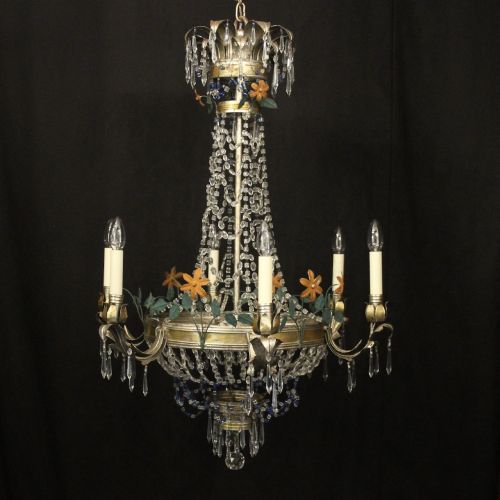
A crystal bead ceiling fixture brings concentrated sparkle to a room, offering a mix of French and Italian styles from the early twentieth century.
Crystal Bead Ceiling Fixture
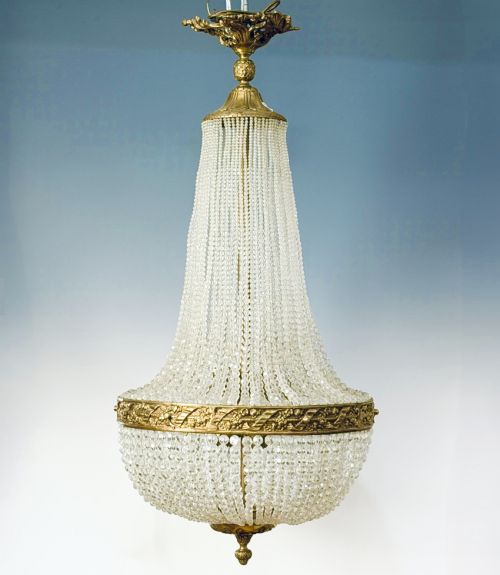
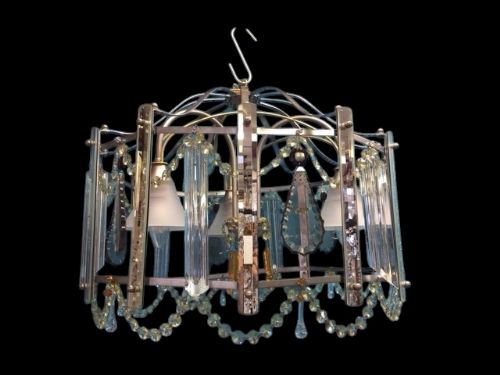
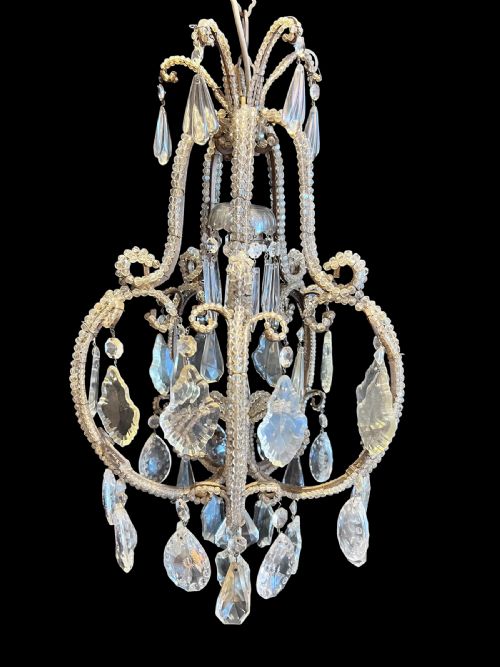
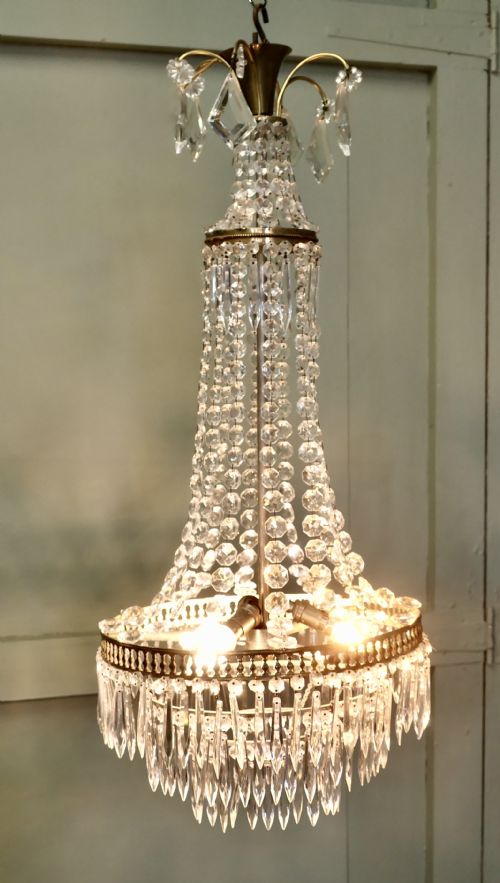
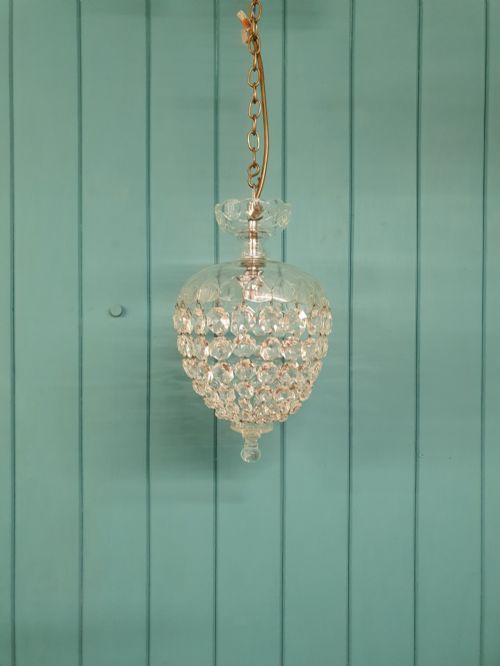
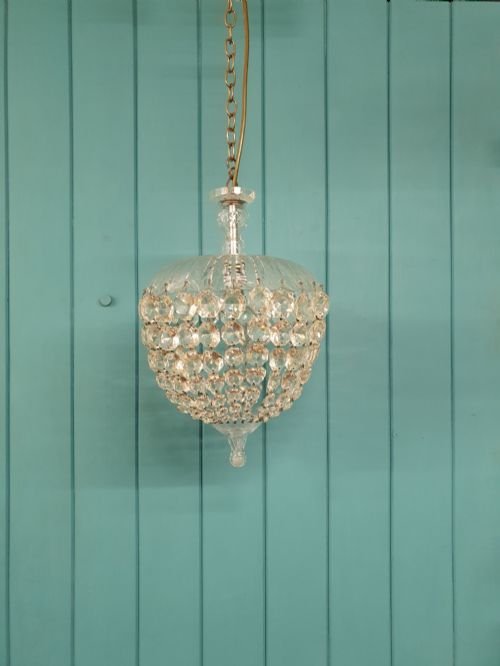
When you search for a crystal bead ceiling fixture, you encounter a variety of hanging lights spanning the nineteenth century through the 1930s. The selection includes dome top chandeliers, pendant lights, and intricate bag chandeliers.
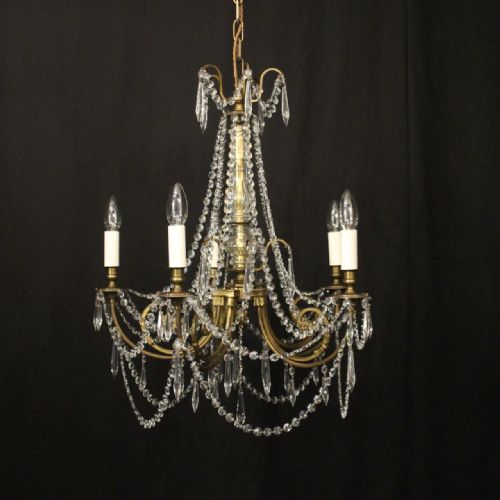
You are most likely to meet pieces from the Edwardian era and the 1920s or 1930s. These range from small wired examples to large multi-light fixtures influenced by French Empire and Italian Florentine designs.
How they were made
Frameworks rely on brass, gilt metal, iron, and wire to support the hanging elements. Cut glass and crystal beads are wired together to form swags, tents, and waterfalls.
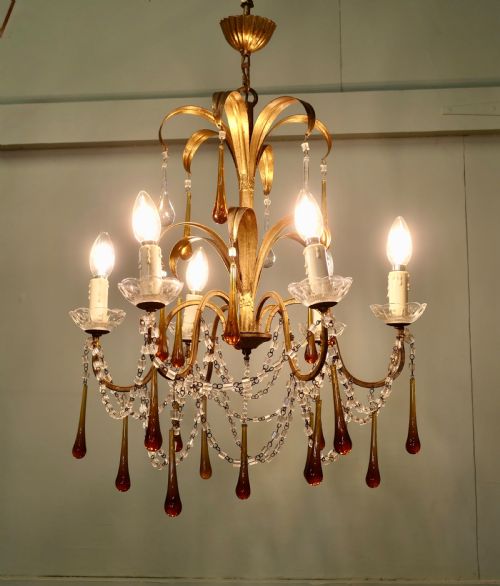
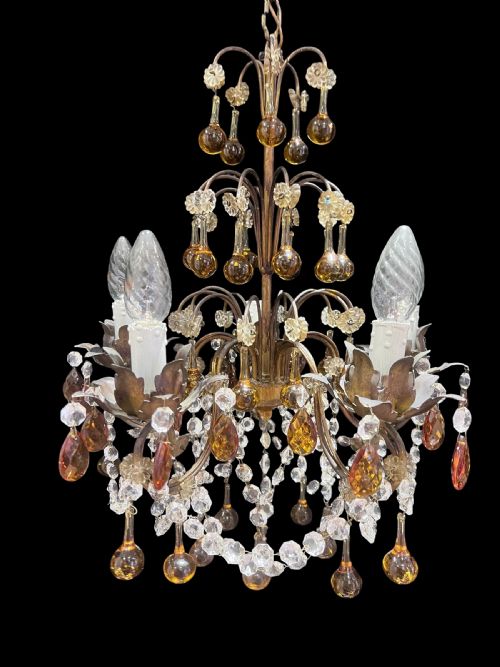
Makers integrated coloured crystals, amber teardrops, and glass fruits such as grapes, apples, and pears into the metal structures to catch and reflect light.
Crystal Bead Ceiling Fixture Retail Price Guide 2026
Typical asking prices for crystal bead ceiling fixture among the pieces listed under this phrase on Sellingantiques today, from the lower quarter to the upper quarter. They describe what is for sale here now, not the wider market.
Materials span brass, wire, gilt metal, and iron, supporting various cuts of crystal and glass.
What varies in quality
The density and cut of the glass components determine the brilliance of the fixture. Heavy cast brass or gilt frames differ significantly from lighter wire frameworks.
The complexity of the arrangement, from simple dome tops to multi-tiered tent and waterfall configurations, dictates the character of each piece.
Wedgwood
The Crystal Bead Ceiling Fixture Glossary
- Bag chandelier
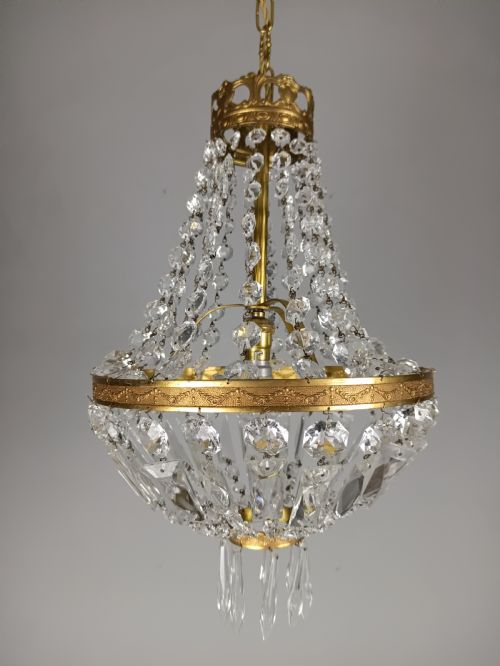
- A lighting fixture featuring a flattened or rounded base entirely covered in a dense net of crystal beads. This shape became popular during the early twentieth century.
- Tent and waterfall
- A configuration where upper strings of beads form an inverted cone shape, dropping down to a wider circular band. Prisms and drops cascade below this upper structure.
- Gilt tolewear
- Painted metalwork treated to resemble gold leaf, often used in French lighting from the early 1900s. It provides a warm metallic background for glass drops.
- Dome top chandelier
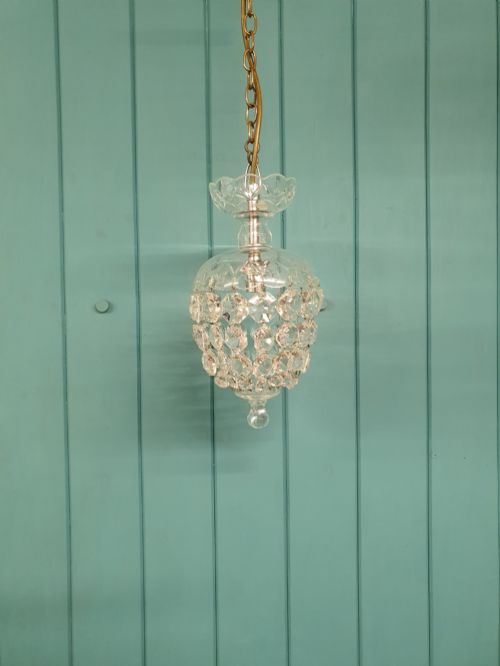
- A compact ceiling light characterised by a rounded upper canopy from which crystal beads and drops depend. These fixtures suit smaller ceiling heights.
Crystal Bead Ceiling Fixture: Frequently Asked Questions
What is a crystal bead ceiling fixture?
A crystal bead ceiling fixture is a hanging light decorated with glass beads, drops, and swags. These pieces date primarily from the nineteenth century to the 1930s.
They encompass diverse forms, including dome top lights, bag chandeliers, and large multi-light French Empire styles.
How do I choose the right size?
Consider the scale of the room and the ceiling height when selecting a fixture. Smaller dome top lights or compact bag chandeliers work well in restricted spaces.
Larger multi-branch Italian Florentine and French tent and waterfall chandeliers require higher ceilings to balance their substantial spread.
Where should I hang these lights?
These fixtures suit hallways, bedrooms, and reception rooms where ambient, reflected light creates a focal point. Their intricate glass drops distribute illumination across the space.
Matching the period style of the light to the surrounding interior helps integrate the piece naturally into a room.
How do I identify the period?
Dating relies on examining the underlying metalwork, wire construction, and the cut of the glass. Edwardian and 1930s pieces often utilise specific brass frames and wired crystal swags.
Earlier nineteenth-century examples tend to feature heavier gilt bronze mounts and distinctively shaped crystal fruit or teardrop elements.