
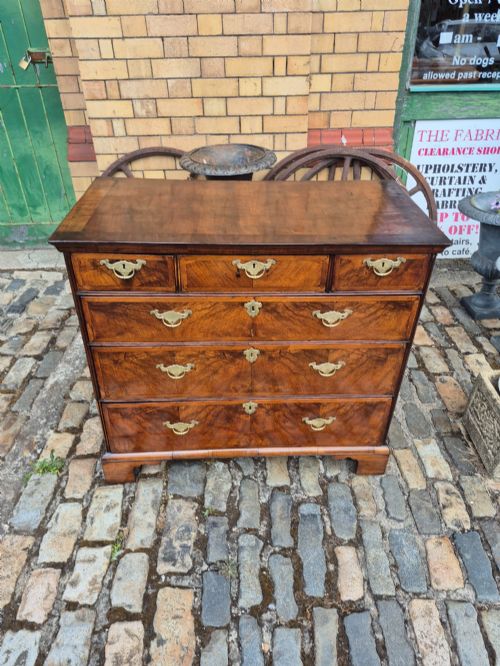
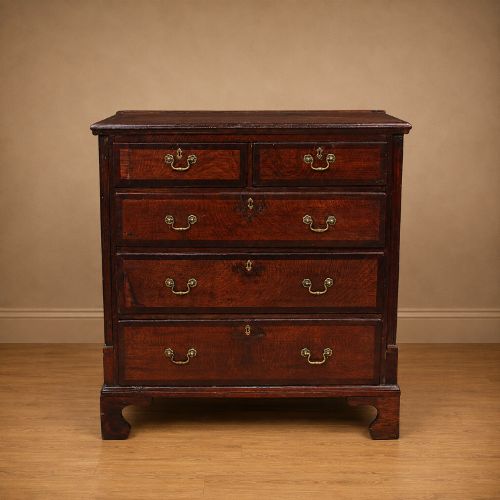
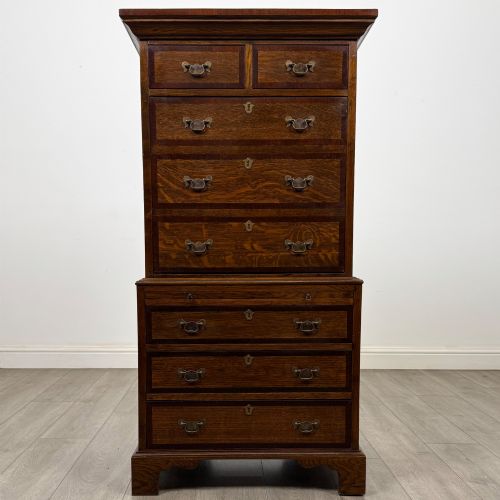
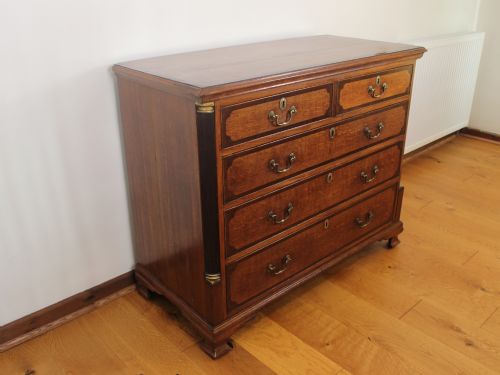
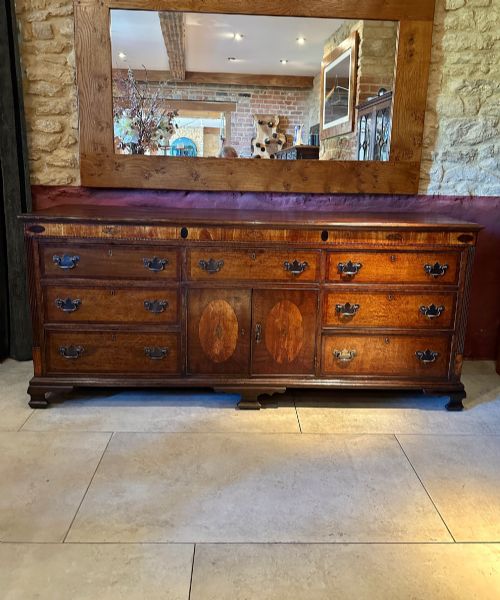


Crossbanded Oak Dresser
A crossbanded oak dresser brings robust country character together with refined contrasting borders.
Crossbanded Oak Dresser
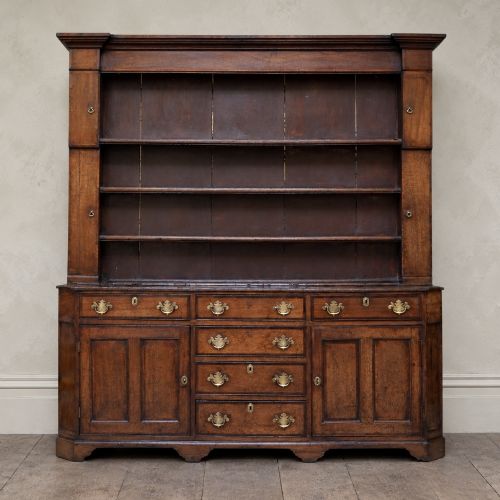
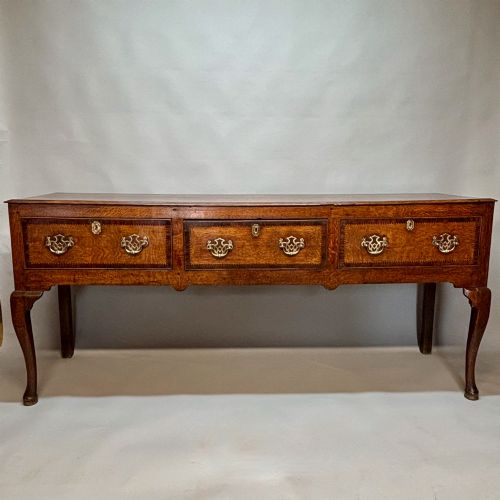
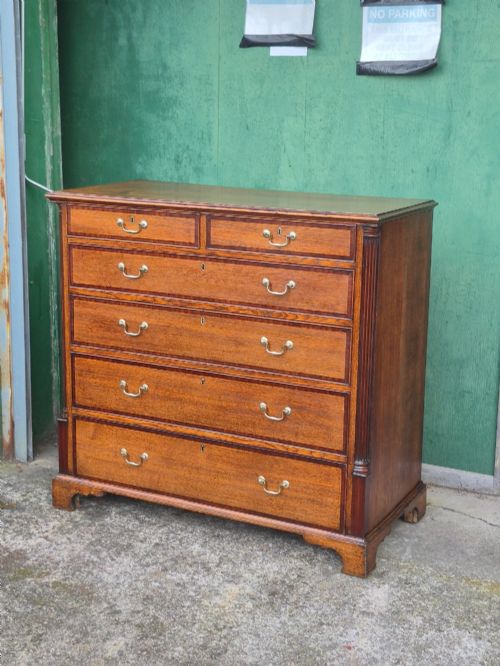
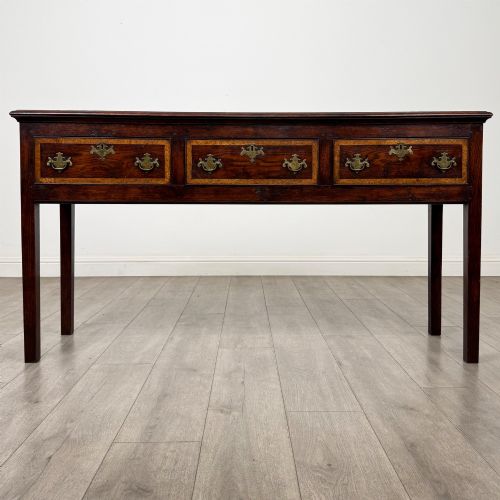
A crossbanded oak dresser combines practical storage with decorative cabinet-making, typically taking the form of a low base, sideboard, or chest of drawers. The pieces seen here span the eighteenth century, the Georgian period, and later revivals, displaying the enduring appeal of native timber framed by contrasting borders.
Buyers seeking a crossbanded oak dresser will frequently encounter regional dresser bases and chests of drawers rather than towering plate racks. These examples originate from English workshops, including pieces attributed to Shropshire, Cheshire, and Lancashire.
The dominant material is oak, often enriched with contrasting mahogany or walnut crossbanding and fruitwood inlay. This blend of sturdy carcase wood and decorative banding defines the visual appeal of the category.
What varies in quality
Quality rests in the precision of the timber selection and the execution of the crossbanding. Finer examples display carefully matched grain patterns and crisp inlay work that integrate harmoniously with the primary oak carcase.
Proportion and regional character also distinguish the output. Pieces that retain their original brass hardware, stable timber movement, and well-proportioned drawer arrangements command greater regard among collectors.
Some regional dresser bases carry the distinct character of Cheshire and Shropshire workshops into modern dining rooms.
The Crossbanded Oak Dresser Glossary
- Crossbanding
- A decorative border of veneer applied to the edges of drawer fronts or tabletops so that the grain runs perpendicular to the surface it frames. This technique provides a crisp visual contrast against the primary timber.
- Dresser base
- The lower portion of a traditional kitchen or dining room storage unit, functioning independently as a sideboard or low cabinet. These pieces typically feature rows of drawers above cupboards.
- Fruitwood
- Dense, fine-grained wood derived from fruit-bearing trees such as pear or apple, utilised by cabinet-makers for decorative inlay work. Its pale tone contrasts effectively with darker oak.
- Chest of drawers
- A case furniture form comprising multiple stacked drawers used for textile storage. In this category, oak chests frequently incorporate mahogany crossbanding and Georgian proportions.
Crossbanded Oak Dresser: Frequently Asked Questions
What is a crossbanded oak dresser?
A crossbanded oak dresser is a sturdy timber storage piece featuring decorative borders of contrasting veneer around the drawer fronts or top.
These items range from Georgian sideboard bases to regional Lancashire and Cheshire furniture pieces.
How do I date a crossbanded oak dresser?
Dating relies on examining construction techniques, hardware styles, and the specific mix of timbers such as mahogany crossbanding on an oak carcase.
Eighteenth-century examples typically display hand-cut dovetails and regional characteristics that distinguish them from later Edwardian or 1930s revivals.
Where were these dressers made?
The evidence points to English regional workshops, with specific pieces linked to counties like Shropshire, Cheshire, and Lancashire.
Makers in these areas combined local oak with fashionable imported timbers like mahogany.
How do I care for an antique oak dresser?
Maintaining these pieces involves keeping them away from direct heat sources and sudden humidity changes to protect the timber and veneer.
Regular dusting and occasional application of appropriate wax will preserve the finish of the oak and crossbanding.