

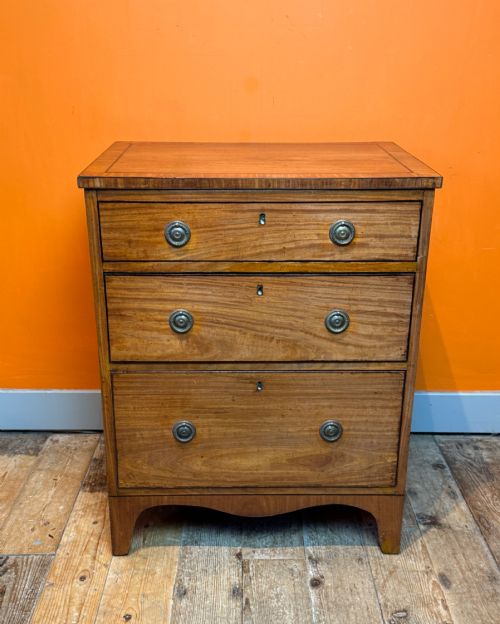
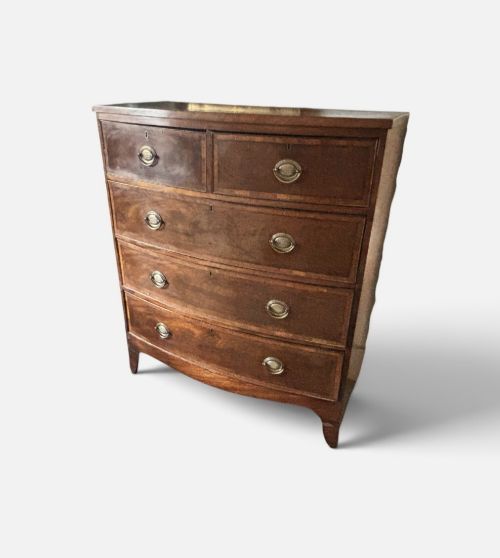
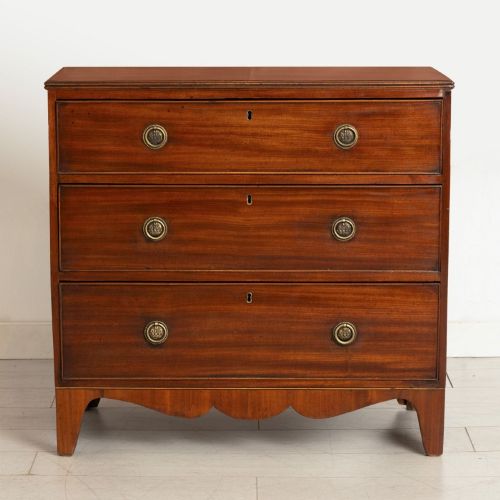
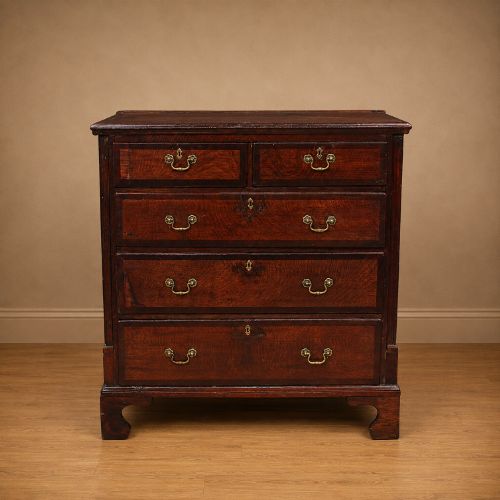





Crossbanded Mahogany Tallboy
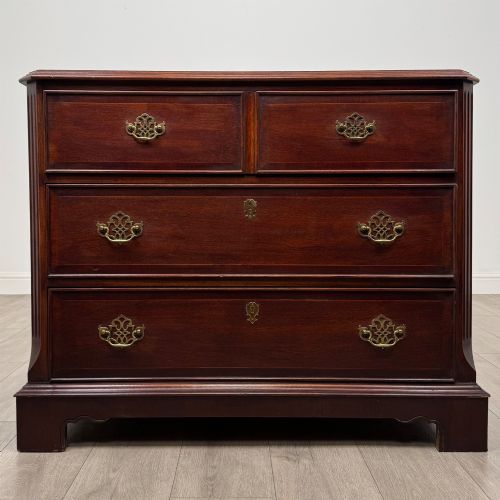
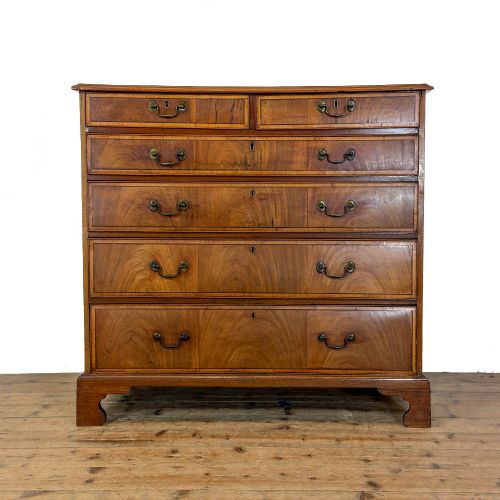
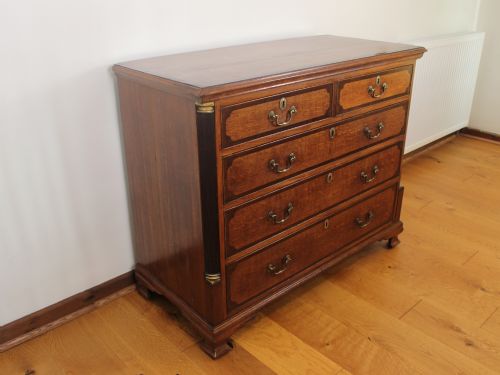
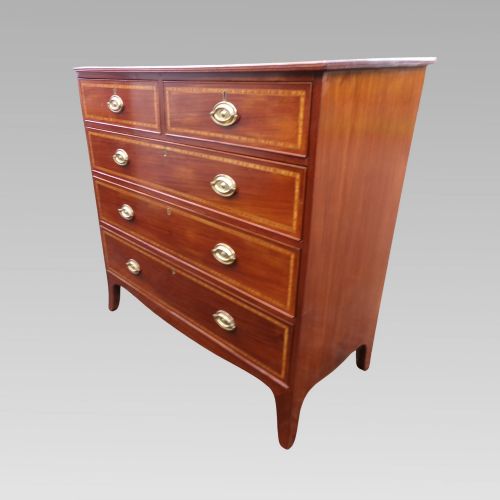
A crossbanded mahogany tallboy offers substantial vertical storage, combining rich timbers with disciplined border work that catches the eye.
Crossbanded Mahogany Tallboy
When you search for a crossbanded mahogany tallboy, you are looking at substantial case furniture designed to hold garments across multiple stacked tiers. These pieces combine deep reddish-brown timbers with contrasting border veneers applied to the top surfaces and drawer fronts. You will encounter forms originating from the Georgian, Regency, and Victorian eras, alongside later Colonial Revival interpretations.
The versions most commonly met on this page span the eighteenth and nineteenth centuries, taking the shape of chests of drawers or linen presses. They utilise primary woods such as mahogany and oak, accented with secondary inlay timbers. The proportions remain tall and upright, dividing interior space into distinct horizontal levels.
Materials and construction
Cabinet makers constructed these carcases using solid mahogany and oak, providing a heavy and stable frame for daily domestic use. Drawer linings and internal dividers frequently rely on native oak or secondary softwoods, showing traditional hand-cut joinery throughout the interior structure.
Outer surfaces receive thin veneers of mahogany, punctuated by decorative crossbanding in satinwood, rosewood, or boxwood inlay. The grain direction of the border strips runs perpendicular to the main panel, requiring precise woodworking skill to prevent timber movement and splitting over time.
Crossbanded Mahogany Tallboy Retail Price Guide 2026
Typical asking prices for crossbanded mahogany tallboy among the pieces listed under this phrase on Sellingantiques today, from the lower quarter to the upper quarter. They describe what is for sale here now, not the wider market.
Listings on this site feature pieces spanning the Georgian, Victorian, and Edwardian periods, constructed in mahogany, oak, satinwood, and rosewood.
Distinguishing quality across examples
The standard of timber selection separates simpler utility pieces from finer cabinet work. Superior examples display carefully chosen flame mahogany with symmetrical grain matching across the drawer fronts, paired with crisp, high-contrast crossbanding.
Hardware and secondary timbers also signal the tier of manufacture. Heavy cast brass handles and escutcheons integrated with well-fitted oak drawer boxes indicate a higher grade of workshop production than replacement fittings and thin deal linings.
The Crossbanded Mahogany Tallboy Glossary
- Crossbanding
- A border strip of veneer laid around the perimeter of a tabletop or drawer front so that the grain runs perpendicular to the central panel.
- Mahogany
- A durable, reddish-brown tropical hardwood imported for high-grade furniture making from the eighteenth century onwards.
- Linen Press
- A tall case piece with upper panelled doors enclosing sliding trays, sitting above a chest of lower drawers.
- Bow Front
- A convex curved cabinet front that swells outward in the centre.
- Satinwood
- A yellowish, lustrous timber utilised for contrasting inlay work and delicate stringing details.
Crossbanded Mahogany Tallboy: Frequently Asked Questions
What is a crossbanded mahogany tallboy used for?
These tall pieces provide deep vertical storage for folded garments, bed linen, and personal items across multiple stacked drawers. Their generous height maximises storage capacity while occupying a relatively compact floor footprint.
Historically, they served a central role in bedroom dressing rooms and large domestic quarters. Today, they function effectively in contemporary bedrooms and hallways where substantial storage is required.
How do I identify a Georgian piece?
Georgian pieces display construction traits such as hand-cut dovetails on the drawer sides and solid timber carcases built from oak or mahogany. The proportions remain classical and restrained, avoiding excessive ornamentation.
Examining the backboards and interior drawer linings reveals older saw marks and handmade fixings consistent with eighteenth-century workshop practices.
Where does the crossbanding appear?
Crossbanding is applied as a decorative border around the edges of top surfaces, drawer fronts, or door panels. The grain of this narrow veneer strip runs across the width of the border rather than following the main panel.
This technique creates a neat framed effect that highlights the geometric precision of the cabinet maker's work.
How do I care for antique mahogany?
Maintain antique mahogany by keeping the timber away from direct heat sources and sudden temperature fluctuations. Regular dusting with a dry, soft cloth preserves the polished surface without building up residue.
Occasional application of traditional beeswax feeds the dry wood and protects the finish from moisture damage.