




Cream Tallboy
These cream tallboy chests of drawers offer generous vertical storage wrapped in pale painted charm, prized for brightening period rooms without overwhelming floor space.
Cream Tallboy
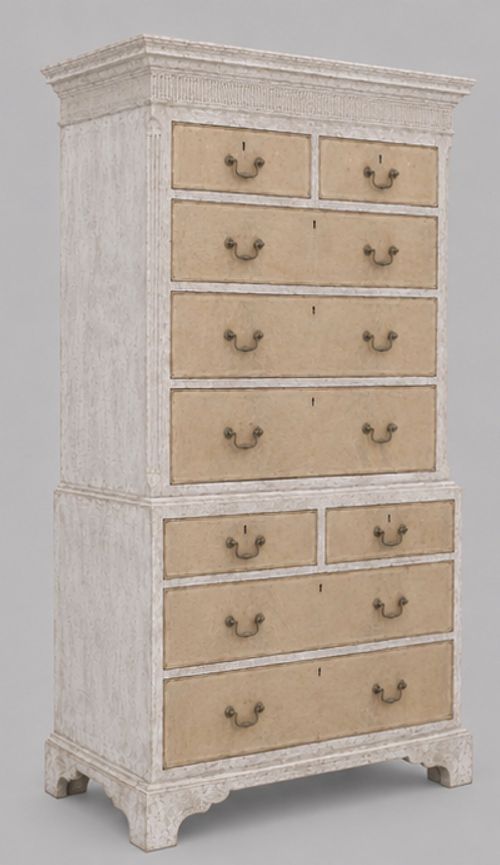
A cream tallboy is a stacked chest of drawers or chest on chest rising higher than a standard dresser, designed to maximise vertical storage. These pieces combine substantial timber carcasses with lighter painted finishes that soften their imposing scale in a room.
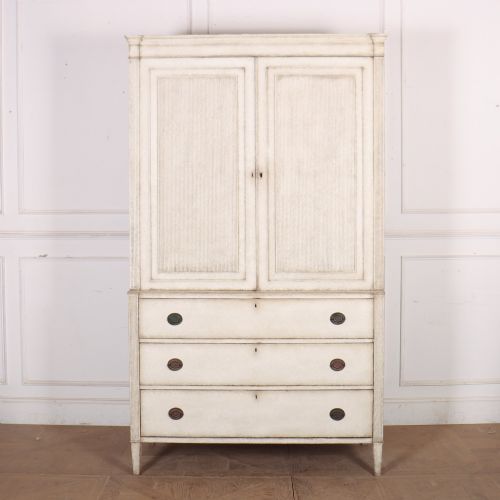
The versions you encounter here span several centuries and regional traditions, from eighteenth-century George III mahogany pieces later bleached and painted to nineteenth-century pine and twentieth-century Japanned examples. They take various forms, including traditional chests on chests, linen presses, and painted softwood cabinets.
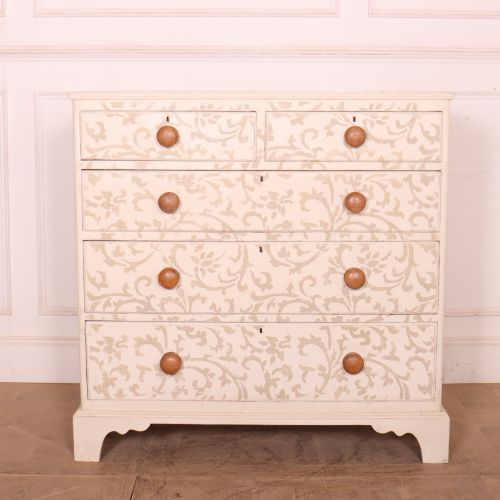
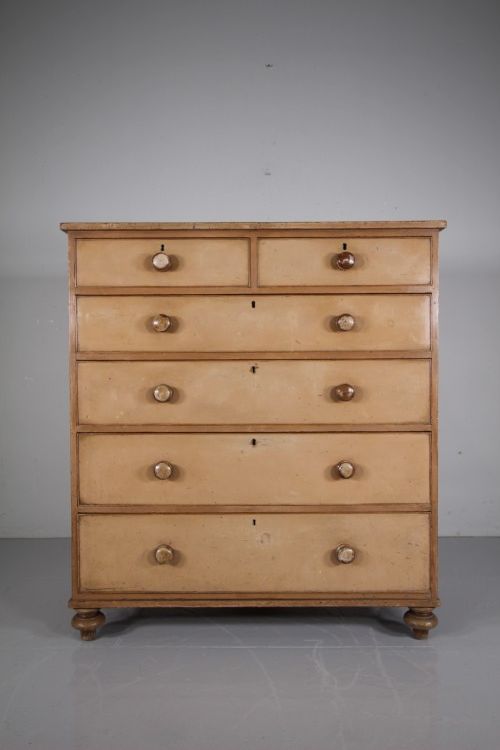
Makers across England, Scandinavia, and the Netherlands applied painted surfaces to timber, producing styles that range from restrained neoclassical lines to elaborate chinoiserie decoration. The selection on this page relies heavily on nineteenth-century craftsmanship alongside eighteenth-century forms and later twentieth-century decorative treatments.
How they were made
Cabinetmakers constructed the main bodies of these tallboys using solid timbers such as pine, softwood, and mahogany, often combining sturdy structural woods with finer secondary hardwoods. Drawers feature traditional joinery designed to support repeated use over generations.
The characteristic pale finishes involve layers of paint applied to wood, sometimes over earlier mahogany or pine surfaces, creating cream or pale tones that range from simple original paint to decorative Japanning and Chinoiserie motifs. Brass hardware such as handles and escutcheons completes the construction, providing functional contrast to the painted wood.
Cream Tallboy Retail Price Guide 2026
Typical asking prices for cream tallboy among the pieces listed under this phrase on Sellingantiques today, from the lower quarter to the upper quarter. They describe what is for sale here now, not the wider market.
What varies in quality
Quality in these tallboys rests on the integrity of the underlying timber construction and the proportion of the stacked sections. Pieces that maintain crisp architectural mouldings and well-balanced proportions between the upper and lower chests demonstrate superior cabinetmaking.
The character and longevity of the painted surface also set examples apart. Original or early paint finishes that have aged naturally with the underlying wood hold greater interest than modern repainting, while detailed decorative work like Chinoiserie or Japanning requires skilled hand execution to succeed.
The Cream Tallboy Glossary
- Tallboy
- A tall chest of drawers, often built as two sections stacked one upon the other. It provides deep vertical storage while occupying a compact floor footprint.
- Chest on chest
- A specific form of tallboy where a smaller upper chest sits directly on top of a wider lower chest. This two-part construction made large furniture easier to move.
- Chinoiserie
- A Western decorative style employing imagined Chinese motifs and landscapes. Painters applied these whimsical scenes to furniture surfaces during various periods.
- Pine softwood
- A common timber used for painted furniture because it accepts paint readily and provides a lightweight yet stable carcase.
Cream Tallboy: Frequently Asked Questions
What is a cream tallboy?
A cream tallboy is a tall, stacked chest of drawers finished in a pale or cream paint. It provides substantial vertical storage while maintaining a light visual presence in a room.
These pieces range from eighteenth-century forms to twentieth-century decorative interpretations, utilising timber carcases finished with paint, brass hardware, and occasional artistic motifs.
How do I date a painted tallboy?
Dating these pieces involves examining the construction methods of the timber drawers, the cut of the brass hardware, and the composition of the paint layers. Secondary woods and dovetail joints offer clues to the century of manufacture.
Stylistic cues such as George III proportions or later Japanned decoration also help anchor the piece to a specific period like the eighteenth or nineteenth century.
What styles are common?
Common styles include George III neoclassical designs, nineteenth-century vernacular pieces, and decorative twentieth-century English Japanned work. Regional variations also introduce Scandinavian and Dutch influences.
Each style brings distinct decorative elements, from faux bamboo turnings to elaborate hand-painted Chinoiserie scenes.