


Cream Silk Rug
When you search for a cream silk rug, you enter a world of fine pile carpets and embroidered textiles from Persia, Central Asia, and beyond.
Cream Silk Rug
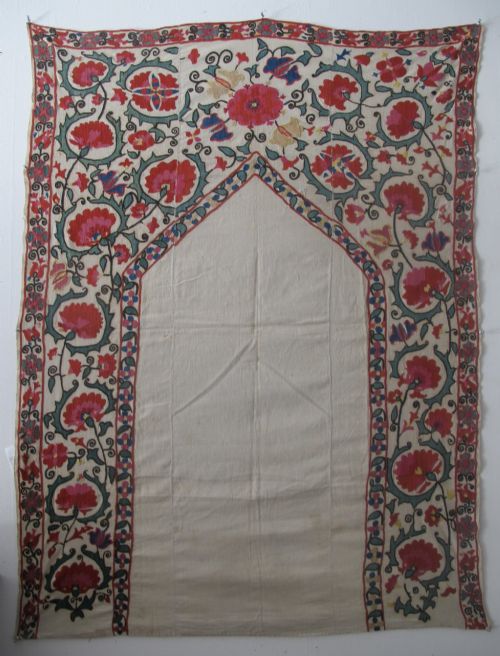
A cream silk rug encompasses woven floor coverings and embroidered wall hangings originating from regions such as Persia, Uzbekistan, and Kashmir.
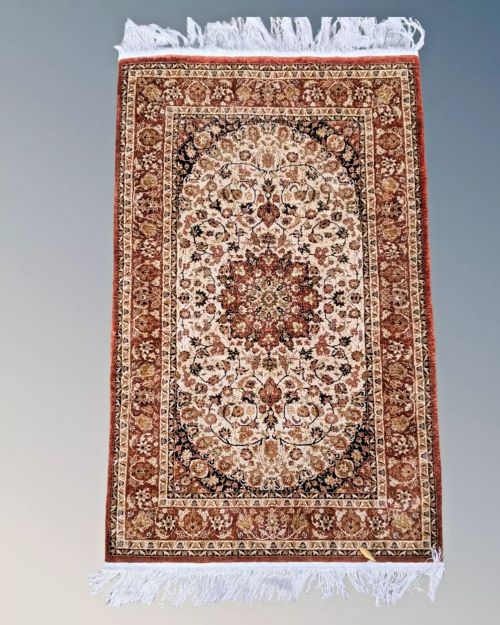
The selections span from nineteenth century tribal embroideries and prayer formats to twentieth century city carpets created in centres like Qum and Kashan.
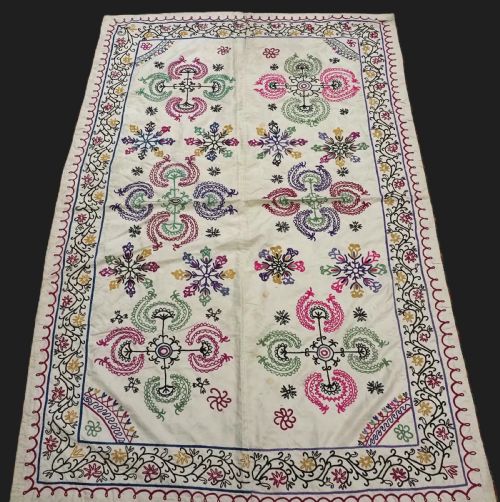
Buyers seeking a cream silk rug encounter both heavy silk pile carpets and delicate embroidered suzanis worked on cotton or linen foundations.
How they were made
Maker traditions rely upon natural fibres including silk thread, wool, cotton, and sabra cactus fibre combined into woven or embroidered textiles.
Embroidered examples utilise fine silk threads stitched onto cotton or linen grounds, while Persian carpets employ knotted pile construction on silk or cotton foundations.
Listings span from the eighteenth century to the twentieth century, incorporating materials like silk, cotton, wool, and cactus silk.
What varies in quality
The finesse of a piece depends upon the density of the knotting in pile carpets or the complexity and tightness of the needlework in embroidered suzanis.
Superior items demonstrate exceptional clarity in traditional designs, whether architectural motifs, floral sprays, or tribal patterns executed with precise materials.
The Cream Silk Rug Glossary
- Suzani
- An embroidered tribal textile from Central Asia, typically worked with silk thread on a cotton or linen ground.
- Pile
- The upright loops or cut ends of yarn that form the usable surface of a carpet.
- Senneh
- A style of Persian rug known for fine weave and distinctive geometric or floral patterns.
- Prayer format
- A textile design featuring a central mihrab or arch motif indicating a direction of prayer.
Cream Silk Rug: Frequently Asked Questions
How do I care for a silk rug?
Silk textiles require gentle professional cleaning and protection from direct sunlight to preserve the delicate fibres and dyes.
Regular light vacuuming without a beater bar helps maintain the surface without damaging the weave or embroidery.
Where were suzanis made?
Suzanis originate primarily from Central Asian regions including Uzbekistan, with historic pieces associated with towns like Bukhara and Samarkand.
Families created these large embroidered panels for dowries and domestic decoration.
What is sabra fibre?
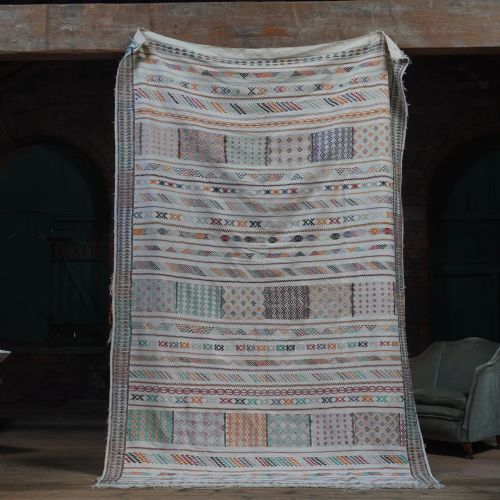
Sabra fibre, often called cactus silk, is a vegetable silk extracted from the leaves of agave succulents found in North Africa.
It provides a lustrous texture utilised in traditional Moroccan kilims and flatweave textiles.
Are these pieces purely decorative?
While many embroidered suzanis and wall hangings serve as decorative textiles, pieces with denser pile construction function well as floor coverings.
Placement depends on the physical robustness of the specific weave and its foundation materials.