



Cream Paper Watercolour Painting
These cream paper watercolour painting works range from Regency and Victorian landscapes to mid-century British scenes, offering collectors detailed compositions on traditional supports.
Cream Paper Watercolour Painting
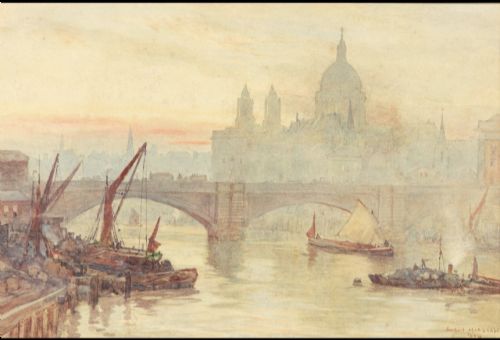
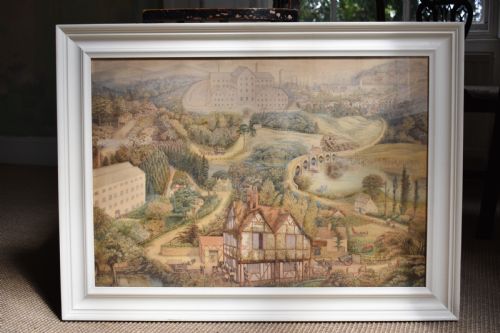
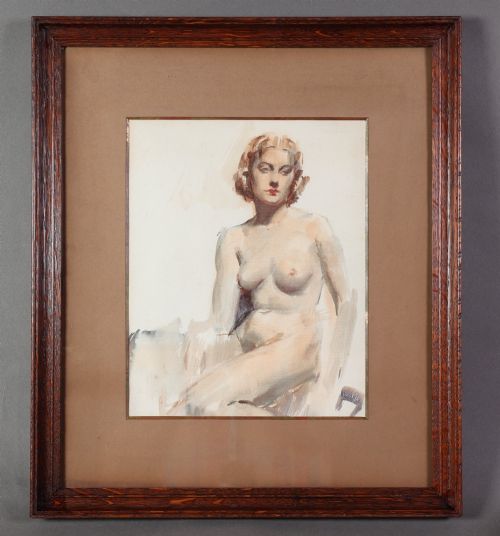
A cream paper watercolour painting brings together works executed on tinted or toned paper supports, spanning the Regency, Victorian, Edwardian, and mid-twentieth-century periods. These pieces include topographical views, maritime scenes, botanical studies, architectural landmarks, and intimate portraits.
Buyers frequently encounter nineteenth-century British school landscapes alongside early twentieth-century portraits and genre pieces. The selection incorporates framed artworks, wall art, and fine art pieces presented behind glass within wood or oak frames.
Materials and technique
Artists applied watercolour pigment, gouache, and ink onto paper supports, often building translucent washes alongside opaque highlights. Pencil underdrawing frequently remains visible beneath the pigment layers, establishing the initial composition.
Finished works are typically housed in wooden frames, frequently incorporating glass to protect the delicate paper surface and water-soluble pigments from atmospheric moisture and handling.
Cream Paper Watercolour Painting Retail Price Guide 2026
Typical asking prices for cream paper watercolour painting among the pieces listed under this phrase on Sellingantiques today, from the lower quarter to the upper quarter. They describe what is for sale here now, not the wider market.
The listings combine British school landscapes, Victorian botanical studies, and continental architectural watercolours on paper supports.
Evaluating quality
Quality rests upon the confidence of the brushwork, the stability of the pigment against fading, and the integrity of the original paper support. Skilled handling of light and tone distinguishes accomplished academic or studio works from naive or amateur productions.
The preservation of the paper sheet, minimal surface disruption, and the retention of crisp detail determine the desirability of a piece. Original framing and documented attribution further elevate individual works within the broader field.
Richard Henry Wright·Cornelius Pearson·William Frederick Settle·James Hardy Junior·Helena Maguire·Edith Barrow·Stanley Orchart·Takashi Nakayama·Henry Wimbush·Dame Laura Knight·Paul-Louis Barruel·John E Bosanquet·Henry Edridge·Leo Klin·George Marks·Henry Scott Tuke·Alexander Melville·Fred Lawson
The Cream Paper Watercolour Painting Glossary
- Watercolour pigment
- Finely ground colour particles mixed with a water-soluble binder, used to create transparent washes on paper.
- Gouache
- An opaque watercolour medium containing added white pigment, which provides solid highlights and dense colour passages.
- Naive art
- Work produced by an untrained artist, characterised by a direct perspective and unconventional proportions.
- Genre art
- Paintings depicting scenes from everyday life, including domestic interiors, street markets, and rural occupations.
Cream Paper Watercolour Painting: Frequently Asked Questions
What periods do these paintings cover?
The available selection spans from the Regency and Victorian eras through the Edwardian period into the mid-twentieth century. Works reflect changing aesthetic movements across these decades.
Dates range from the late eighteenth century up to modern twentieth-century British and international examples.
How should watercolour on paper be displayed?
Works on paper require protection behind glass and should be kept away from direct sunlight to prevent pigment fading. Stable indoor environments prevent paper degradation.
Framing should utilise acid-free mounts to separate the paper surface from the glazing material.
What subjects appear in these artworks?
Subjects include coastal shipping, Venetian architecture, botanical studies of blooms, domestic animals, and rural landscapes. Portraiture and topographical landmarks also feature prominently.
Artists recorded both British scenes and continental architecture during their travels.
Are these works signed by the artists?
Many examples bear artist signatures, inscriptions, or attribution notes detailing the location and date of creation. Some pieces represent documented works by listed painters.
Unsigned pieces rely on stylistic analysis, period framing, and subject matter to indicate their origin.