

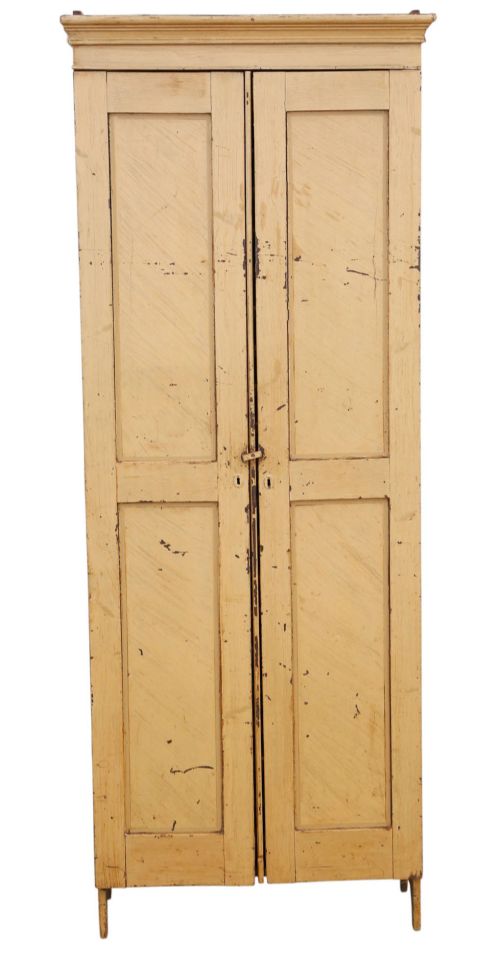
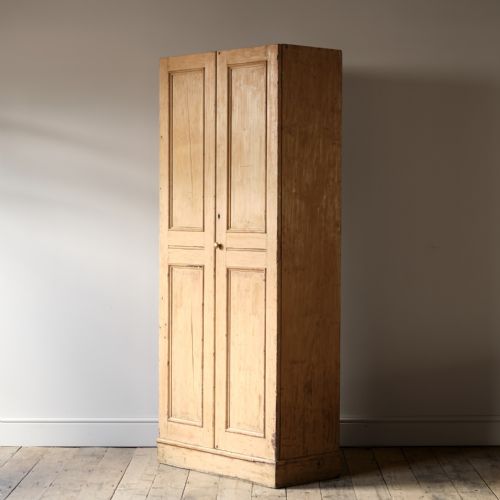


Cream Pantry Cupboard
A cream pantry cupboard brings honest utility and quiet charm to a room, offering generous storage rooted in centuries of practical domestic life.
Cream Pantry Cupboard
A cream pantry cupboard is a substantial storage piece designed for domestic organisation, frequently appearing as a housekeeper's cupboard, linen cupboard, or tall chapel cupboard. These utilitarian forms originated to store provisions, household linen, or dry goods safely away from damp and pests in busy households.
The pieces seen here span the eighteenth century, the nineteenth century, and the Victorian era, showing regional British and Swedish country traditions. Most examples take the form of tall housekeepers' cupboards or simple painted cabinets built for everyday utility.
Makers constructed these cupboards to stand against dining room or kitchen walls, providing deep shelved or hung storage behind panelled doors. Buyers encounter vernacular proportions ranging from tall, narrow footprints to wide storage units designed for maximum household capacity.
How they were made
Cabinet makers built these cupboards primarily from solid pine, selecting coniferous timber for its availability and workability in regional workshops. Carpenters joined structural members using traditional timber framing techniques suited to hard-wearing domestic furniture.
Surfaces carry layers of paint, including original painted finishes and later painted wood treatments that protected the soft timber. Iron and brass hardware such as hinges, latches, and pulls secured the heavy doors and added functional detail to the vernacular designs.
Cream Pantry Cupboard Retail Price Guide 2026
Typical asking prices for cream pantry cupboard among the pieces listed under this phrase on Sellingantiques today, from the lower quarter to the upper quarter. They describe what is for sale here now, not the wider market.
Listings here feature eighteenth-century and nineteenth-century pieces built in pine, painted wood, and painted pine by regional makers.
What varies in quality
The distinction between ordinary and exceptional pieces rests in the survival of original painted surfaces and the integrity of the timber framing. Cupboards retaining undisturbed layers of historic paint show a depth of character that later surface treatments lack.
Proportion and scale dictate the visual success of these utilitarian forms, where narrow footprints and well-balanced door panels show greater consideration by the original regional builder. Heavier construction and uncompromised internal shelving add to the substance of the better examples.
The Cream Pantry Cupboard Glossary
- Housekeeper's cupboard
- A large storage piece traditionally used in substantial homes for linens, dry stores, and household provisions. These tall units typically combine upper and lower cupboard sections.
- Pine
- A soft coniferous timber widely utilised in regional country furniture for its accessibility and strength. Carpenters favoured it for painted pieces because the grain takes surface coatings readily.
- Original paint
- The initial decorative or protective surface coating applied to a piece during its period of manufacture. Surviving historic paint layers are valued by collectors for their authentic visual texture.
- Panelled door
- A door construction method where solid timber panels float within a grooved frame to accommodate seasonal wood movement. This technique prevents warping in large cupboard doors.
- Vernacular furniture
- Domestic pieces made by local tradesmen for everyday use rather than high-style metropolitan workshops. These items reflect regional building traditions and practical local needs.
Cream Pantry Cupboard: Frequently Asked Questions
What is a cream pantry cupboard used for?
These cupboards provide substantial storage for kitchen provisions, crockery, table linens, and household dry goods.
In modern rooms, they function effectively as standalone larders, linen stores, or display units for kitchenware.
How old are these cupboards?
The examples on this page date from the eighteenth century through to the Victorian era and the mid-nineteenth century.
Most pieces represent nineteenth-century country craftsmanship alongside earlier eighteenth-century Yorkshire and English examples.
Are the painted finishes original?
Several pieces preserve their original painted surfaces applied during the period of manufacture.
Other examples show historic layers of paint that reflect the ongoing maintenance and redecoration of country homes over generations.
What woods were used to build them?
Makers constructed these utilitarian cupboards primarily using solid pine, which was readily available to regional cabinet makers.
Hardware components such as hinges and pulls were fashioned from iron and brass to withstand daily household use.