



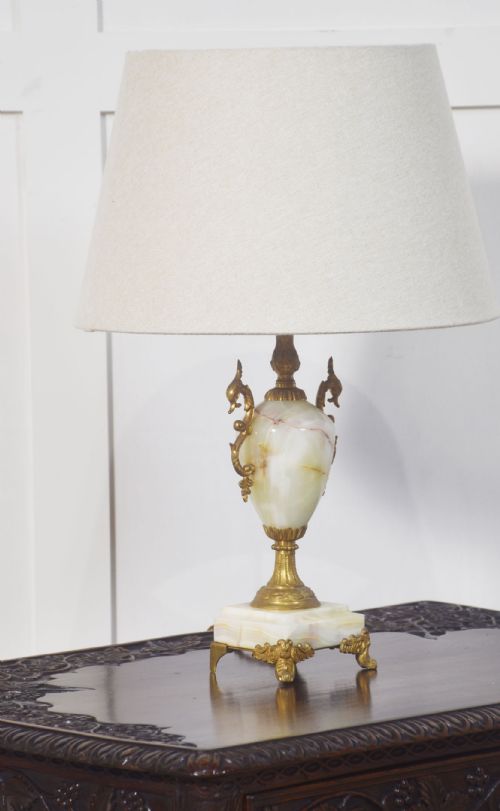


Cream Marbled Light
Cream marbled light brings together tactile stone bases and warm illumination, offering a classic focal point for any interior.
Cream Marbled Light
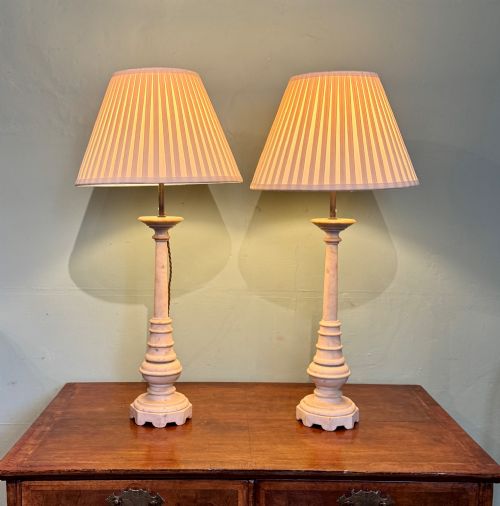
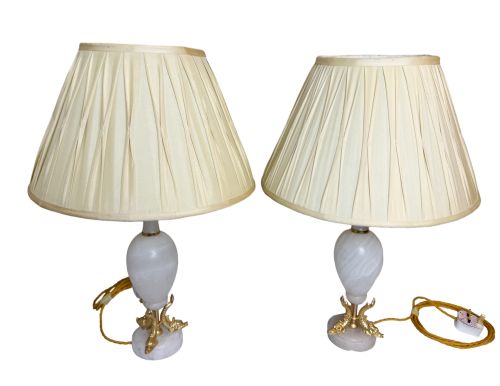
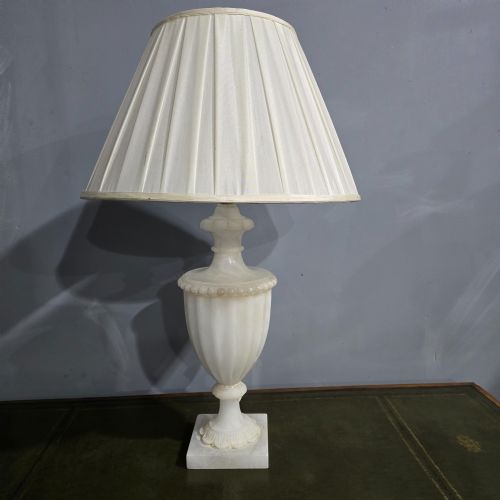
When you search for a cream marbled light, you encounter decorative table lamps, ceiling light fittings, and chambersticks fashioned from substantial mineral bodies. The selections span eras from the Victorian period through the Edwardian years and into the Art Deco epoch.
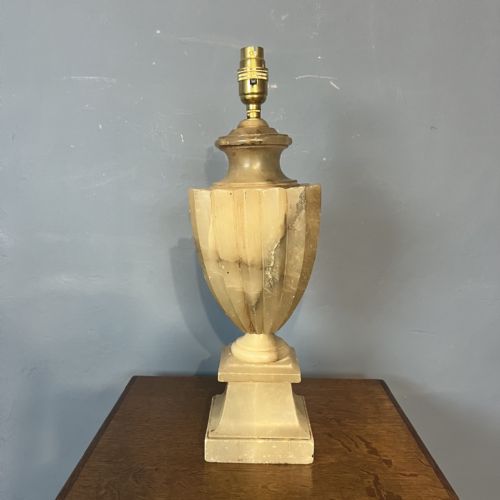
Most examples you meet on this page utilise carved marble, alabaster, or onyx displaying natural veining in pale tones. These stone components are frequently paired with cast metals such as brass, bronze, gilt bronze, or ormolu.
Forms range from classical columns and sculptural animal figures to clean geometric profiles typical of French Neoclassical and Grand Tour aesthetics. Pairs frequently appear alongside singular statement lamps.
Materials and construction
The primary bodies are shaped from dense natural minerals including white and coloured marble, translucent alabaster, and banded onyx. Artisans turned, carved, and polished these heavy stones to showcase their inherent veining and tonal variation.
Metal mounts, trim, and figural elements are cast in brass, bronze, spelter, or ormolu, then secured to the stone bases with threaded rods or pins. Fabric shades or glass fittings complete the assemblies, integrating electrical wiring or candle sockets depending on the period.
Listings feature items spanning the Victorian, Edwardian, and Art Deco periods, utilising alabaster, onyx, marble, and brass.
Quality factors
The sophistication of the stone carving and the clarity of the natural veining set finer pieces apart from standard production. Heavier mineral blocks with smooth, even polishes demonstrate superior material selection by the maker.
The weight, crispness, and finishing of the metal mounts provide another distinction, where finely chased ormolu and heavy cast brass elevate the overall composition far beyond simpler metal-mounted alternatives.
The Cream Marbled Light Glossary
- Alabaster
- A fine-grained, translucent stone often carved into lamps and vases. Its natural softness allows for delicate turning and shaping.
- Onyx
- A banded variety of chalcedony quartz valued for its layered, multi-toned appearance. It provides a dense and polished surface for decorative bases.
- Ormolu
- Gilt bronze ornamentation applied to furniture and lighting. The technique involves coating cast bronze with a finely ground gold mercury amalgam.
- Chamberstick
- A short candlestick fitted with a wide drip pan and a loop handle for carrying from room to room. Later examples are sometimes adapted as lamps.
- Grand Tour
- A traditional trip through Europe undertaken by upper-class young men in the eighteenth and nineteenth centuries. Souvenirs from these travels frequently included carved stone artefacts and antiquities.
Cream Marbled Light: Frequently Asked Questions
How do I date a marble lamp?
Dating relies on stylistic clues, mounting techniques, and wiring evidence. Victorian and Edwardian examples often feature heavier brass or ormolu mounts, whereas Art Deco pieces show geometric lines.
Examining the internal fixings and the type of lamp holder provides further clues regarding whether a piece retains its original period assembly.
Are these lamps heavy to place?
Stone and mineral bodies add significant weight, making these pieces exceptionally stable on sideboards and desks. Alabaster, marble, and onyx require sturdy furniture surfaces to support their mass safely.
Positioning them away from high-traffic edges prevents accidental tipping given their solid construction.
Can I use modern bulbs with these?
Most antique lighting has been rewired or adapted for modern electrical standards over time. Standard bulb fittings are typically accommodated by contemporary lamp holders.
Consulting a professional electrician ensures that older brass and metal structures are safely grounded and meet current safety regulations.
What is the difference between onyx and marble?
Marble is a metamorphic rock formed from recrystallised carbonate minerals, displaying varied veining and a crystalline structure. Onyx is a banded form of microcrystalline quartz that often exhibits a greater degree of natural translucency.
Both materials were selected by makers for their decorative patterns and ability to take a high polish.