



Cream Chaise Longue
A cream chaise longue brings traditional elegance and relaxed seating to a room, drawing on periods from the Regency era to the twentieth century.
Cream Chaise Longue
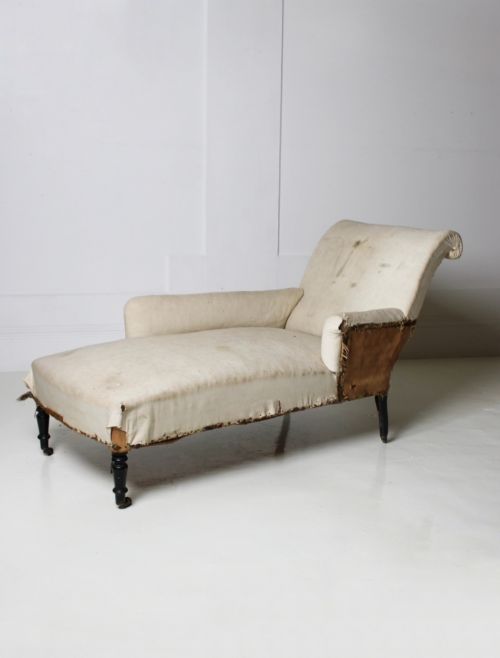
A cream chaise longue offers extended seating designed for reclining, combining the back support of a sofa with the footrest of a daybed. These pieces appear across various historic periods, including the Victorian era, William IV, and the Regency period.
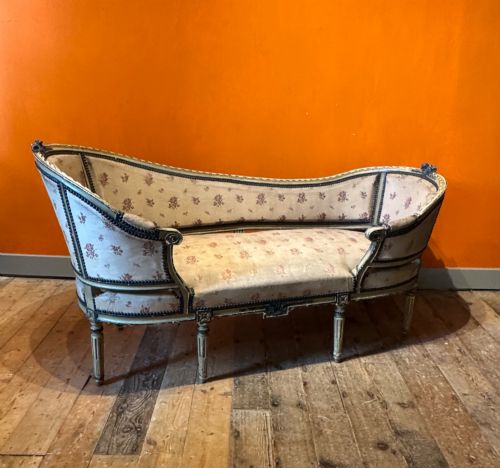
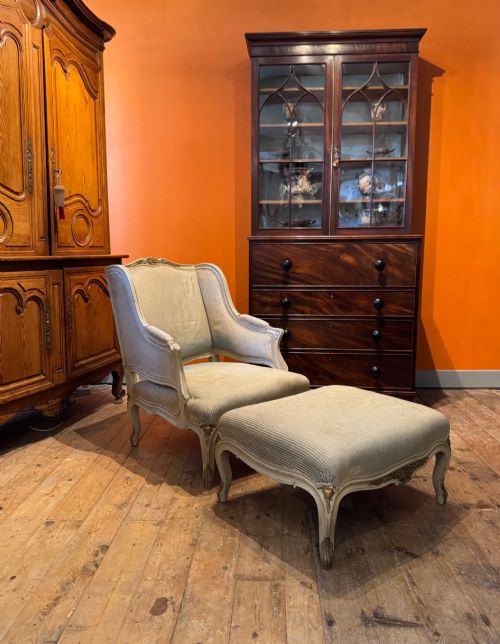
The selections on this page encompass diverse forms such as French Louis XV style duchesse brisées, scroll arm sofas, and double-ended settees. Upholstery fabrics range from calico and velvet to original paint and gilt decorations.
Buyers will encounter different wooden frames supporting the cream upholstery, predominantly walnut, mahogany, beech, and timber. Miniature and large country house daybeds provide options spanning compact spaces to grand reception rooms.
Materials and construction methods
Makers constructed the structural frames of these daybeds and settees using sturdy timbers such as mahogany, walnut, and beech. Brass details and ebonised finishes occasionally complement the primary wood structure.
Upholstery relies on traditional fabrics including velvet, calico, and various upholstered textiles, frequently secured with buttoning techniques. Carved wooden details and gilt decoration adorn the frames of specific nineteenth-century and revival pieces.
Cream Chaise Longue Retail Price Guide 2026
Typical asking prices for cream chaise longue among the pieces listed under this phrase on Sellingantiques today, from the lower quarter to the upper quarter. They describe what is for sale here now, not the wider market.
Listings feature timber frames in mahogany, walnut, and beech, paired with upholstery materials including velvet and calico across nineteenth and twentieth-century periods.
Factors of quality in historic seating
Quality rests in the finesse of the timber carving and the integrity of the frame construction, whether executed in walnut, mahogany, or beech. Pieces retaining original paint or specific maker attributions display distinct craftsmanship.
The execution of upholstery work, from buttoned velvet to fitted calico, dictates the refinement of the finished daybed. Proportions of scroll arms and double-ended designs also influence the visual balance of the seating.
Howard & Sons·Jas Shoolbred·HAMPTON & SONS
The Cream Chaise Longue Glossary
- Chaise longue
- An upholstered sofa in the form of a chair with a long seat large enough to support the user's legs. This form spans multiple historic periods and regional styles.
- Duchesse brisée
- A chaise longue broken into two or three parts, typically a chair and one or two footstools, or a chair with an attached low stool. The French Louis XV style utilises this configuration.
- Scroll arm
- A curved armrest resembling a scroll, commonly found on nineteenth-century sofas and daybeds. Mahogany scroll ends define several Regency and Victorian examples.
- Double-ended settee
- A sofa or settee featuring raised ends of equal height at both sides. These pieces often incorporate walnut or mahogany frames with upholstered seating.
- Reclining daybed
- A piece of seating furniture designed for lying down, sometimes featuring adjustable mechanisms. Victorian examples demonstrate this form of extended seating.
Cream Chaise Longue: Frequently Asked Questions
How do I identify a Victorian chaise longue?
Victorian examples often feature walnut or mahogany frames with carved woodwork, buttoned velvet upholstery, and distinct scroll or double-ended forms dating from the nineteenth century.
Makers from this period also produced salon suites and reclining daybeds that share similar decorative motifs and framing techniques.
What is the difference between a daybed and a chaise longue?
A chaise longue typically combines a chair back with a lengthened seat for one person to recline with supported legs. Daybeds can offer similar lounging functions but often feature symmetrical or simpler ends.
Both forms utilise upholstered fabrics and timber frames ranging from the Regency period to the early twentieth century.
Where should I place a cream chaise longue?
These pieces suit living rooms, large bedrooms, or reception spaces where their extended seating and decorative frames can serve as a focal point. Their neutral cream upholstery integrates easily with various interior colour schemes.
Placing the piece away from direct sunlight helps preserve historic fabrics like velvet and calico.
How do I care for antique upholstery?
Maintain fabric upholstery by gentle vacuuming with a soft brush attachment to remove dust without damaging delicate fibres. Protect velvet and buttoned surfaces from moisture and heavy friction.
Wooden frames benefit from occasional dusting with a dry cloth to preserve walnut, mahogany, or gilt finishes.