




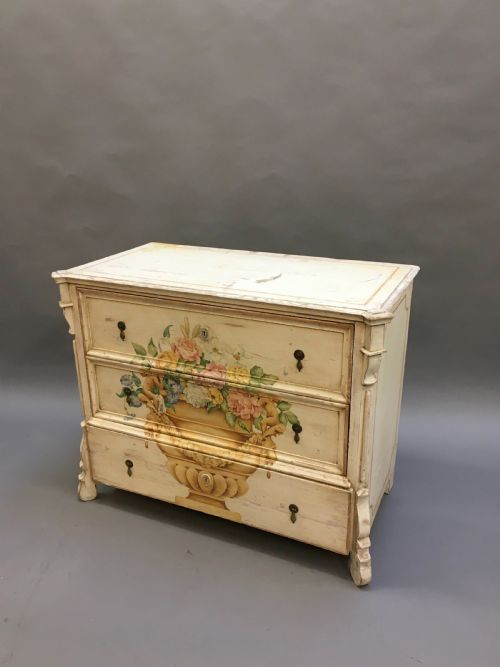


Cream Bedroom Chest
A cream bedroom chest brings a pale, light-reflecting finish and practical storage to a sleeping space, drawing on centuries of painted cabinetmaking traditions.
Cream Bedroom Chest
A cream bedroom chest encompasses a variety of storage forms designed for domestic quarters, ranging from compact bedside units to large multi-drawer tallboys. These pieces arrive in styles such as Regency, Louis XVI, Chinoiserie, and Victorian Country, reflecting both formal European design and vernacular traditions.
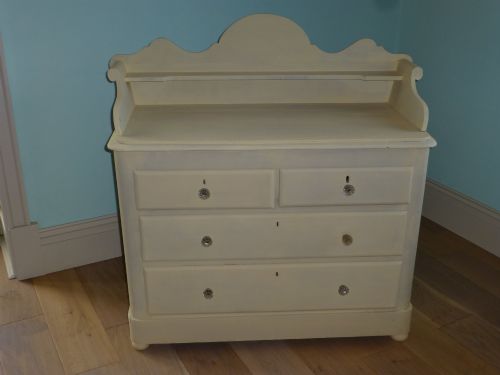
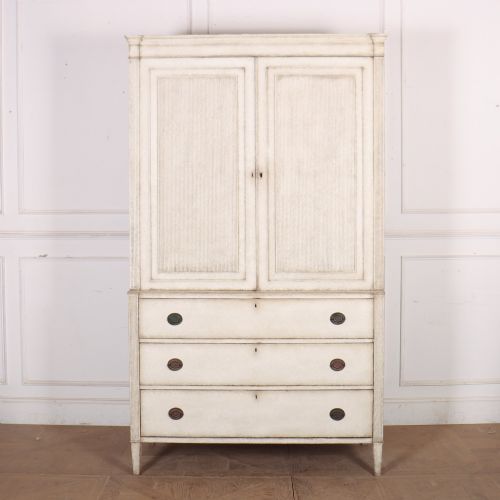
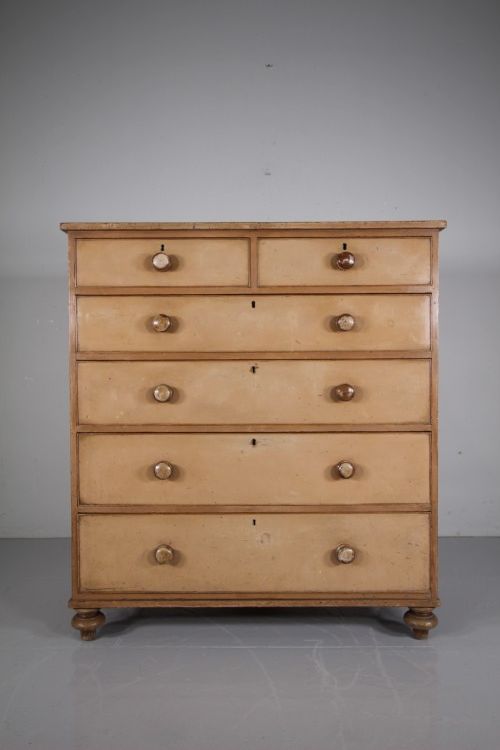
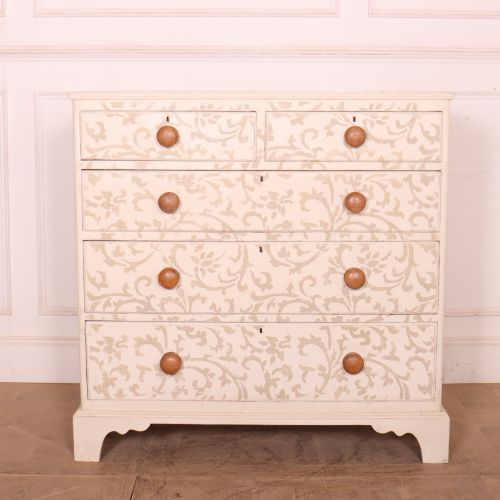
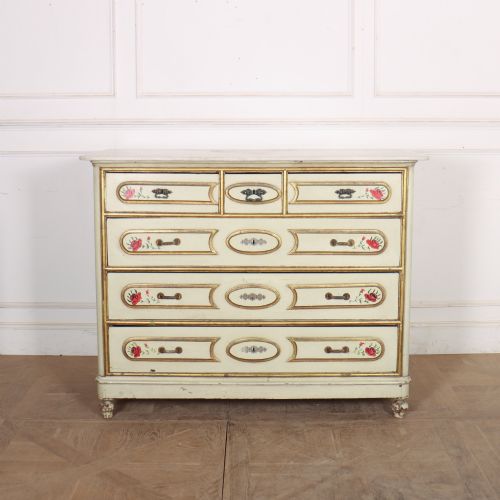
The version most commonly encountered on this page is the painted pine chest of drawers from the nineteenth century, often retaining its original surface. Alongside these standard chests, buyers will find commodes, linen cupboards, blanket boxes, and chests on chests finished in pale or cream tones.
Origins span English, French, Spanish, Swedish, and Dutch workshops, showing that the preference for light painted furniture crossed national borders. Pieces date from the eighteenth century through to the 1920s, demonstrating a long history of applying decorative painted surfaces to functional timber storage.
Materials and construction
Construction relies heavily on timber such as pine, oak, mahogany, and general wood or timber framing, occasionally supplemented by brass hardware and glass elements. Many nineteenth-century examples utilise solid pine carcasses built to withstand daily domestic use.
Surfaces are finished with paint, Japanning, or gilt details, creating the characteristic cream colour seen across the selection. Certain commodes and cabinets incorporate marble tops, adding a durable stone surface above the wooden drawers.
Cream Bedroom Chest Retail Price Guide 2026
Typical asking prices for cream bedroom chest among the pieces listed under this phrase on Sellingantiques today, from the lower quarter to the upper quarter. They describe what is for sale here now, not the wider market.
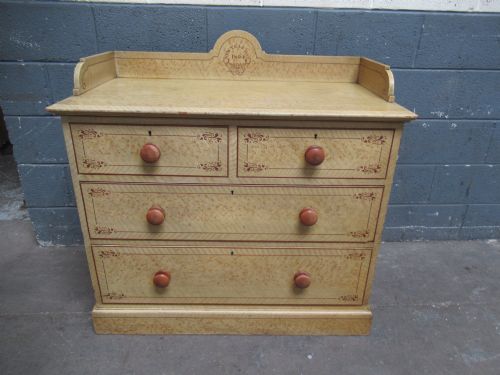
One listed nineteenth-century pine chest preserves an original date inscribed within the timber by its maker.
Defining quality
Quality rests upon the integrity of the original paint surface and the subtlety of decorative techniques like Chinoiserie or Japanning. Pieces retaining untouched, period paint show a superior grade of preservation compared to later overpainting.
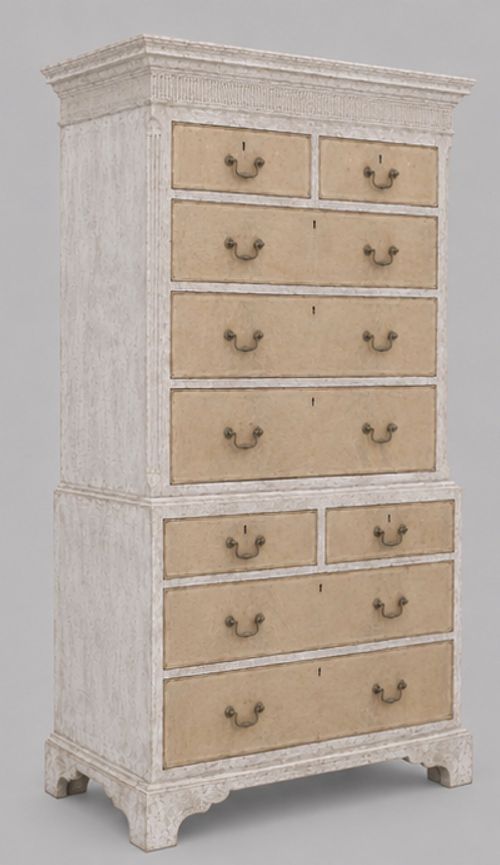
Joinery standards distinguish finer regional workshops from standard utility pieces, visible in the construction of drawers, such as those made in two parts on larger tallboys. The inclusion of materials like marble tops or detailed brass fittings elevates certain commodes and bedside chests above basic pine storage.
The Cream Bedroom Chest Glossary
- Commode
- A low cabinet or chest of drawers, often of French or continental origin, designed for domestic storage.
- Tallboy
- A tall chest of drawers, sometimes configured as a chest on chest, providing vertical storage capacity.
- Japanning
- A European imitation of East Asian lacquer work, frequently utilised on decorative furniture from the nineteenth and early twentieth centuries.
- Bowfront
- A front curve to a chest of drawers that swells outward at the centre, found on Georgian and Regency pieces.
- Pine
- A softwood commonly utilised for traditional country furniture and painted bedroom chests throughout the nineteenth century.
Cream Bedroom Chest: Frequently Asked Questions
How do I clean a painted chest?
Dust the surface regularly with a soft, dry cloth to prevent dirt accumulation on the painted finish.
Avoid harsh chemical cleaners or excess moisture, which can damage original nineteenth-century paintwork or gilt details.
Are these chests heavy to move?
Solid timber construction, particularly in pieces made from oak or pine, results in substantial weight.
Larger items like tallboys and chests on chests often separate into two parts to ease transport and placement.
Where should I place a bedside chest?
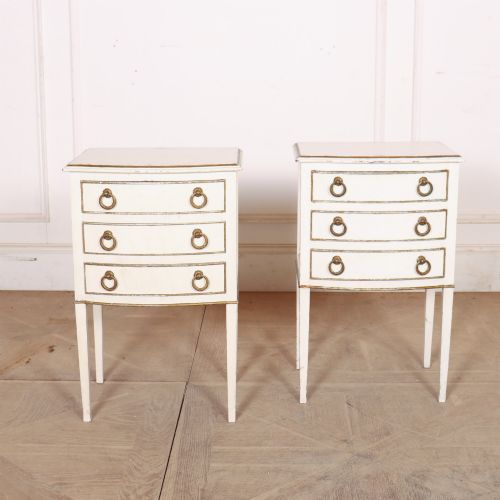
These compact units suit sleeping quarters alongside a bed, providing surface space for lamps and small items.
Matching pairs create symmetry, while single pieces offer a contrasting accent beside the bed frame.
How can I tell the period?
Stylistic indicators such as Regency faux bamboo, Louis XVI proportions, or Georgian bowfronts point to specific design eras.
Construction methods, timber types, and the character of the paint surface further assist in dating each item.