



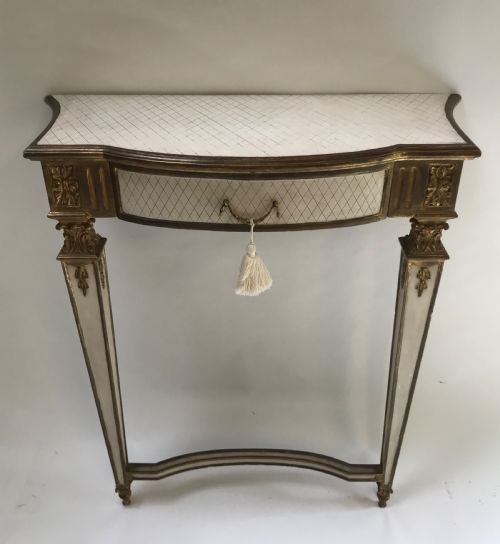


Cream and Gold Side Table
A cream and gold side table brings refined Continental elegance and practical surface space to a room, offering both decorative presence and everyday utility.
Cream and Gold Side Table
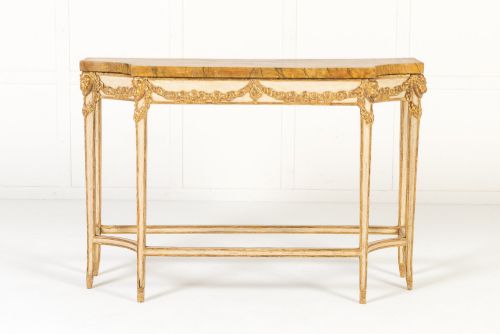
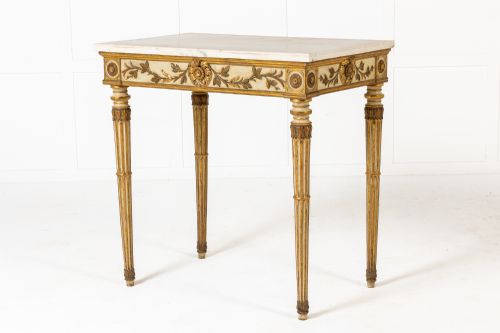
When searching for a cream and gold side table, buyers encounter a selection of Continental occasional tables, consoles, and bedside furniture spanning the nineteenth and early twentieth centuries. These pieces typically exhibit painted or gessoed surfaces in cream tones highlighted with parcel gilt detailing.
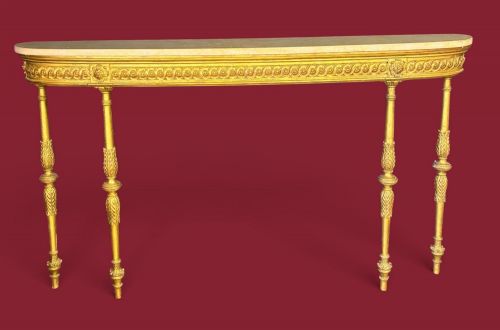
The objects listed range from Italian painted side tables and Venetian-influenced occasional pieces to French console tables and marble-topped variants. Forms vary from compact bedside tables to larger console tables designed for display against a wall.
Originating largely from the nineteenth century through the 1930s, these tables reflect historicist revivals including Neoclassical, Venetian, and Louis XVI styles. Buyers frequently select these items to introduce a restrained antique aesthetic into traditional or eclectic interiors.
How they were made
Construction relies primarily on wood and painted wood frameworks, frequently embellished with gesso to build up crisp decorative mouldings. Artisans applied traditional paint layers and parcel gilt highlights to accentuate carved details and architectural motifs.
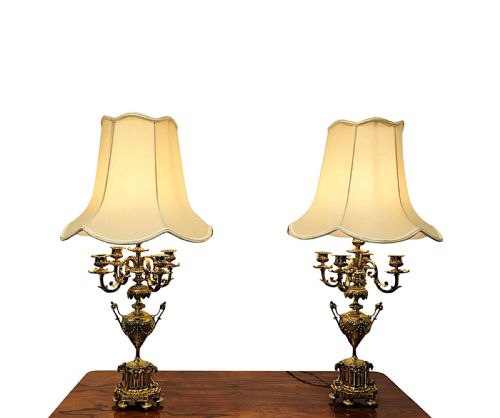
Many examples incorporate inset marble tops, utilising materials such as Sienna marble to provide durable and visually striking surfaces. Metal elements such as brass appear on related table lamps and fittings associated with these interiors.
Listings include items spanning the 1880s to the 1930s, featuring Neoclassical, Venetian Revival, and Louis XVI styles.
What varies in quality
The fineness of the hand-applied paintwork and the crispness of the gesso moulding distinguish finer pieces from simpler commercial work. Original surface patination and the subtlety of the parcel gilding determine the visual depth of the finish.
Structural integrity depends on the quality of the timber framework and the precise fitting of inset marble tops where applicable. Pieces retaining their original decorative schemes command greater interest than those with later repainting.
The Cream and Gold Side Table Glossary
- Parcel Gilt
- A decorative technique where selected areas of an object are highlighted with thin gold leaf, leaving the underlying paint or wood visible elsewhere. This method creates contrast and accentuates carved or moulded details.
- Gesso
- A plaster-like mixture applied to wood substrates to create a smooth surface for painting or to build up low-relief ornamentation. It provides the base for many historic gilt and painted finishes.
- Console Table
- A table designed to be fixed against a wall, frequently supported by front legs or brackets. In historical interiors, these often featured decorative marble tops.
- Neoclassical Revival
- A style drawing inspiration from classical antiquity, characterised by symmetry, restraint, and classical motifs. It strongly influenced furniture design through the nineteenth and early twentieth centuries.
- Venetian Revival
- An aesthetic movement inspired by the historic decorative arts of Venice, often featuring ornate painted surfaces and gilded accents. Pieces in this style emphasise theatricality and colour.
Cream and Gold Side Table: Frequently Asked Questions
How do I style a cream and gold side table?
These tables function effectively as bedside units, hallway consoles, or occasional surfaces in a living room. Pairing them with complementary lighting or minimalist objects allows the painted and gilded finish to remain the focal point.
Because the palette is neutral with metallic highlights, the tables integrate easily into both period schemes and modern interiors. Keeping surface items sparse preserves the visual balance of the piece.
Are these tables sturdy enough for daily use?
Most pieces are constructed from solid timber frames designed for normal domestic placement, though delicate decorative mouldings require thoughtful handling. Tables with marble tops offer robust surfaces for holding lamps or decorative objects.
Placing the furniture away from direct heat sources and moisture helps protect the historic painted and gilt surfaces over time. Regular dusting with a soft, dry cloth is sufficient for ongoing maintenance.
What periods do these side tables come from?
The selection encompasses nineteenth-century craftsmanship alongside early twentieth-century pieces, including Edwardian examples and designs from the 1910s, 1920s, and 1930s. Stylistic influences often reference earlier historic periods such as Italian Rococo or Louis XVI.
Date attributions rely on construction methods, material usage, and stylistic indicators typical of European workshops during those eras. Pieces frequently reflect regional traditions from Italy, France, and Spain.
What is the difference between a console and a side table?
Console tables are traditionally designed to stand against a wall, sometimes relying on wall brackets for additional stability, and often feature decorative marble tops. Side tables and occasional tables are typically freestanding and movable for flexible placement.
Both forms share similar decorative treatments, including painted cream finishes and parcel gilt details. The choice between them depends on the intended floor space and function within a room.