



Cranberry Shade Table Lamp
A cranberry shade table lamp brings rich colour and warm light to a room, combining functional illumination with decorative glass.
Cranberry Shade Table Lamp
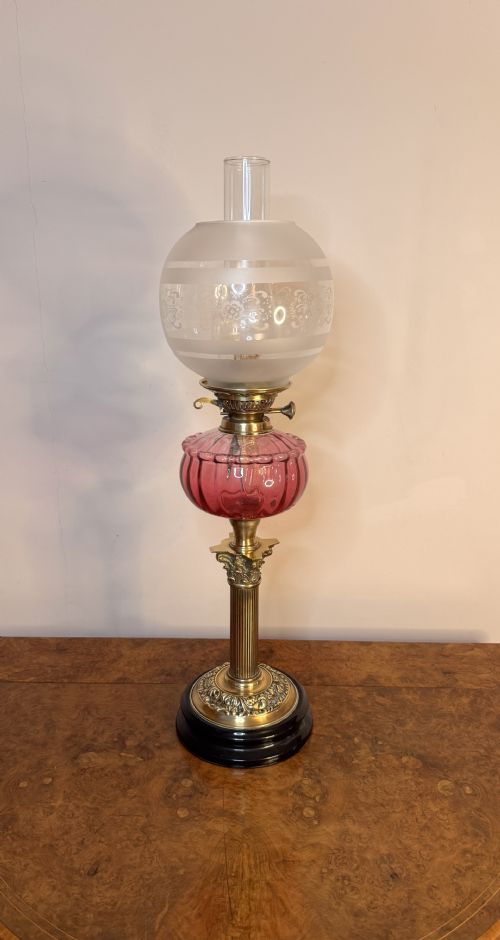
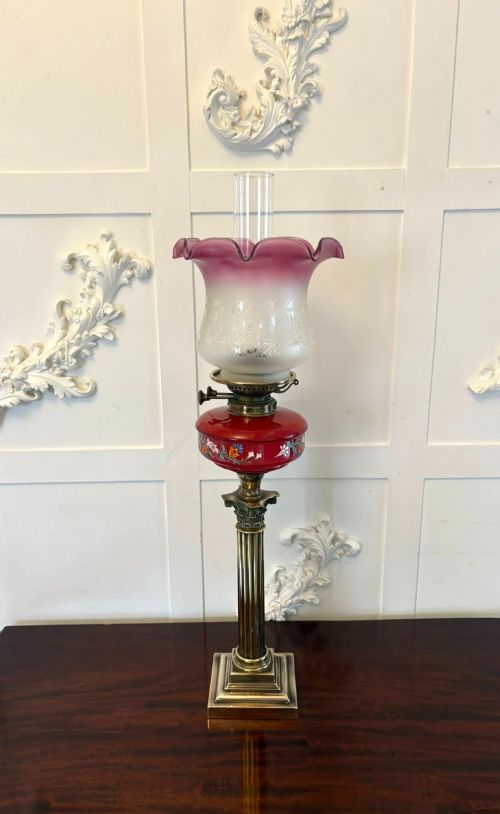
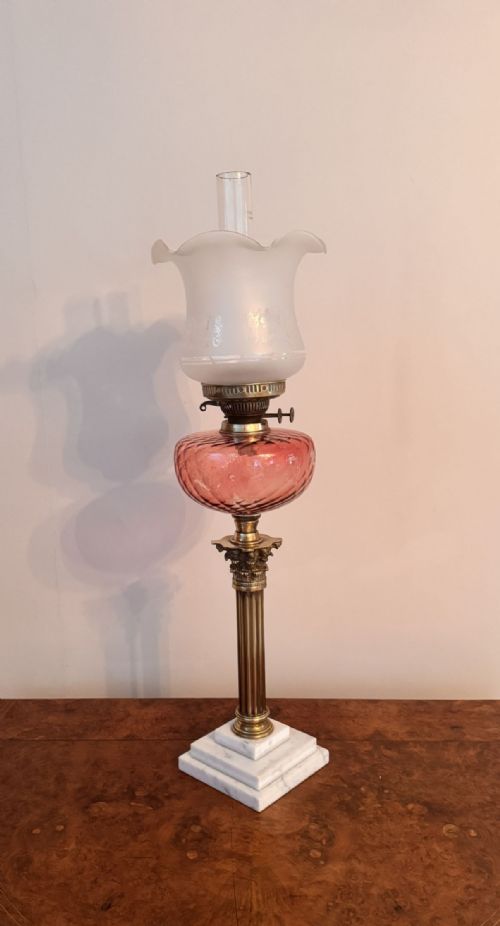
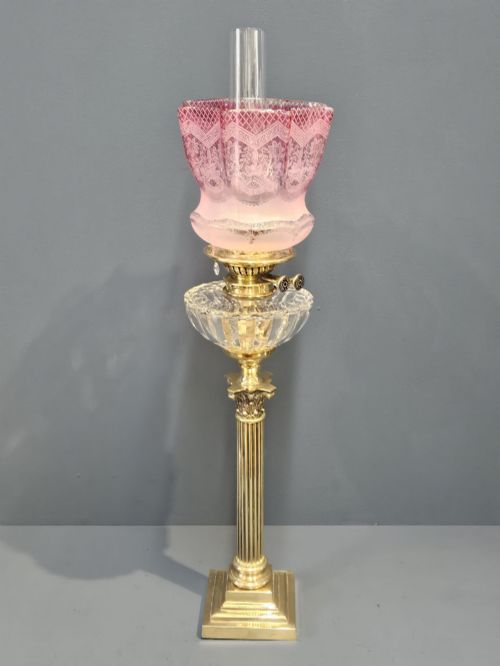
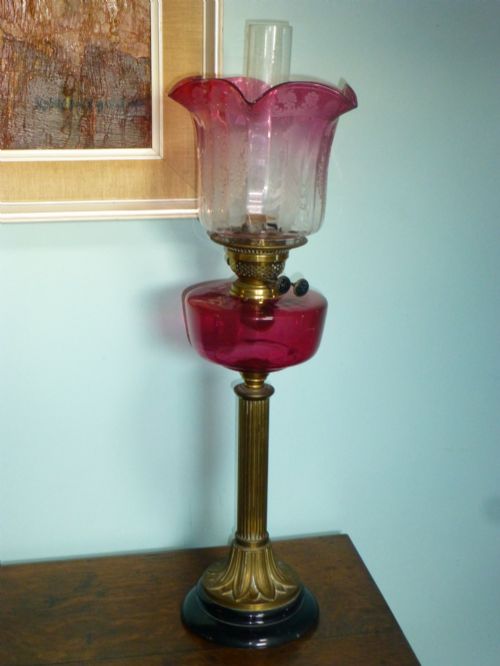
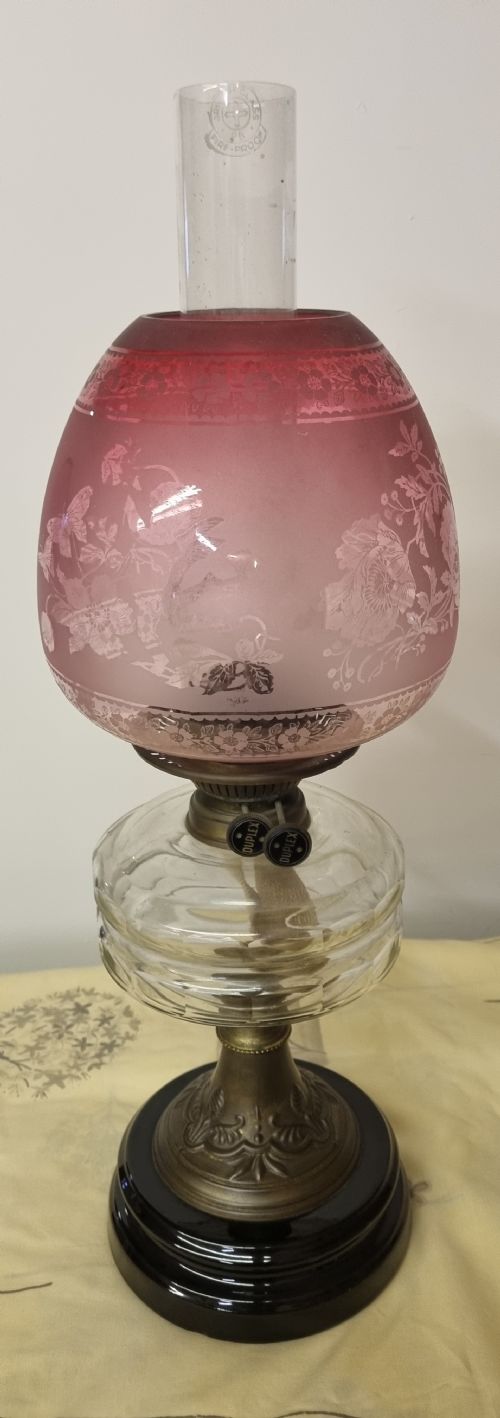
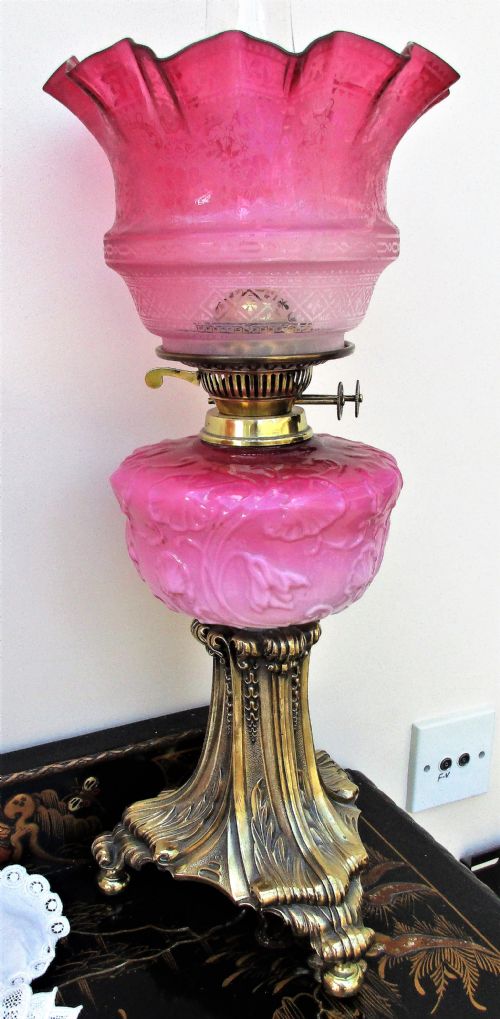
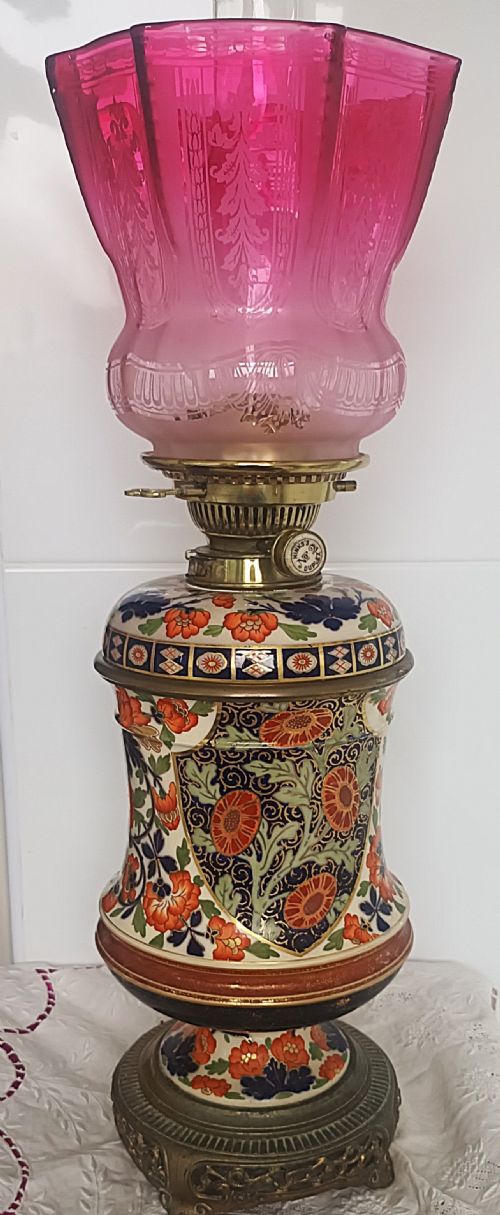
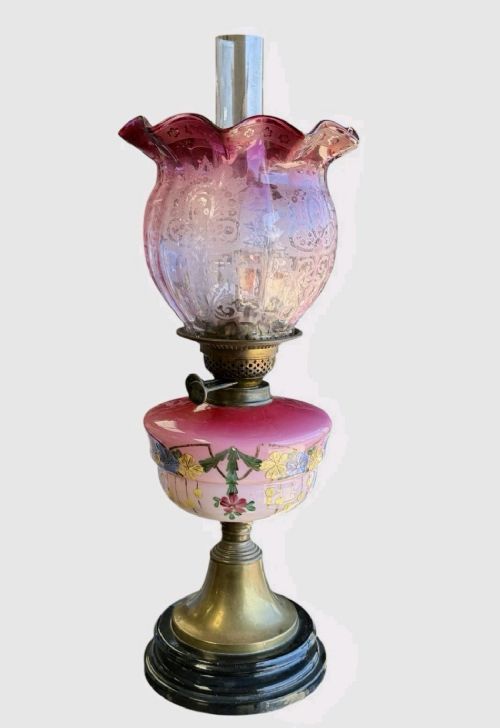
A cranberry shade table lamp refers to lighting fixtures featuring distinct red-pink glass shades paired with period bases. The pieces seen here span the Victorian and Edwardian eras, predominantly taking the form of oil lamps converted for modern use.
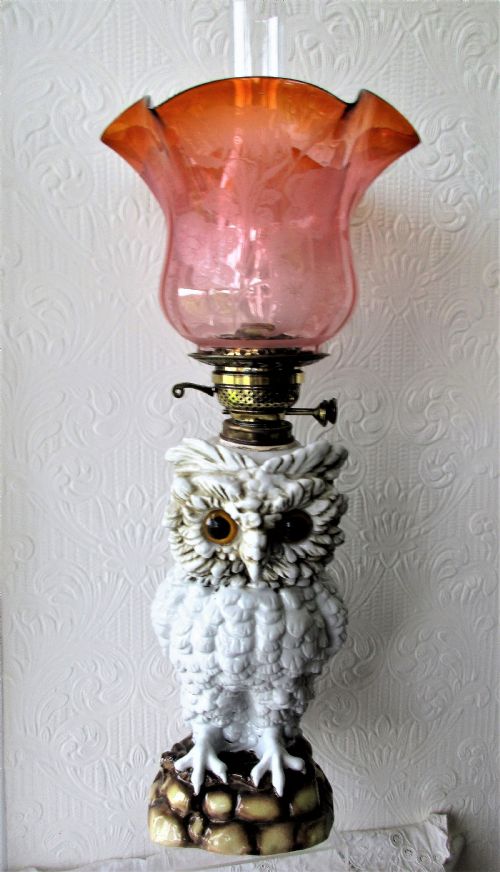
Most examples combine solid brass columns with vibrant glass fonts and shades. Corinthian column designs and reeded brass stems appear frequently alongside ceramic and marble components.
Makers from England and Germany produced these items during the nineteenth and early twentieth centuries. Collectors encounter straightforward desk lamps alongside tall duplex burners and elaborate botanical designs.
Materials and construction
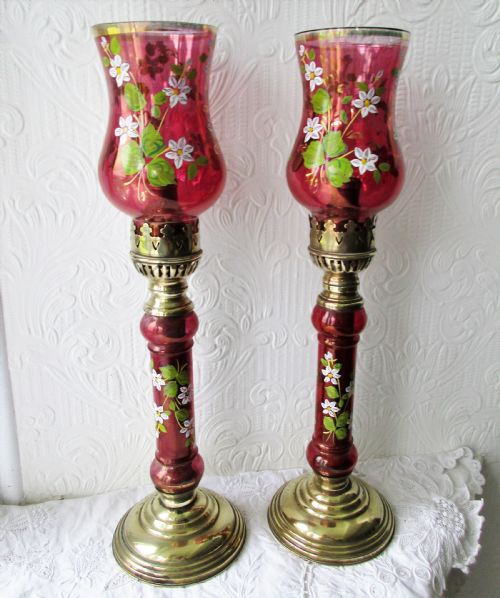
Glassmakers created cranberry glass by adding gold chloride to the molten batch, achieving the characteristic rich pink hue through careful reheating. Artisans shaped these glass shades and fonts by blowing and sometimes etching or hand-painting the surfaces.
Foundries cast brass components into architectural columns, floral bases, and burner mechanisms. Stonework and porcelain provided heavy foundations for stability, while marble and ceramic sections introduced contrasting textures.
Cranberry Shade Table Lamp Retail Price Guide 2026
Typical asking prices for cranberry shade table lamp among the pieces listed under this phrase on Sellingantiques today, from the lower quarter to the upper quarter. They describe what is for sale here now, not the wider market.
Listings feature items from the 19th Century, Victorian, Edwardian, and up to 1930, utilising brass, glass, porcelain, and marble.
Factors determining quality
The weight and casting precision of the brass elements distinguish finer examples from standard production. Crisp details on Corinthian capitals and substantial marble plinths indicate higher standards of manufacture.
Glass quality depends on the depth and evenness of the colour within the shade and font. Hand-painted motifs and delicate etching require greater artisan skill than plain moulded glass.
Hinks·Taylor Tunnicliff·Sitzendorf
The Cranberry Shade Table Lamp Glossary
- Cranberry glass
- A type of transparent pink-red glass coloured with gold. It became popular during the Victorian period for tableware and lighting.
- Corinthian column
- A classical architectural column style featuring ornate carved capitals with acanthus leaves. Many Victorian lamp bases imitate this form in cast brass.
- Duplex burner
- A double-wick mechanism used on nineteenth-century oil lamps to provide a brighter flame. It requires two flat wicks operating side by side.
- Font
- The oil reservoir of a lamp, positioned below the burner. In these pieces, the font is often made of coloured or cut glass.
- Reeded column
- A cylindrical shaft decorated with parallel, raised convex mouldings. This decorative pattern frequently appears on brass lamp stems.
Cranberry Shade Table Lamp: Frequently Asked Questions
What is a cranberry shade table lamp?
A cranberry shade table lamp is a period lighting fixture featuring a distinctive pinkish-red glass shade paired with a brass, ceramic, or marble base. These items originate mainly from the Victorian and Edwardian eras.
Many of these pieces began as oil lamps before being adapted for electrical use. They serve as decorative focal points while providing ambient illumination.
How do I date a brass and glass lamp?
Dating relies on examining manufacturing techniques, material combinations, and stylistic clues such as column designs or burner types. Victorian examples often feature heavy cast brass and hand-finished glass.
Later Edwardian versions can incorporate simpler adjustments or different wiring setups. Maker marks on burners or ceramic bases also help establish a specific decade.
Were these lamps originally for oil?
Yes, the majority of nineteenth-century examples functioned as oil lamps utilising brass burners and glass reservoirs. Owners later converted them to hold electrical fittings.
Original burners and galleries are often retained to preserve the authentic appearance of the piece. This conversion process allows historical lighting to function safely in modern homes.
Where should I place a table lamp?
These lamps suit side tables, desks, and sideboards where their colourful glass shades can catch the light. Their substantial height makes them effective as statement pieces in a living room or study.
Positioning them away from high-traffic areas protects the delicate glass components from accidental knocks. The warm glow complements traditional and eclectic interiors alike.