
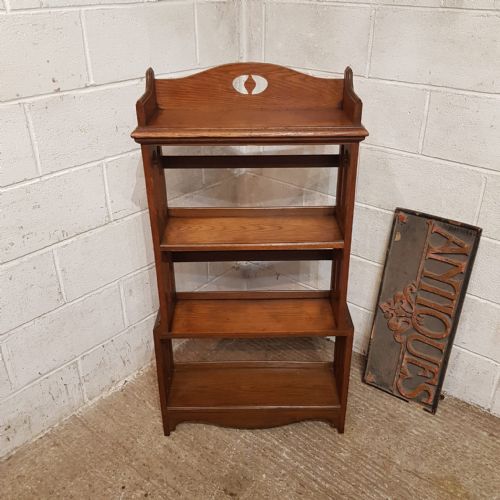
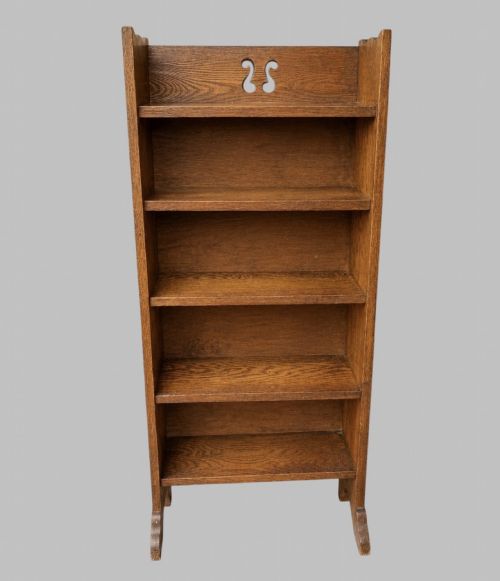


Craftsman Book Stand
These craftsman book stand pieces bring honest construction and utility into a room, offering sturdy places to keep volumes within reach.
Craftsman Book Stand
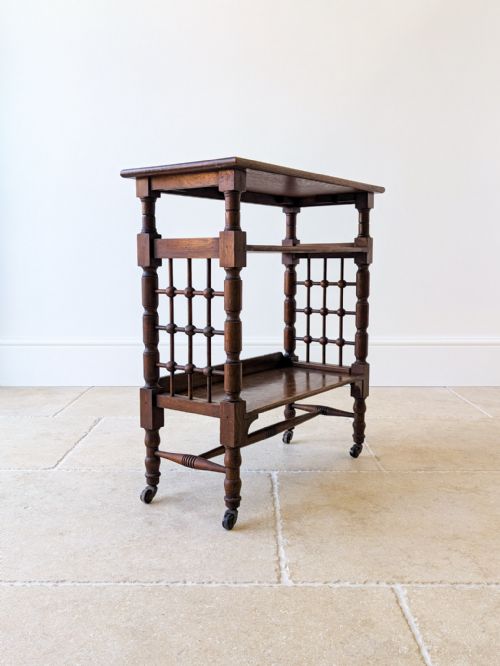
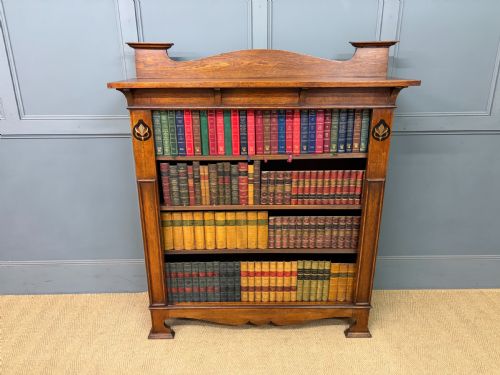
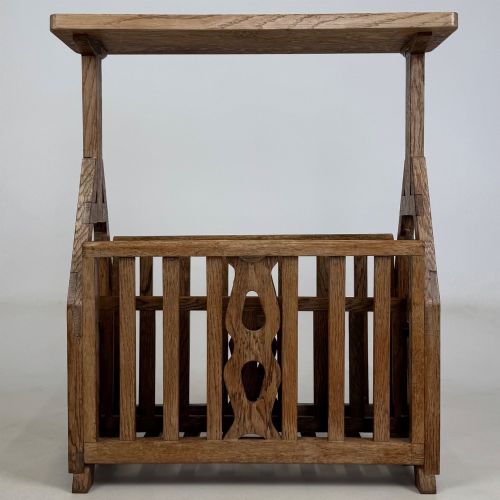
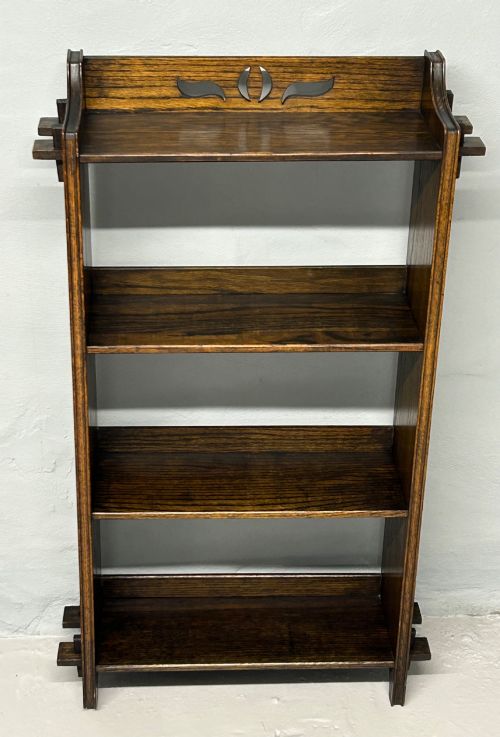
A craftsman book stand embodies the utilitarian design philosophy of the Arts and Crafts movement, focusing on sturdy function and honest materials. These pieces typically manifest as open bookcases, slope-shelf troughs, and low side tables designed to hold books close to hand.
Most examples found here date from the Edwardian period through the early twentieth century, spanning the 1880s to the 1930s. Oak is the predominant wood encountered, often left solid and unadorned to show the grain.
Buyers frequently encounter open formats featuring fixed shelves or slanted fronts intended for fireside reading. The aesthetic avoids heavy Victorian ornamentation in favour of clean architectural lines and occasional decorative cut-outs.
How they were made
Makers relied primarily on solid oak, utilising its natural grain and strength to support heavy volumes without extensive internal framing. Walnut also appears occasionally, providing a darker and smoother finish.
Construction techniques emphasise visible joinery and straightforward assembly suited to the Arts and Crafts ethos. Details such as decorative cut-outs provide visual interest through form rather than applied surface ornament.
What varies in quality
Quality rests upon the selection of timber and the integrity of the structural proportions. Pieces fashioned from solid oak with well-balanced open shelves demonstrate superior craftsmanship compared to simpler utilitarian variants.
The sophistication of design distinguishes individual pieces, particularly where thoughtful edge-work or decorative cut-outs elevate a straightforward fireside trough into a considered example of the movement.
The Craftsman Book Stand Glossary
- Arts and Crafts
- A design movement originating in the late nineteenth century that championed traditional craftsmanship and simple forms over mass production. This style influences the structure of these bookcases and stands.
- Book Trough
- An open receptacle designed to hold books upright or at a slant for easy browsing. These often sit beside firesides or on side tables.
- Slope-Shelf
- A slanted shelf design that displays book spines at an angle for comfortable reading titles. This feature appears frequently on fireside troughs.
- Edwardian
- A historical period spanning the early twentieth century defined by lighter domestic furniture styles. Pieces from this era often maintain Arts and Crafts influences.
Craftsman Book Stand: Frequently Asked Questions
Where should I place a book trough?
These low troughs suit placement beside armchairs or low seating where volumes need to stay within arm's reach. Their open fronts allow quick selection of current reading material.
They also function well on side tables or low surfaces in studies and sitting rooms.
How do I identify an Arts and Crafts piece?
Look for honest construction methods, solid oak timber, and a general absence of fussy applied ornament. Clean lines and functional forms define the aesthetic.
Decorative cut-outs often replace traditional mouldings to provide visual interest.
Are these stands suitable for heavy books?
Solid oak construction provides the necessary strength to support standard library volumes and heavier reference books. The open shelves are fixed to handle everyday domestic use.
Distributed weight across the sturdy base prevents tipping during normal handling.
What periods do these pieces cover?
The selection spans from the late nineteenth century through the Edwardian era and into the early twentieth century. Pieces typically reflect the height and continuation of the Arts and Crafts movement.
Dates range from the 1880s up to the 1930s.