



Craft and Writing Table
A craft and writing table brings honest utility and vernacular form into daily use.
Craft and Writing Table
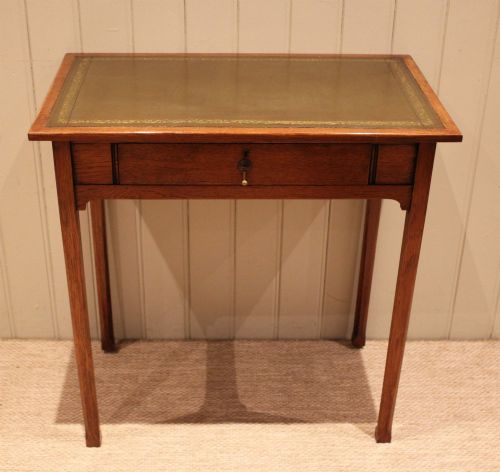
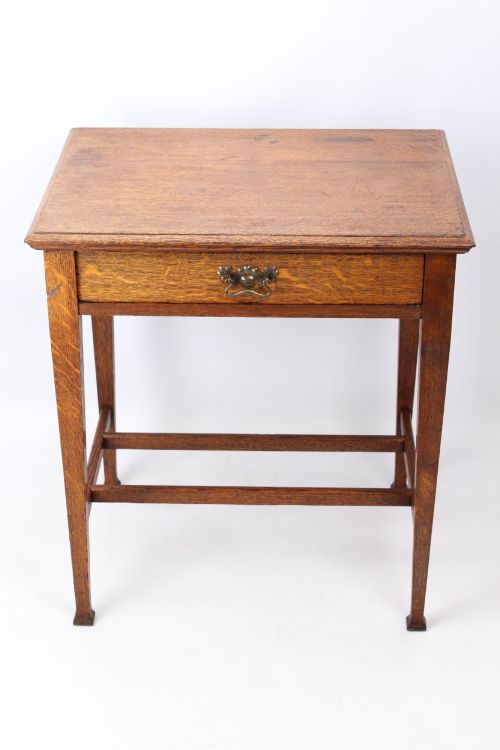
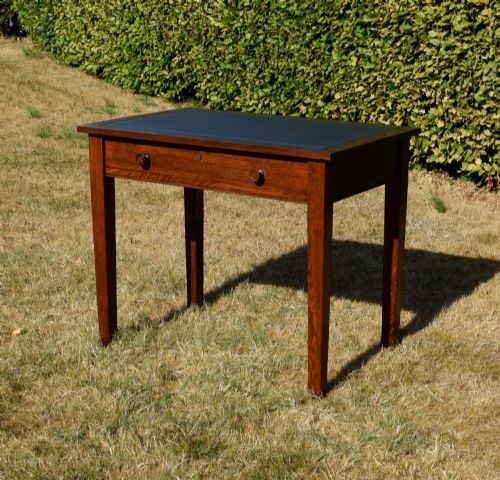
A craft and writing table combines the sturdy utility of a workspace with the considered design of the late nineteenth and early twentieth centuries. These pieces emerge predominantly from the Arts and Crafts, Edwardian, and Art Nouveau movements, reflecting a period when furniture prioritised solid construction and straightforward purpose over superfluous ornament.
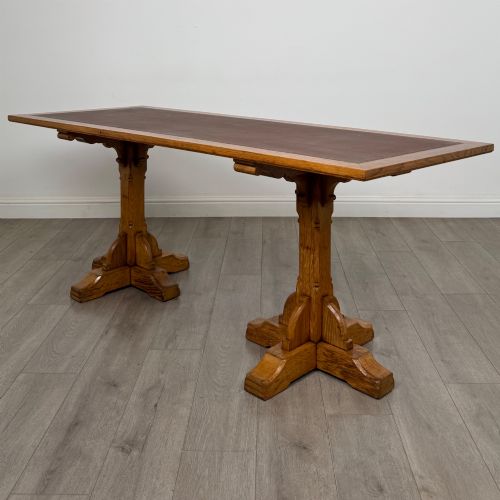
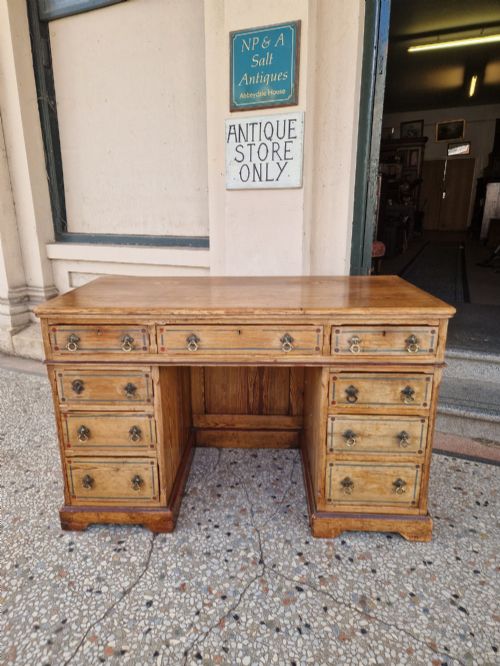
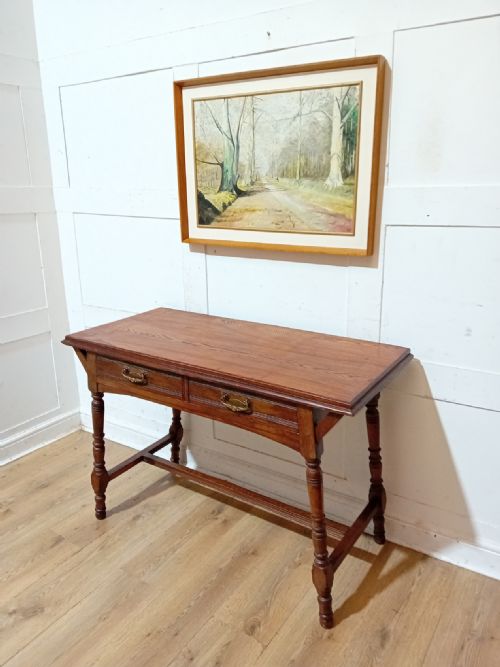
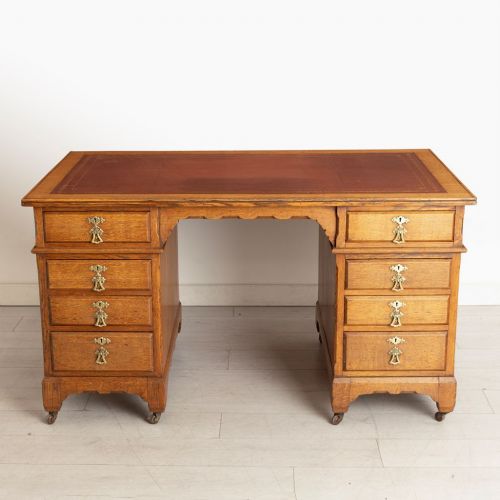
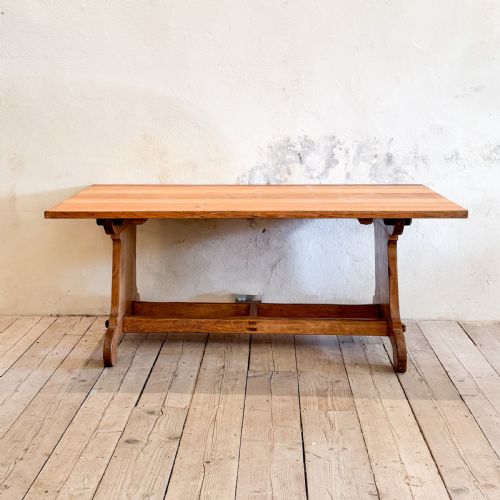
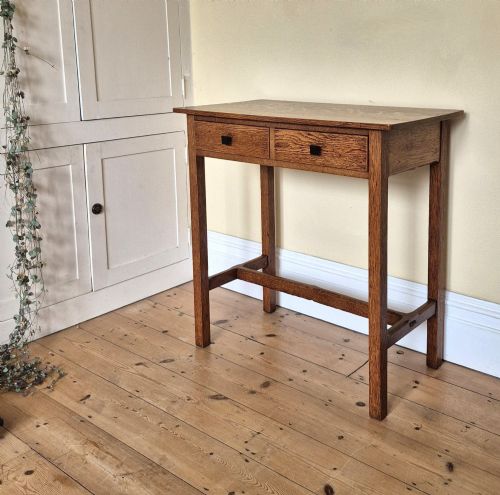
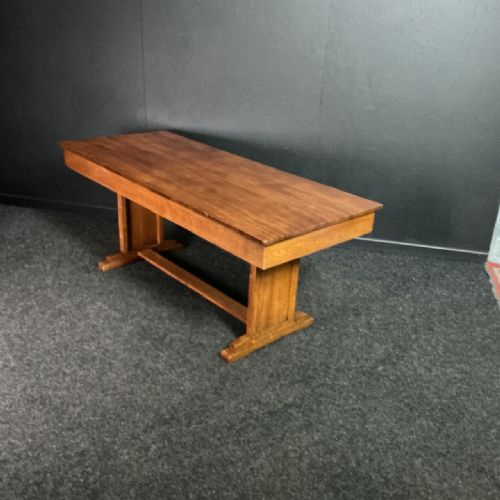
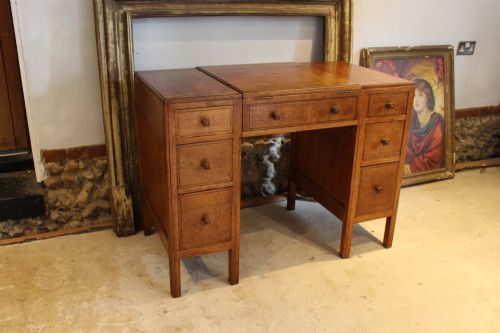
The most common form met on this page is the oak writing table or library table, often displaying simple panel construction, galleried backs, or leather insets. Desks span various formats, from compact kneehole desks and Davenport designs to large pedestal partners tables and public school library tables.
Origins trace across the late nineteenth century and the early decades of the twentieth century, capturing decades where workshops such as Heal and Sons, Liberty, and James Shoolbred produced robust domestic and institutional furniture. Buyers encounter these tables in lighter golden oak, darker ebonised finishes, pitch pine, ash, and mahogany.
How they were made
Makers utilised solid timbers such as quartered oak, ash, pitch pine, and mahogany, selecting woods for durability and visible grain. Metalwork appeared in brass handles, hinges, and drawer pulls, while writing surfaces frequently incorporated inset leather for practical daily use.
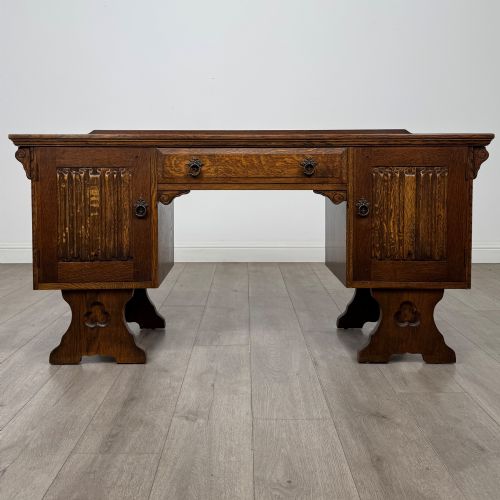
Construction methods relied on traditional joinery techniques suited to heavy daily wear, framed by the stylistic tenets of the Arts and Crafts movement. Workshops incorporated structural elements like raised galleries, linenfold carving, trestle bases, and ebonised wood details without relying on excessive factory mass-production.
Craft and Writing Table Retail Price Guide 2026
Typical asking prices for craft and writing table among the pieces listed under this phrase on Sellingantiques today, from the lower quarter to the upper quarter. They describe what is for sale here now, not the wider market.
The selection includes forms ranging from small children's desks to large public school library tables.
What varies in quality
Quality rests in the selection of timber, particularly the choice of quartered oak or figured mahogany, and the integrity of the underlying joinery. Superior pieces display thoughtful proportions, integrated hardware such as original brass fittings, and maker attribution or labels.
Design restraint and hand-carved detailing, such as crisp linenfold panels or well-executed structural framing, separate workshop pieces from standard commercial output. The presence of original leather writing surfaces and intact maker stamps elevates the standing of an individual table.
Heal and Sons·Liberty·James Shoolbred·Hubert Simpson of Kendal·Howard and Sons
The Craft and Writing Table Glossary
- Arts and Crafts
- A design movement valuing handcrafting, vernacular traditions, and simple construction over industrial mass-production. This style dominates the forms and joinery seen across these tables.
- Quartered oak
- Timber sawn radially across the growth rings, producing a distinct silver grain figure. This cut provides exceptional stability and visual depth to tabletops.
- Linenfold
- A style of relief carving imitating folded linen fabric, frequently utilised on panels and desk fronts. It appears on Edwardian and Arts and Crafts cabinetry.
- Pedestal desk
- A form featuring two supporting pedestals of drawers beneath a desktop, allowing storage on both sides in partners variants. These provide substantial workspace.
- Raised gallery
- A low decorative upstand along the rear edge of a writing table or desk. This feature prevents papers and pens from sliding off the back surface.
Craft and Writing Table: Frequently Asked Questions
What is a craft and writing table?
A craft and writing table is a utilitarian workspace built during the late nineteenth or early twentieth century, drawing on Arts and Crafts or Edwardian design principles. These pieces prioritise honest timber construction, visible grain, and straightforward utility over excessive ornamentation.
Buyers encounter formats ranging from compact side tables and Davenport desks to large library and partners tables. They serve as functional desks for study or writing while anchoring a room with period character.
Where were these tables used originally?
These tables were designed for domestic studies, libraries, public school reading rooms, and drawing spaces. Their robust build quality suited both private homes and demanding institutional environments.
Libraries and school rooms utilised large oak library tables for shared reading and reference work. Smaller writing desks and Davenport forms served individual correspondence and administrative tasks in private parlours.
How do I care for an antique oak desk?
Care for an antique oak desk by maintaining stable room humidity and avoiding direct placement near heat sources. Regular dusting with a soft, dry cloth preserves the finish without requiring heavy polishes.
Protect inset leather surfaces with mild care suited to aged hide, and lift items rather than dragging them across the desktop. Gentle maintenance preserves the natural patina developed over decades of use.