

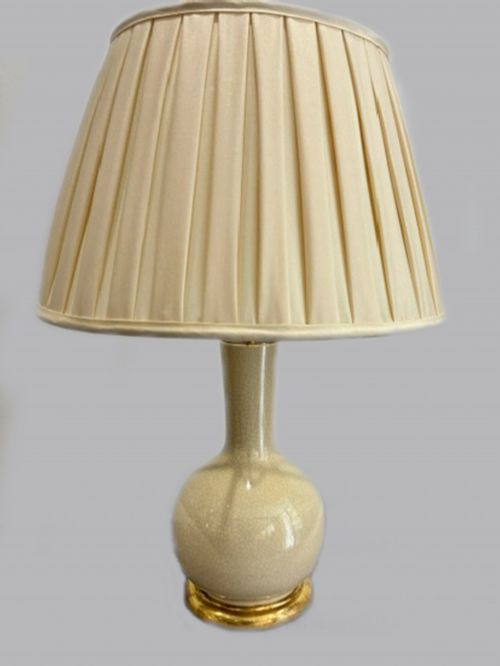
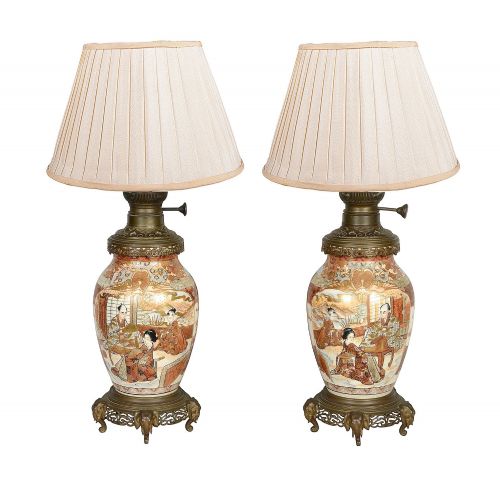


Crackle Glaze Lamp
These crackle glaze lamp pieces bring textured ceramic warmth to a room, offering the decorative depth that collectors seek.
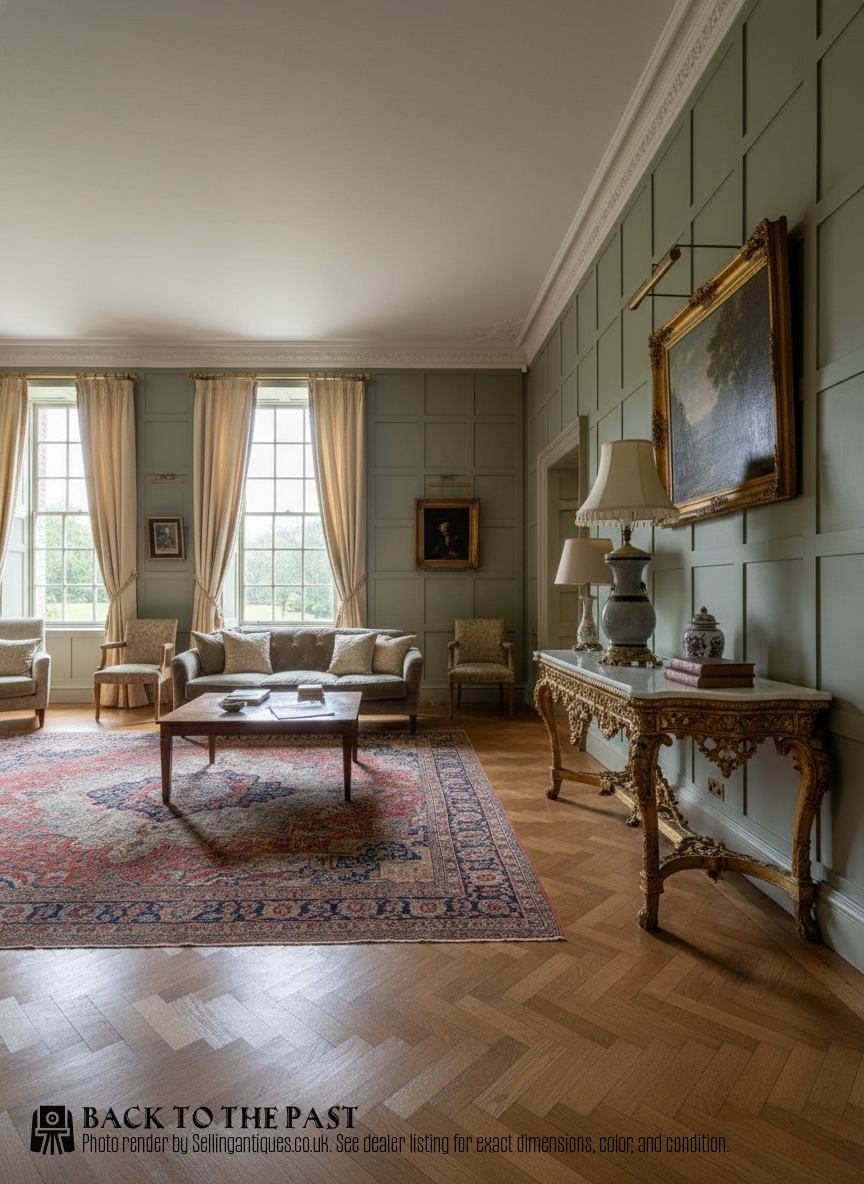
Crackle Glaze Lamp
When you search for a crackle glaze lamp, you are looking at table lamps formed from ceramic, porcelain, earthenware, and china bodies displaying a network of fine decorative fissures across the surface. The versions you are most likely to meet on this page originate from nineteenth century Chinese export workshops, alongside French and Japanese Meiji period examples adapted into lighting.
The forms span individual single lamps and matched pairs, frequently incorporating converted vases mounted with brass, gilt metal, or ormolu fittings. Stylistically, they draw heavily on Chinoiserie, Empire, and Victorian tastes, often paired with silk or fabric shades to complete the silhouette.
How they were made
The bodies of these pieces rely on ceramic, porcelain, and earthenware foundations, finished with specialised glazes designed to craze during cooling. Metal mounts in brass, gilt metal, and ormolu provide structural support and decorative bases for the converted vases.
Lighting conversion involves pairing these historic ceramic vessels with fabric and silk shades, combining traditional pottery techniques with period electrical or oil fittings.
Crackle Glaze Lamp Retail Price Guide 2026
Typical asking prices for crackle glaze lamp among the pieces listed under this phrase on Sellingantiques today, from the lower quarter to the upper quarter. They describe what is for sale here now, not the wider market.
Listings feature nineteenth century Chinese, French, and Japanese Meiji period ceramics mounted in brass, gilt metal, and ormolu.
What varies in quality
Quality rests in the harmony between the ceramic body and its metal mounts, where finer examples display precise ormolu or gilt metalwork that complements rather than overpowers the glaze. The control of the crazing pattern itself separates standard production from superior pieces, with tighter and more even crackle networks showing greater technical mastery.
The integrity of the conversion from vase to lamp also matters greatly, as does the condition of the original china, porcelain, or earthenware body beneath the glaze.
The Crackle Glaze Lamp Glossary
- Crackleware
- Pottery featuring a deliberate network of fine cracks in the glaze layer. This aesthetic effect is achieved during the cooling process in the kiln.
- Ormolu
- Gilded bronze or brass mounts applied to decorative objects and furniture. It provides a rich metallic contrast to ceramic bodies.
- Chinoiserie
- European artistic style reflecting Chinese motifs and techniques. It appears frequently in nineteenth century decorative arts.
- Meiji Period
- Era in Japanese history lasting from eighteen sixty-eight to nineteen twelve. Pieces from this time often show exceptional detail and craftsmanship.
Crackle Glaze Lamp: Frequently Asked Questions
Are these lamps converted from old vases?
Many examples on this page begin life as nineteenth century vases or jars before receiving electrical or mechanical fittings. This conversion practice allows historic ceramics to function as practical lighting.
Makers often paired Chinese blue and white or celadon vessels with brass and gilt metal mounts, turning decorative porcelain into functional table lamps.
How do I identify a nineteenth century piece?
Dating relies on examining the ceramic body, the style of the glaze, and the construction of the metal mounts. Nineteenth century pieces often display traditional Chinese export or Japanese Meiji period characteristics.
The presence of hand-finished brass, ormolu, or early wiring components further helps establish the age of the lamp.
Do these lamps come in pairs?
Matched pairs appear frequently among the listings, often created from symmetrical sets of nineteenth century vases. These pairs provide balanced lighting for sideboards or mantelpieces.
Single lamps also feature prominently, offering striking focal points for smaller tables or desks.
What styles are common in these lamps?
The aesthetic draws heavily on Chinoiserie, Empire, and Victorian design traditions. Blue and white porcelain, celadon glazes, and Satsuma earthenware dominate the visual vocabulary.
Fabric and silk shades complete the presentation, softening the light and complementing the textured ceramic finishes.