


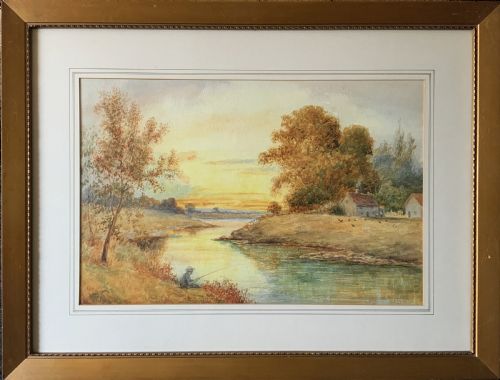


Countryside Watercolor
A countryside watercolor captures rural fields, rivers, and hamlets on paper through delicate pigment and brushwork.
Countryside Watercolor
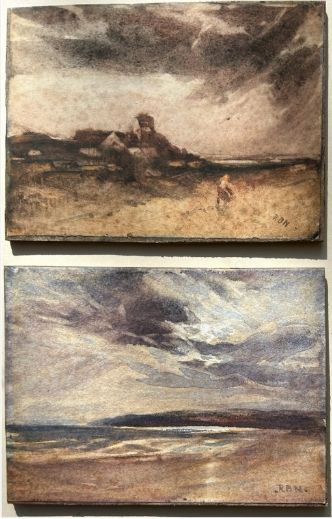
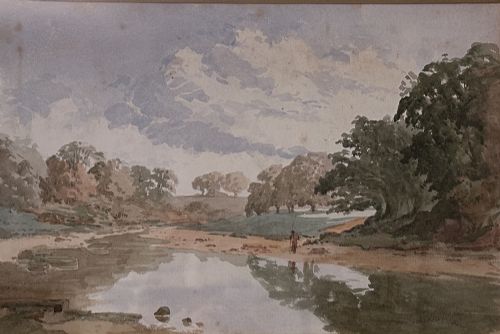
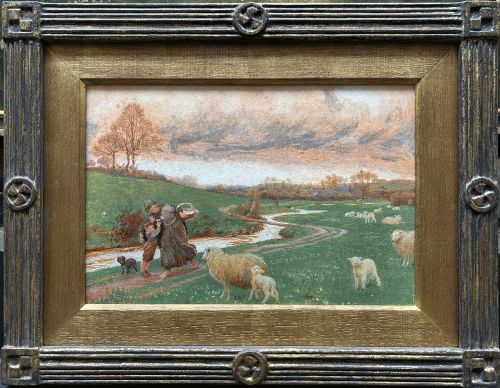
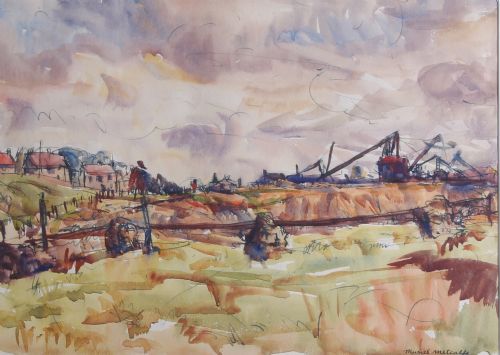
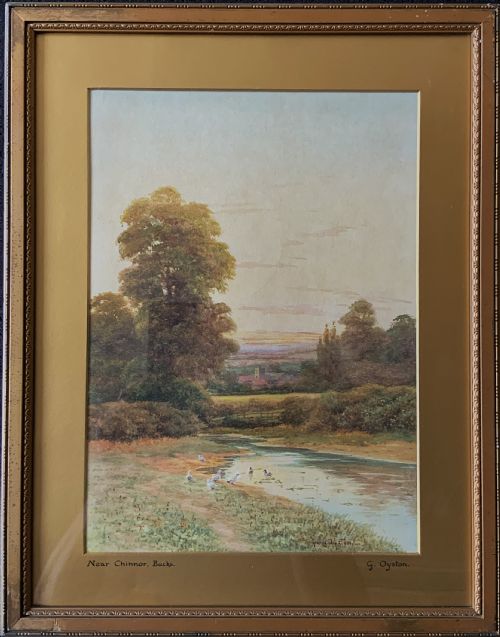
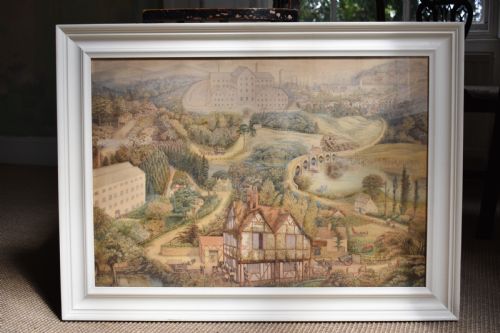
A countryside watercolor brings pastoral scenes, rural cottages, and riverbanks into domestic spaces through original framed works on paper. The selection spans the nineteenth century through the mid twentieth century, covering Victorian naturalism, Edwardian pastoral, and early twentieth century British movements.
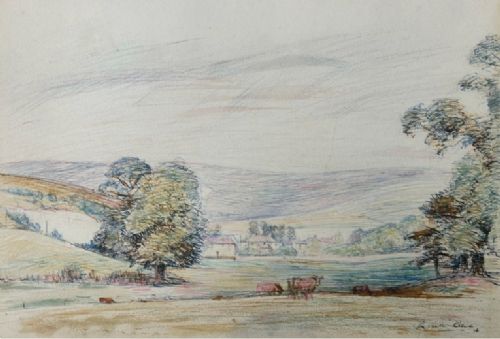
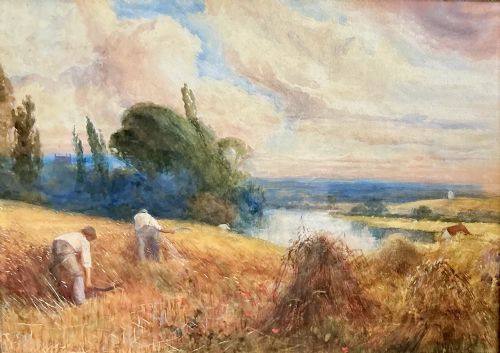
Most pieces meet the buyer as signed original paintings from named artists working across English, Scottish, Welsh, and Irish counties. Landscapes range from quiet Yorkshire dales and Dorset lanes to busy harvest scenes with figures and livestock.
Materials and Technique
These works rely primarily on watercolour pigment applied to paper supports, frequently augmented with graphite for preliminary sketching and fine detail. Many period examples retain their original wooden frames, sometimes accented with glass and gold leaf to protect the delicate surface.
Artists built depth through transparent washes of colour, allowing the white of the paper to illuminate skies and water. Control of pigment density and brushwork defined the transition from nineteenth century naturalism toward twentieth century regional expression.
Countryside Watercolor Retail Price Guide 2026
Typical asking prices for countryside watercolor among the pieces listed under this phrase on Sellingantiques today, from the lower quarter to the upper quarter. They describe what is for sale here now, not the wider market.
Listings feature works executed on paper using watercolour pigment and graphite, spanning the nineteenth century through the nineteen sixties.
Quality and Execution
Quality rests upon the artist's command of light, atmospheric perspective, and the structural integrity of the composition. Stronger works convey a distinct sense of place and season through confident brushwork rather than rigid documentation.
Condition of the paper and pigment stability separate finer examples from faded or heavily acid damaged sheets. Original framing and clear provenance from documented exhibitions or signatures also elevate a piece within the range.
Robert Buchan Nisbet·Muriel Metcalfe·Frederick Walker·George Oyston·Russell Sidney Reeves·Frederick Hines·Alfred George Morgan·Edgar Woollatt·Charles Gregory·Samuel Timmins·Henry Charles Fox·Fred Lawson·Cuthbert Crossley·George Graham·Arthur Tucker·James William Booth·Frederick Septimus Lewis·William Hoggatt·Thomas Hunn·Stanley Orchart·James Orrock·Robert Thorne Waite·Henry Bailey·Robert Winchester Fraser·George Arthur Fripp
The Countryside Watercolor Glossary
- Watercolour
- A painting method where fine pigment is suspended in a water soluble vehicle and applied to paper. This medium allows for luminous, translucent washes of colour.
- Graphite
- A form of carbon used for initial underdrawing beneath watercolour pigment. Artists utilised it to map composition lines before applying washes.
- Gold Leaf
- Hammered gold beaten into extremely thin sheets used to gild picture frames. It provides a warm, reflective border for Victorian and Edwardian works.
- Pastoral
- A style of fine art depicting rural life, shepherds, cottages, and agrarian landscapes. These scenes present an idealized view of the countryside.
- Support
- The underlying physical material upon which the artwork is painted. In these listings, paper serves as the primary support.
Countryside Watercolor: Frequently Asked Questions
What periods do these watercolors cover?
The works span from the nineteenth century through the Victorian and Edwardian eras into the nineteen thirties and sixties.
Most examples cluster around the late nineteenth and early twentieth centuries during the height of British landscape painting.
Are these paintings original works?
Every listed item is an original painting on paper rather than a reproduction or print.
Artists applied watercolour pigment by hand, often signing or initialing the completed landscape.
How should I frame and hang them?
Many pieces arrive in their original period wooden frames which complement the age of the artwork.
Keep them away from direct sunlight to prevent the watercolour pigments and paper from fading over time.
What subjects typically appear in these scenes?
Common subjects include rivers, harvesting scenes, thatched cottages, livestock in fields, and regional rural landmarks.
Locations span specific English, Scottish, Welsh, and Irish counties recorded by local topographical artists.