



Countryside Horse Painting
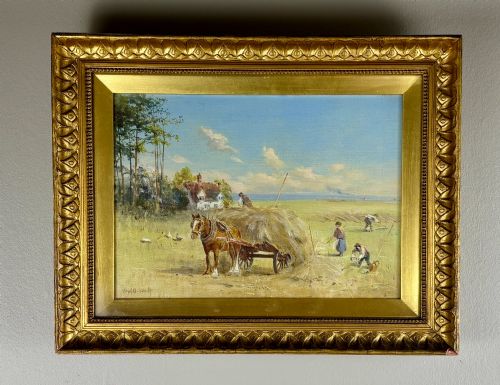
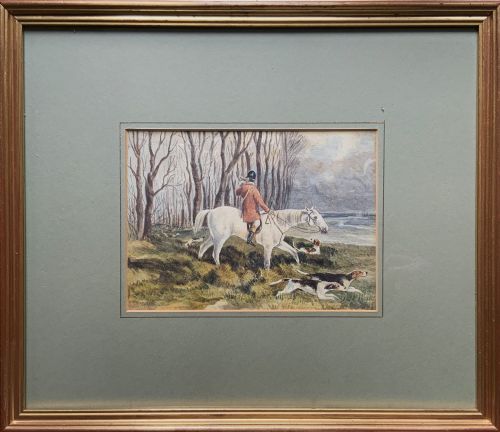
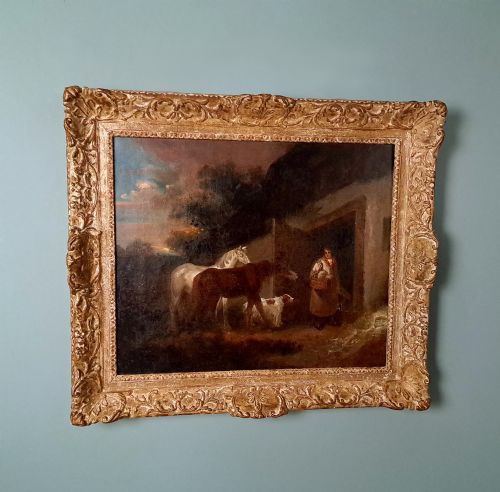
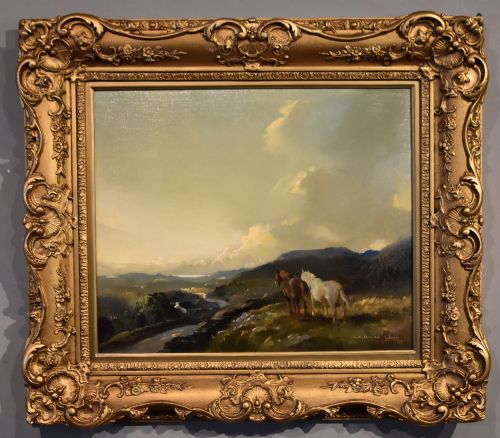
A countryside horse painting captures the rural working life of past centuries through oil on canvas or delicate watercolour.
Countryside Horse Painting
A countryside horse painting portrays rural scenes involving working animals, farm carts, and riders across pastoral landscapes.
The pieces most frequently met on this page date from the nineteenth and early twentieth centuries, spanning Victorian and Edwardian periods.
Works appear in various forms, including framed oil paintings, gouache, and watercolour paintings depicting rural life.
Materials and methods
Artists painted primarily with oil on canvas or applied watercolour and gouache onto paper.
Support materials frequently include prepared wood panels and stretched canvas housed within giltwood frames.
Countryside Horse Painting Retail Price Guide 2026
Typical asking prices for countryside horse painting among the pieces listed under this phrase on Sellingantiques today, from the lower quarter to the upper quarter. They describe what is for sale here now, not the wider market.
Listings feature works executed in oil on canvas, wood, paper, and giltwood from the nineteenth century to 1940.
Assessing quality
Quality rests on the precision of brushwork and the artist's ability to render the anatomy and movement of working horses accurately.
Composition and atmospheric depth separate accomplished pastoral landscapes from standard decorative works.
Thomas Thomas·William Joseph Shayer Senior·Vernon DeBeauvoir Ward·Charles Walter Simpson·John Sanderson Wells·James William Booth·John Linnell·Charles Faulkner·Will Anderson·Robert Hollands Walker·Basil Bradley·Herbert Royle·Rowland Henry Hill·W.A. Clark·Henry Charles Fox·Ernest Higgins Rigg·George Hamilton Constantine·George Turner·John Richard Worsdale·Georgina Lara·Edward Lloyd·Henry H Parker·William Kay Blacklock·Alfred George Stevens·Reginald Mills
The Countryside Horse Painting Glossary
- Oil on Canvas
- Pigment mixed with drying oil applied to a woven fabric stretched across a wooden frame.
- Watercolour
- Paint consisting of colour pigments suspended in a water-soluble binder, traditionally used on paper.
- Giltwood
- Wood carved and coated with a thin layer of gold leaf or gold paint, commonly found on traditional frames.
- Gouache
- An opaque water-based paint that includes a white pigment filler, producing a heavier finish than standard watercolour.
- British Impressionism
- An artistic movement focusing on light and everyday subjects, prominent in British painting from the late nineteenth century onward.
Countryside Horse Painting: Frequently Asked Questions
What periods do these paintings cover?
The works span from the nineteenth century through the 1940s, capturing Victorian and Edwardian pastoral scenes.
Many pieces originate from the late nineteenth century and the interwar decades.
How should I frame an antique painting?
Traditional giltwood or simple wooden frames complement the earthy tones and pastoral subject matter effectively.
Ensure the frame material suits the period of the specific canvas or paper work.
Where were these rural scenes painted?
Artists worked across British countryside locations, including Devon, Yorkshire, and Warwickshire.
Subjects often feature farmyards, country lanes, and agricultural labour.
Are these works created on canvas or paper?
Paintings utilise both oil on canvas and watercolour or gouache on paper supports.
Canvas works typically arrive framed in wood, while paper pieces often require protective glazing.