

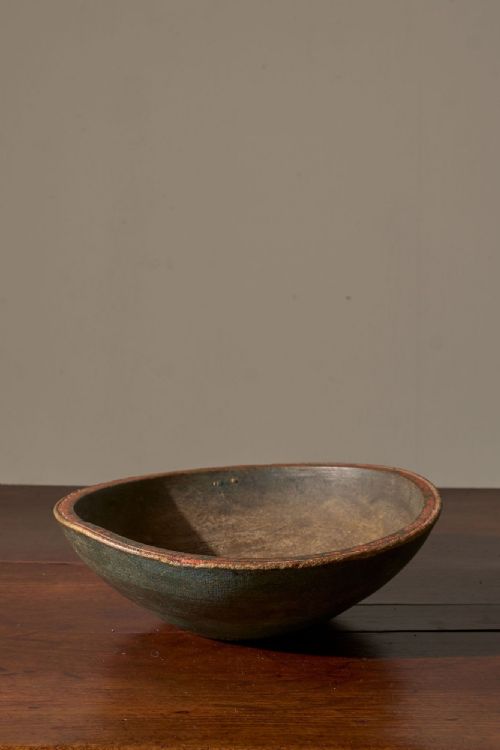
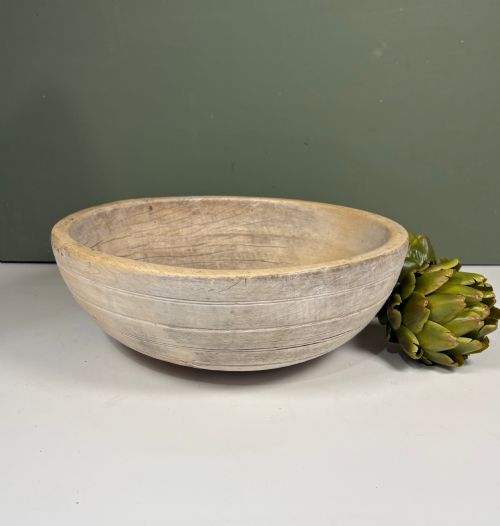


Country Treen Bowl
These country treen bowl pieces are honest domestic turned vessels shaped by hand from sycamore, ash, and fruitwood for daily kitchen and dairy work.
Country Treen Bowl
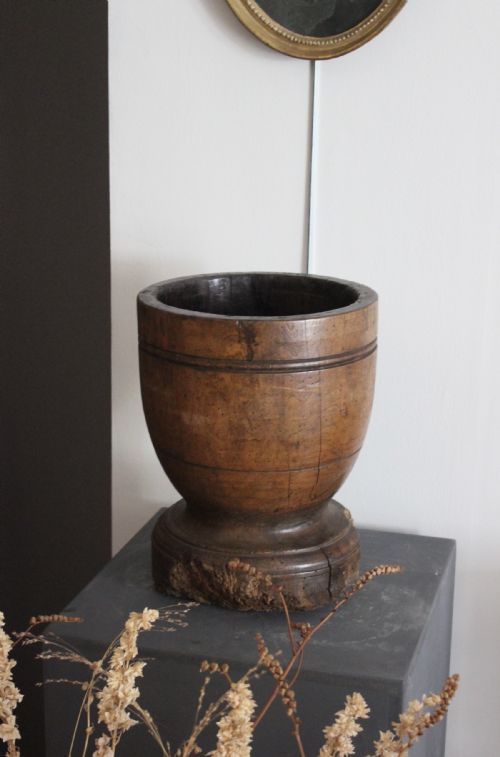
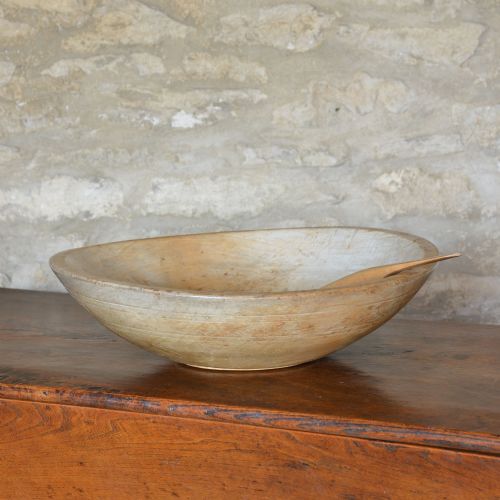
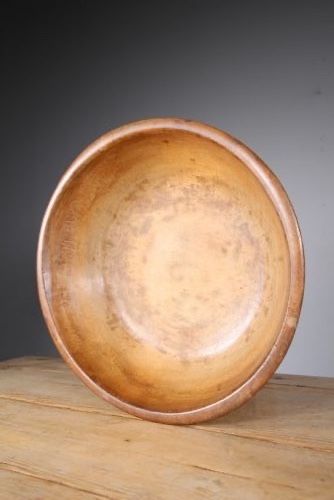
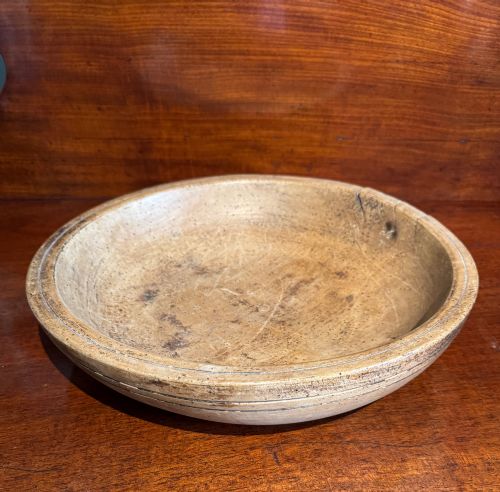
A country treen bowl represents the utilitarian wooden domestic ware used across farmhouses and dairies in the seventeenth, eighteenth, and nineteenth centuries. When searching for a country treen bowl, buyers encounter utilitarian forms like dairy bowls, mortars, platters, and scoops shaped from native timbers.
The pieces appearing on this page span several regional traditions, including English, Welsh, French Provincial, and Swedish Country origins. Most examples date from the nineteenth century, though earlier seventeenth and eighteenth century survivals also emerge.
These vessels served practical functions in rural kitchens, from skimming cream in dairies to presenting food at the table. Their simple turned profiles reflect the direct needs of rural life rather than courtly ornament.
How they were made
Turners shaped these vessels on pole lathes using green wood, primarily sycamore and fruitwood, which allowed the timber to move and warp slightly as it dried. This turning technique produced the characteristic circular walls and flat bases seen in dairy bowls and mortars.
Some larger platters and dug out bowls were carved directly from solid blocks of ash or pine using gouges and adzes rather than being turned on a lathe. Surfaces were often left plain, though occasional pieces retain traces of early paint or develop a warm patina through generations of scrubbing and handling.
Country Treen Bowl Retail Price Guide 2026
Typical asking prices for country treen bowl among the pieces listed under this phrase on Sellingantiques today, from the lower quarter to the upper quarter. They describe what is for sale here now, not the wider market.
Listings feature sycamore, ash, fruitwood, and pine across English, Welsh, French, and Swedish regional domestic traditions.
What varies in quality
The distinction between ordinary and superior pieces rests on the crispness of the turning, the balance of the proportions, and the depth of the surface patina. Timber selection also matters, as well-figured sycamore or richly grained fruitwood elevates a vessel beyond a purely utilitarian object.
Survival of original surfaces and minimal structural disturbance separate the best examples from those heavily altered by later sanding or aggressive cleaning. Wear that speaks to honest kitchen use enhances character, provided the rim and base retain their original integrity.
The Country Treen Bowl Glossary
- Treen
- Small handmade wooden domestic objects and utensils. The term derives from the old word for tree.
- Sycamore
- A pale hardwood favoured for dairy vessels because it did not impart taste or odour to milk, butter, or food. It is the most common timber found in these bowls.
- Dairy bowl
- A wide, shallow turned wooden vessel used in traditional dairies for setting milk and skimming cream. These bowls often feature flat bases for stability on slate or wooden dairy benches.
- Patina
- The deep sheen and surface texture developed on wooden objects over centuries through handling, washing, and waxing. It reveals the age and history of the piece.
Country Treen Bowl: Frequently Asked Questions
What were country treen bowls used for?
These wooden vessels served practical tasks in farmhouses and dairies, particularly for setting milk, skimming cream, and preparing food.
Larger bowls and platters also held provisions or served meals on the family table before ceramic and metal wares became common.
How do I care for a wooden bowl?
Keep wooden vessels away from direct heat sources and sudden temperature changes, which cause the timber to split or warp.
Clean them gently with a damp cloth rather than soaking them in water, and periodically apply a neutral mineral oil to nourish the dry wood.
How can I tell the age of a treen bowl?
Age is judged by tool marks left on the underside, the method of construction, timber shrinkage, and the quality of the surface patina.
Lathe-turned rings, peg holes, and distinct regional turning profiles also help place a piece within the seventeenth, eighteenth, or nineteenth centuries.
Why is sycamore so common in treen?
Sycamore timber contains little natural tannin or strong scent, making it ideal for vessels that held dairy produce and food.
Its tight grain also tolerated frequent scrubbing with sand and water without splintering during daily dairy work.