


Country Style Kitchen Table
A country style kitchen table anchors the room through sturdy timber and generations of everyday use.
Country Style Kitchen Table
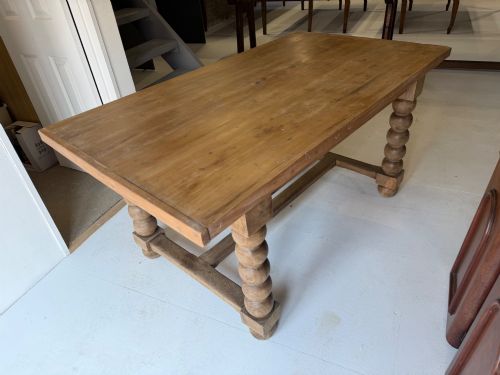
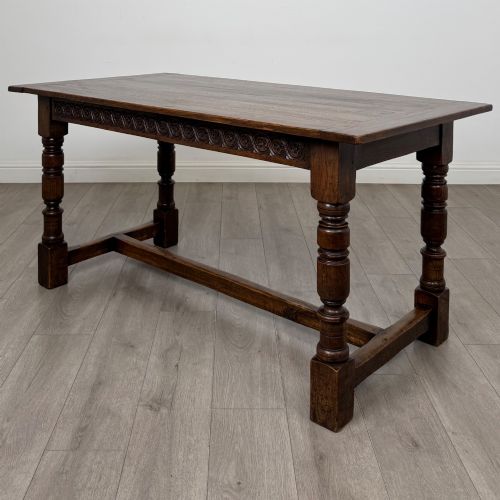
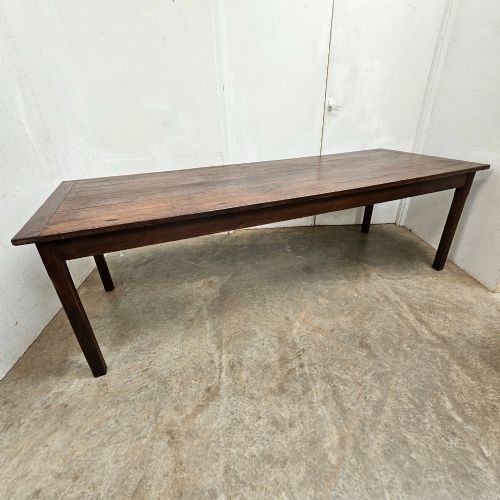
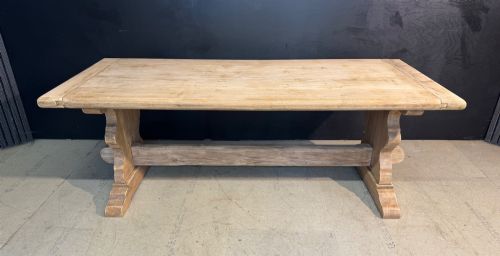
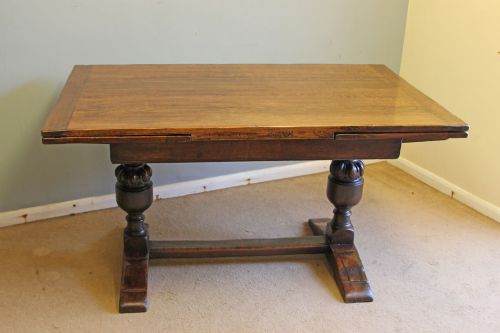
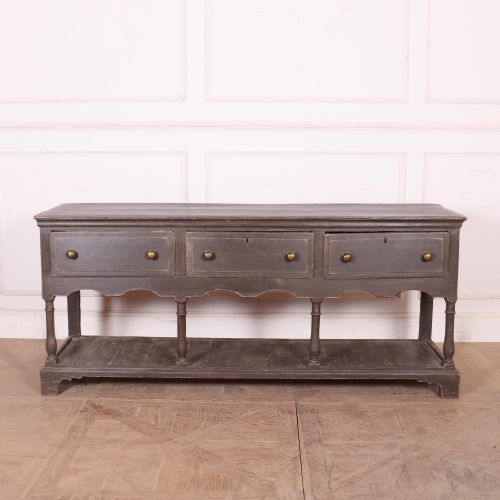
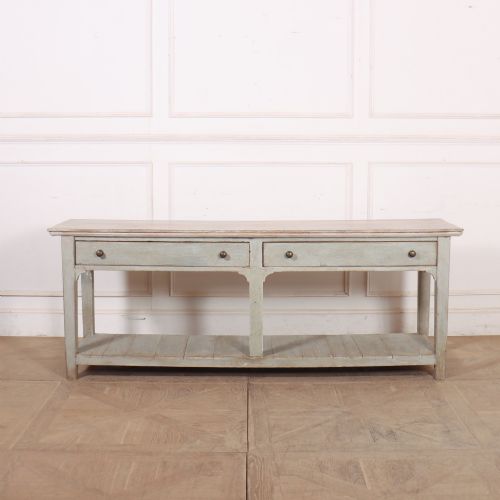
When searching for a country style kitchen table, buyers find robust dining tables, refectory forms, and potboard dresser bases originating from the eighteenth, nineteenth, and early twentieth centuries. These pieces emerge in styles ranging from English Country and Rustic Farmhouse to French Provincial, Scandinavian Country, and Gustavian. The most common examples meeting this search are oak refectory tables and painted pine or timber boards dating from the nineteenth century.
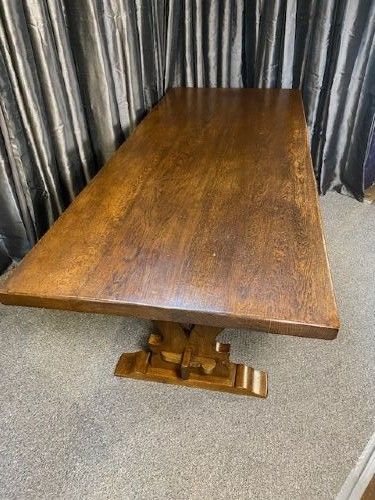
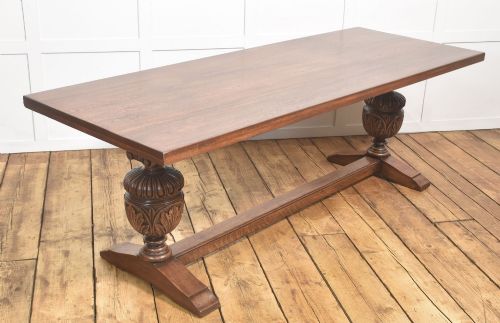
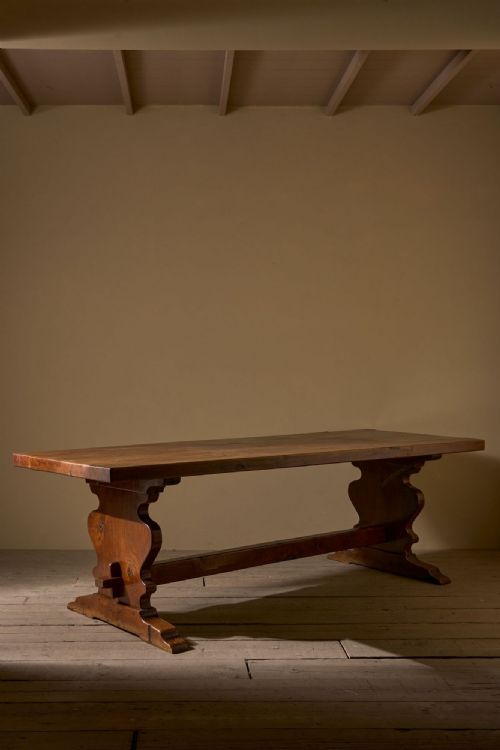
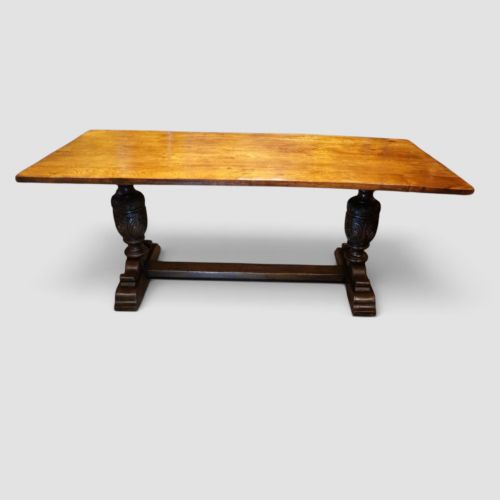
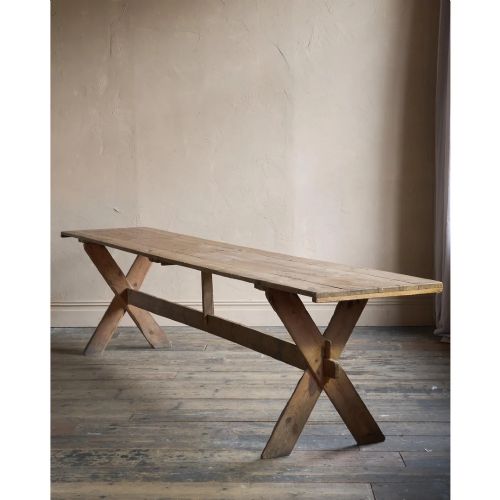
Many listings show structural variations such as trestle frames, draw leaves, gate legs, and extensions designed for practical tasks and large gatherings. Formats span straightforward pine dining surfaces to substantial oak refectory tables bearing historical revivals like Jacobean or Tudor motifs.
Judging Quality
Quality rests upon the integrity of the timber selection, such as the choice of solid oak or dense pine, and the stability of the structural joints. Tables featuring thick tops joined securely to sturdy refectory or trestle bases demonstrate superior physical endurance.
The sophistication of the surface finish also divides examples, where hand-painted layers, preserved patinas, and cleanly integrated extension mechanisms elevate the construction above simpler utility pieces.
Listings demonstrate that oak and pine are the dominant materials utilised across nineteenth-century refectory and dresser base forms.
The Country Style Kitchen Table Glossary
- Refectory table
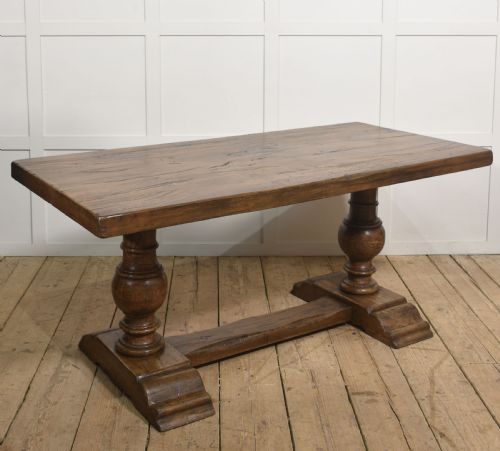
- A long dining table traditionally used in monastic refectories and later adopted in domestic country kitchens. These pieces typically feature heavy rectangular tops supported by substantial legs and floor stretchers.
- Dresser base
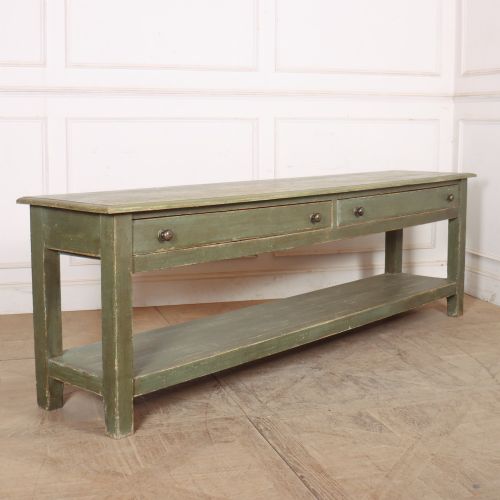
- A lower storage unit fitted with drawers and occasionally a potboard shelf underneath. They serve as versatile sideboards or serving tables in country interiors.
- Potboard
- An open slatted lower shelf built into the base of a dresser or serving table. It provides storage for heavy kitchen pottery and culinary equipment.
- Trestle table
- A table supported by two or more vertical frames connected by a horizontal beam. This design maximises legroom along the length of the surface.
- Draw leaf table
- An extending table equipped with sliding leaves stored beneath the main surface. Pulling them out increases the overall table length for larger groups.
Country Style Kitchen Table: Frequently Asked Questions
What defines a country style kitchen table?
These tables are defined by robust wooden construction, simple utilitarian forms, and regional European designs spanning the seventeenth through the early twentieth centuries. They prioritize everyday practicality over formal ornamentation.
Materials typically include solid oak, pine, and painted timber, reflecting English, French, and Scandinavian country traditions.
How do refectory and trestle tables differ?
Refectory tables feature four corner legs or inset supports connected by low stretchers, offering a solid and permanent frame. Trestle tables rely on end supports joined by a central beam to hold the top.
Both forms appear frequently in country kitchens, providing the stability needed for daily preparation and dining.
How should I care for an antique wooden table?
Maintenance involves protecting the timber from excessive moisture and sudden temperature shifts by using mats and keeping the surface clean with a damp cloth. Regular application of suitable wax helps preserve the finish.
Allowing the wood to breathe and avoiding harsh chemical cleaners maintains the natural patina accumulated over decades.
Are painted pine tables authentic to country styles?
Painted pine surfaces are entirely authentic, particularly within Swedish Gustavian and English provincial traditions where soft pigments protected the softwood underneath. These finishes developed distinct wear patterns through daily kitchen use.
Original paint layers provide historical context and visual character to nineteenth-century dining and preparation tables.