


Country Rustic Bar Stool
A country rustic bar stool brings tactile warmth and honest utility to a kitchen counter or home bar.
Country Rustic Bar Stool
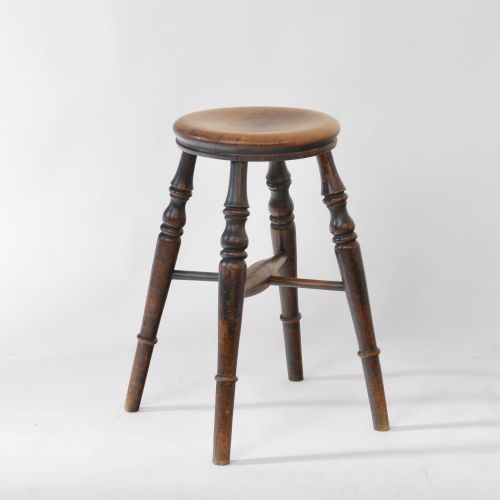
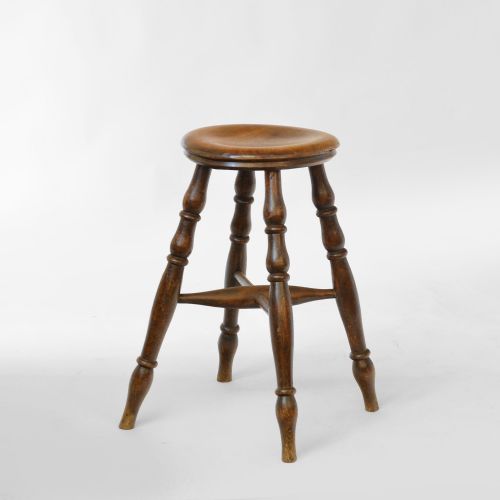
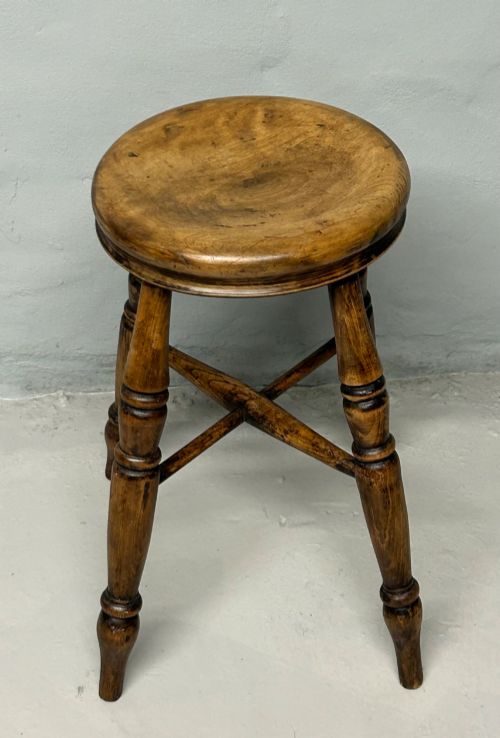
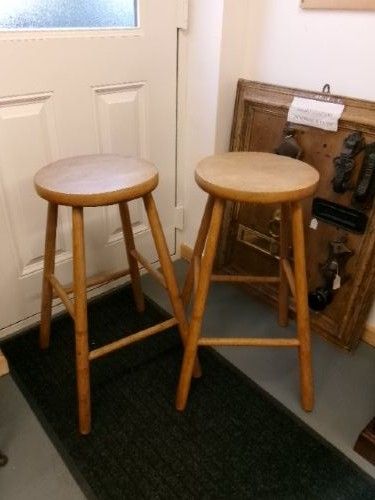
A country rustic bar stool represents tall seating designed for vernacular tavern, pub, or kitchen use rather than formal parlours. The pieces found here span the nineteenth century through to the early decades of the twentieth century, taking the form of pub stools, tavern stools, and high kitchen stools.
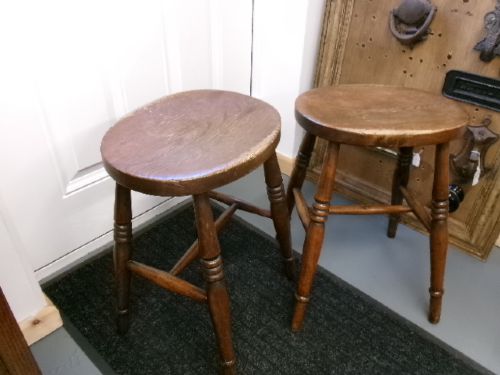
Most examples rely on traditional timber construction, often pairing solid elm tops with turned beech or hardwood legs. Makers created these functional objects for prolonged daily service in domestic and commercial settings, resulting in sturdy proportions and practical heights.
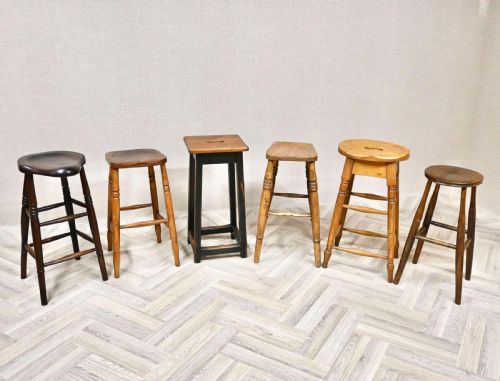
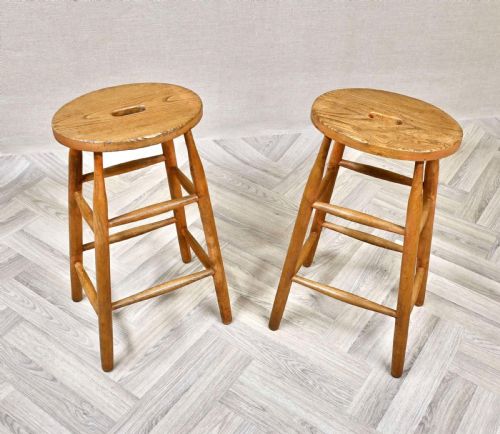
The aesthetic embraces plain honesty over ornamentation, drawing from Victorian country, rustic farmhouse, and vernacular traditions. Buyers encounter single items alongside matched pairs and larger assembled sets suitable for contemporary kitchen islands and home bars.
Materials and Construction
Makers utilised native hardwoods such as elm, beech, oak, sycamore, and pine, selecting timber for strength and resilience under heavy use. Solid elm frequently provides the thick seat base, prized for its resistance to splitting and rich grain pattern.
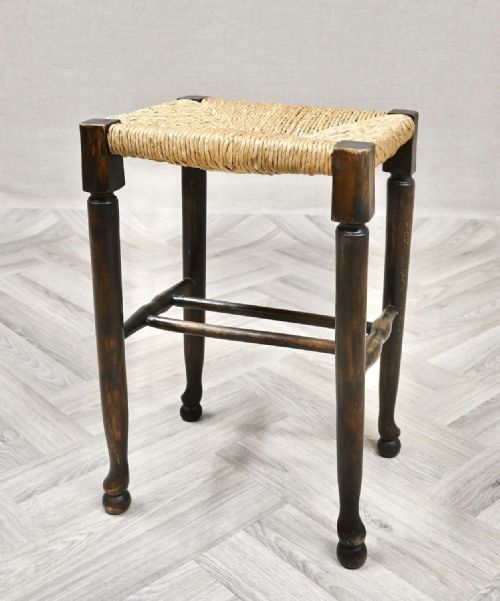
Turned beech and hardwood form the structural legs and stretchers, joined using traditional woodworking techniques that ensure rigidity without metal fasteners. Certain variants incorporate rush seating for added texture, while others feature carefully dished wooden tops shaped for comfort.
Listings feature solid elm, beech, and sycamore timbers shaped into tall pub and tavern stools throughout the nineteenth and early twentieth centuries.
Judging Quality and Character
Quality rests in the integrity of the timber and the honesty of the wear accumulated through decades of use. Solid construction without excessive replacement parts distinguishes superior examples from heavily restored alternatives.
Subtleties in the turning of the legs and the depth of the dished seat reveal the hand of the vernacular craftsman. Natural patination developed through years of everyday service adds considerable visual depth to the wood.
The Country Rustic Bar Stool Glossary
- Vernacular
- Everyday objects built by local craftspeople for practical utility rather than following grand architectural or courtly design movements. These pieces rely on regional traditions and readily available local materials.
- Dished top
- A seat surface hollowed or scooped out by hand or lathe to improve sitting comfort. This ergonomic shaping is typical of better quality nineteenth-century wooden stools.
- Stretcher
- Horizontal wooden brace connecting the legs of a stool to provide structural rigidity and stability. They often double as footrests on taller seating.
- Turned
- Shaped on a woodturning lathe to create cylindrical or decorative profiles for legs and supports. This method ensures uniform strength across structural components.
Country Rustic Bar Stool: Frequently Asked Questions
Are these stools comfortable for daily seating?
The solid wooden seats, often shaped with a dished contour, offer surprising support for everyday kitchen use. Many historical examples were built for long hours in public houses.
Pairing them with appropriate counter heights ensures proper ergonomics. Adding a loose cushion can further soften the wooden surface if desired.
How do I clean antique wooden stools?
Dust the timber regularly with a soft, dry cloth to prevent the buildup of dirt in the grain. Avoid harsh chemical cleaners that strip the historic wax and natural patina.
Feed the wood occasionally with a quality beeswax polish to maintain moisture and lustre. Keep them away from direct heat sources to prevent the timber from splitting.
Can I mix different styles around a bar?
Combining various nineteenth-century regional styles creates an authentic farmhouse aesthetic rather than a rigid uniform look. Look for similar heights and seat materials to maintain visual harmony.
Matching sets appear alongside individual finds, allowing flexibility in your arrangement. The shared vernacular DNA bridges minor differences in turning and timber.
How do I date an older wooden stool?
Examine the tool marks, timber shrinkage, and the nature of the joinery beneath the seat. Hand-turned legs and genuine wear patterns indicate nineteenth-century production or earlier.
French polishing, staining techniques, and wood species also offer clues to the era of manufacture. Consulting the listed period provides a reliable guide to each piece's age.