

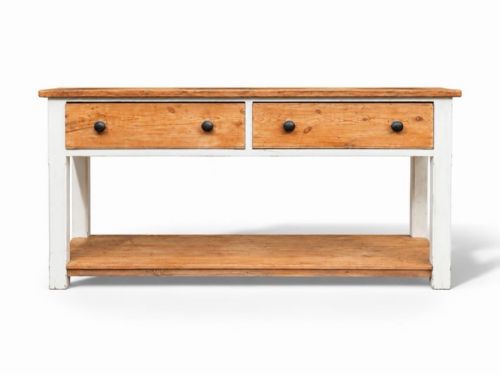
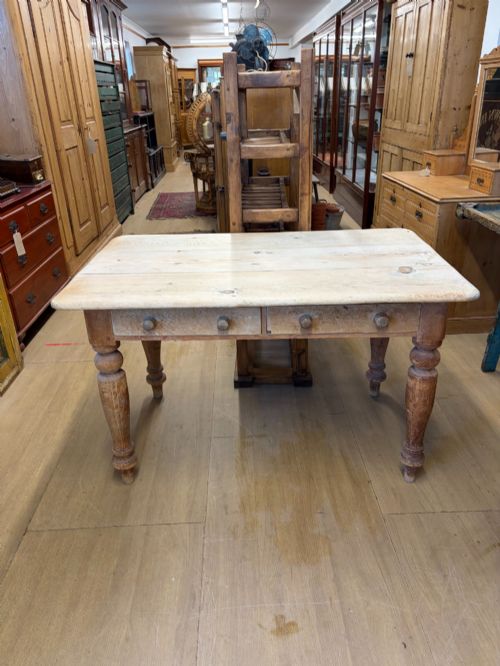
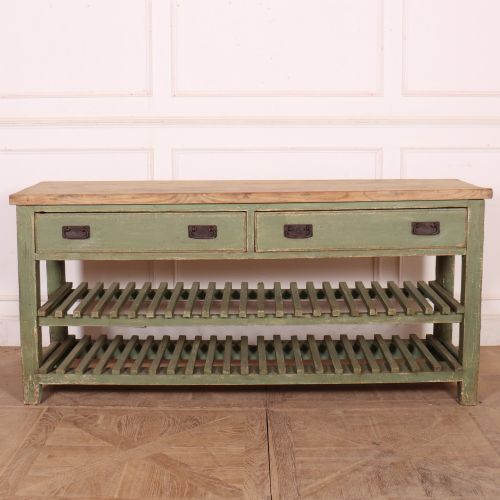
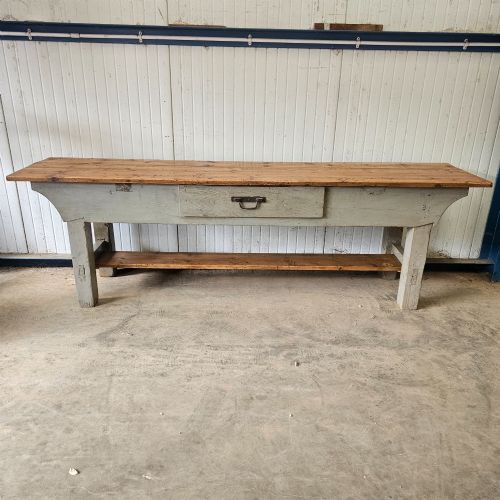
Country Pine Console
A country pine console brings the honest, hard-working character of domestic utility furniture straight into a modern hallway or living space.
Country Pine Console
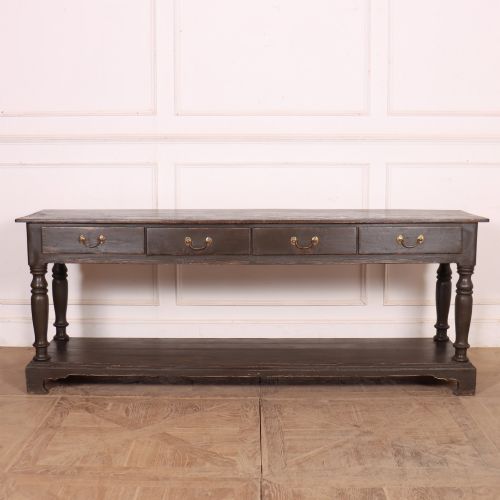
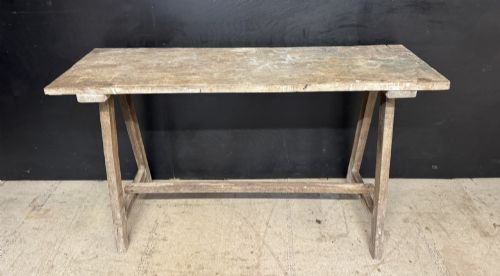
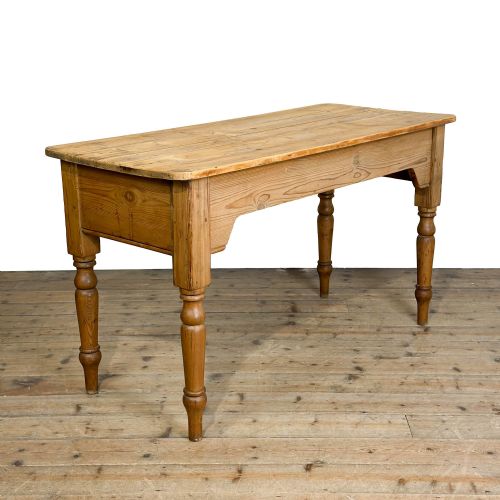
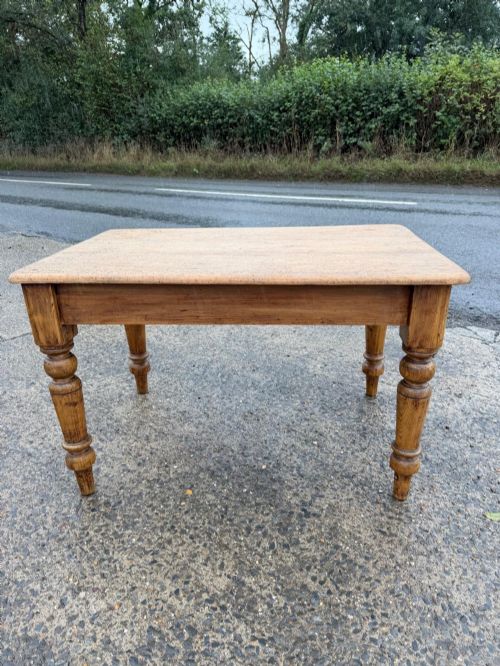
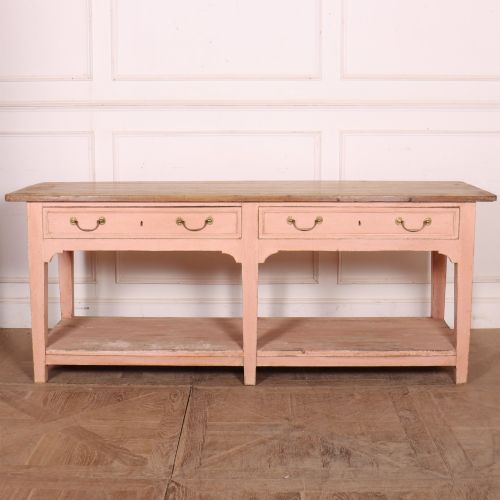
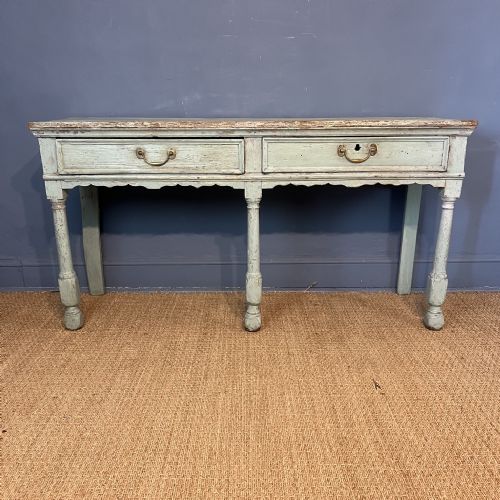
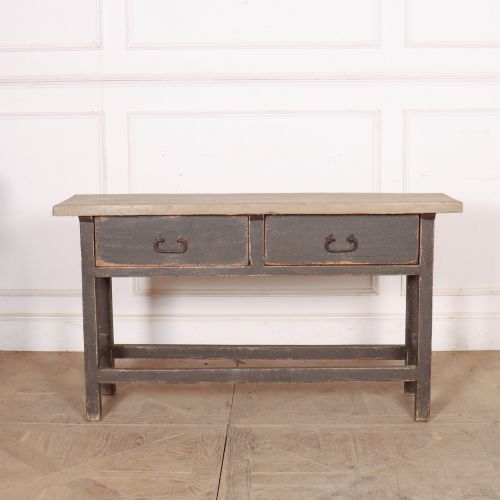
When searching for a country pine console, you encounter a varied selection of utilitarian furniture adapted from domestic and agricultural settings, including side tables, serving tables, and dresser bases. These pieces span from the eighteenth century through the Victorian era and into the early twentieth century, reflecting regional vernacular traditions from England, Scotland, Wales, France, Sweden, and Italy.
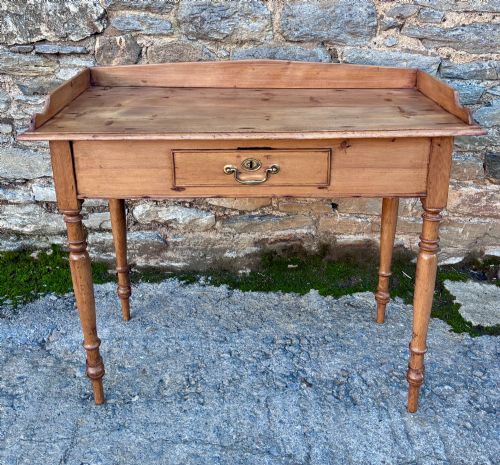
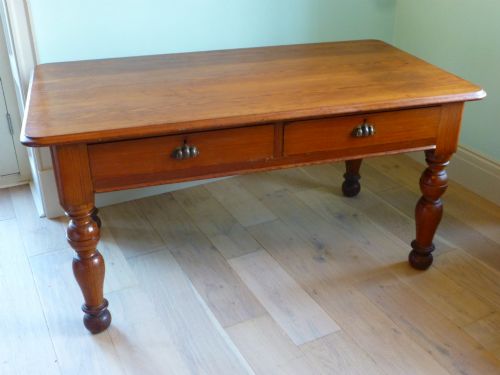
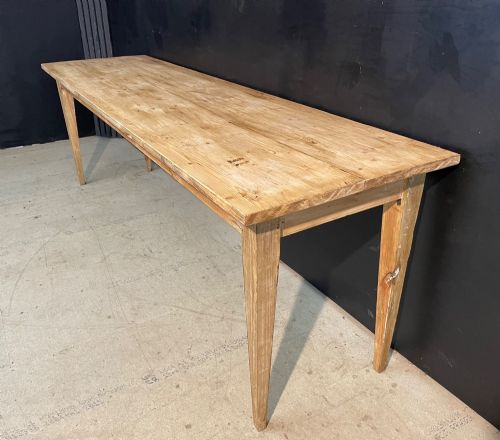
The form typically takes shape as a narrow table, washstand, or low dresser base suited to hallways, kitchens, and living areas where floor space is at a premium. Side tables and scrub-top kitchen tables frequently double as consoles thanks to their generous proportions and narrow depths.
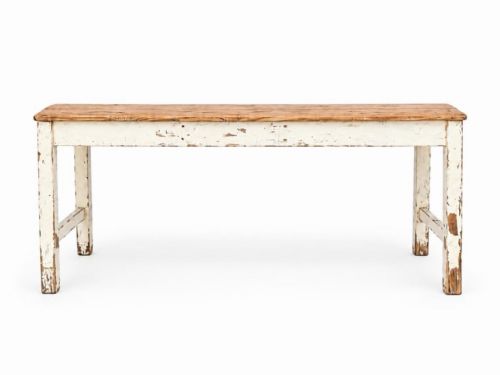
Surviving examples range from plain waxed timber surfaces to heavily painted or scumbled finishes that record decades of daily household use.
Materials and construction methods
Construction relies primarily on pine and painted timber, frequently paired with secondary woods like sycamore for prep surfaces and iron, brass, or metal for drawer pulls and structural bracing. Cabinetmakers utilised robust mortise and tenon joinery to ensure these worktables and serving surfaces could withstand heavy domestic labour.
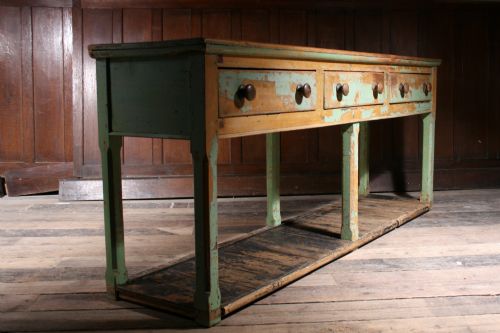
Many items retain their original paint, scumble finishes, or potboards beneath, showing how utilitarian furniture was protected and periodically refreshed by generations of owners. Unpainted examples display waxed finishes that highlight the natural grain and knots of the softwood timber.
Country Pine Console Retail Price Guide 2026
Typical asking prices for country pine console among the pieces listed under this phrase on Sellingantiques today, from the lower quarter to the upper quarter. They describe what is for sale here now, not the wider market.
Judging quality and integrity
Quality in these pieces rests heavily on the survival of original surfaces, such as early paint layers and scumble glazes, rather than pristine factory perfection. Tables featuring unwashed scrub-tops, potboards, and original drawers demonstrate superior historical integrity compared to heavily restored examples.
Proportions also dictate the distinction between everyday utility items and finer regional pieces, with well-balanced legs, sturdy stretchers, and untouched hardware elevating a simple worktable into a striking architectural console.
The Country Pine Console Glossary
- Potboard
- An open slatted lower shelf fitted beneath a dresser base or console, originally designed for storing heavy pots and pans off damp floors.
- Scumble
- A decorative paint technique involving translucent glazes dragged or combed over an opaque base coat to imitate the rich grain of more expensive hardwoods.
- Scrub-top
- A solid timber tabletop left unpainted and unvarnished, designed to be repeatedly scrubbed clean with water and sand after food preparation.
- Frieze
- The horizontal architectural band directly beneath the tabletop, frequently housing one or more narrow storage drawers.
- Washstand
- A dedicated domestic wash unit featuring a timber top designed to hold a basin and pitcher, now frequently repurposed as a narrow hallway console.
Country Pine Console: Frequently Asked Questions
What is a country pine console?
A country pine console is typically a narrow antique table, dresser base, or washstand originally used in kitchens, dairies, and sculleries. These versatile pieces now serve effectively as hallway tables or living room furniture.
They combine practical storage drawers and lower shelves with the rustic charm of aged softwood and painted finishes.
How do I style a pine console?
These tables fit naturally into hallways, dining rooms, and kitchens where their narrow depths leave walkways clear. Their rustic character anchors modern spaces and provides a functional surface for lamps, books, and decorative objects.
Pairing a painted console with neutral walls lets the historic texture and original brushwork of the timber stand out.
How do I date an old pine table?
Dating relies on examining construction methods, timber selection, and surface treatments like early paint layers or wax patination. Eighteenth-century and early nineteenth-century pieces often feature hand-cut joints and vernacular proportions distinct from later Victorian factory production.
Hardware styles and the presence of secondary woods also offer clear clues to a piece's era of origin.
Are painted pine consoles original?
Many surviving pieces retain early or original paint, scumble, or milk paint finishes applied to protect the softwood timber. The presence of wear and layered patina indicates genuine domestic history rather than modern decorative distressing.
Inspect the surface closely to see how the paint has settled into the grain and around the joints over decades of use.