
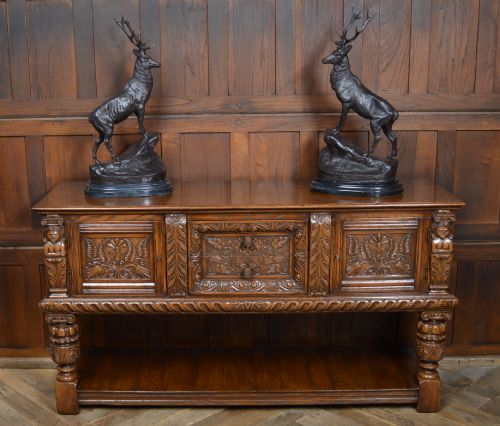


Country Oak Hallway Table
A country oak hallway table grounds an entrance with honest timber, combining enduring utility with the quiet warmth of regional craftsmanship.
Country Oak Hallway Table
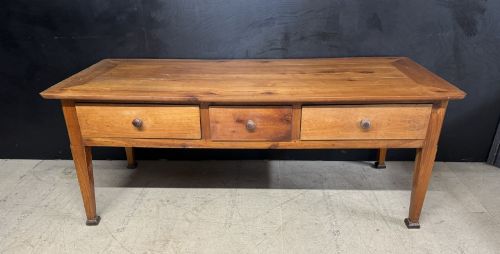
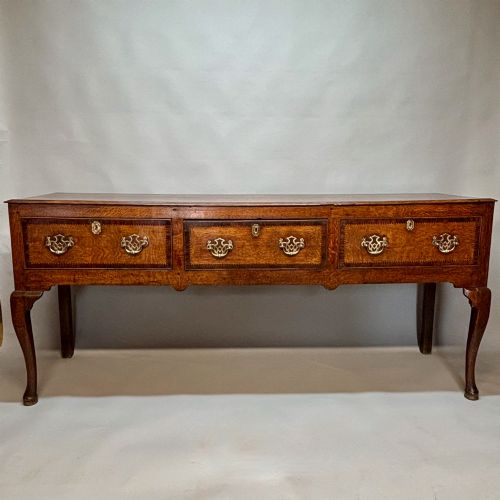
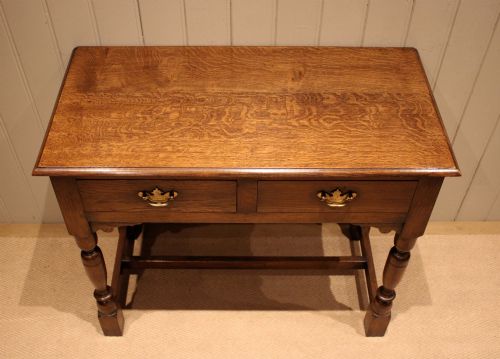
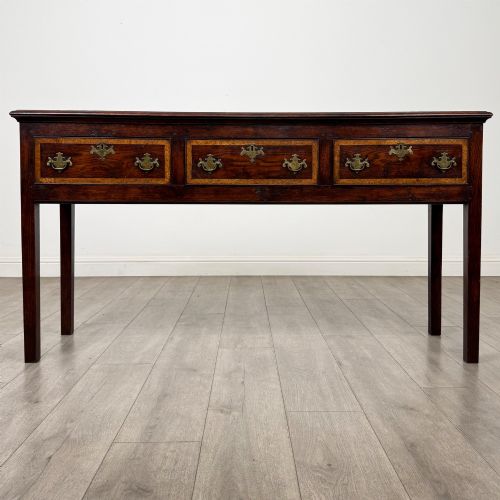
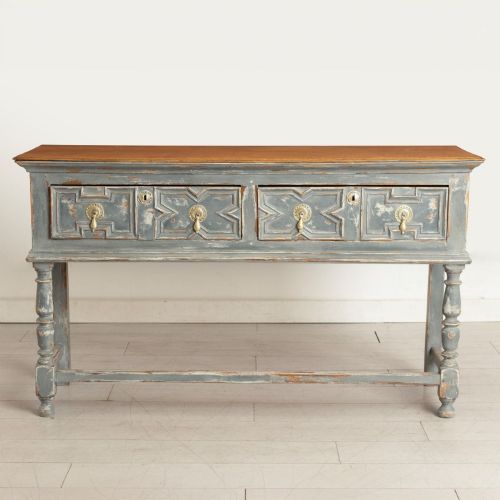
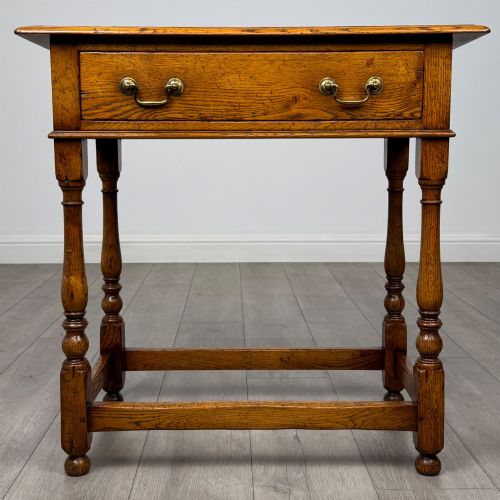
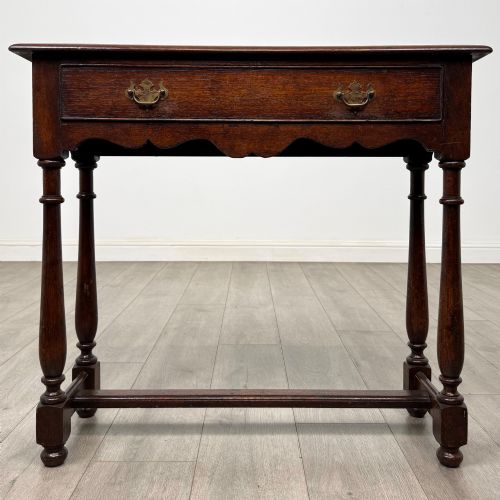
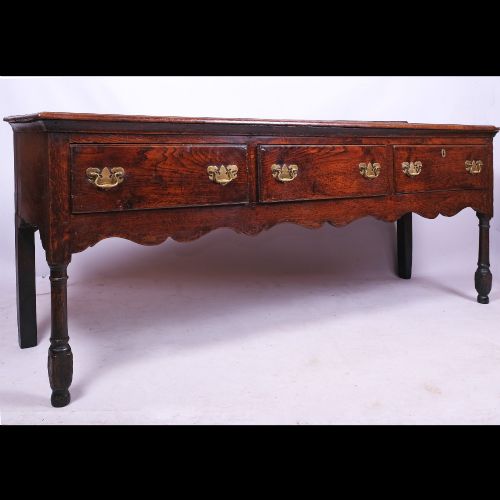
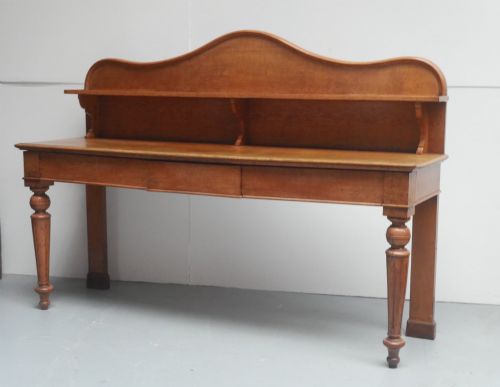
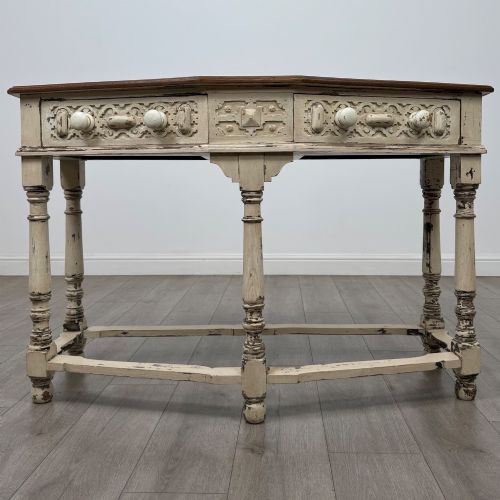
A country oak hallway table encompasses sturdy side tables, low dresser bases, and narrow console pieces designed to sit neatly in passage spaces. These forms emerge from the eighteenth and nineteenth centuries, alongside later Edwardian and revival interpretations that keep traditional proportions alive.
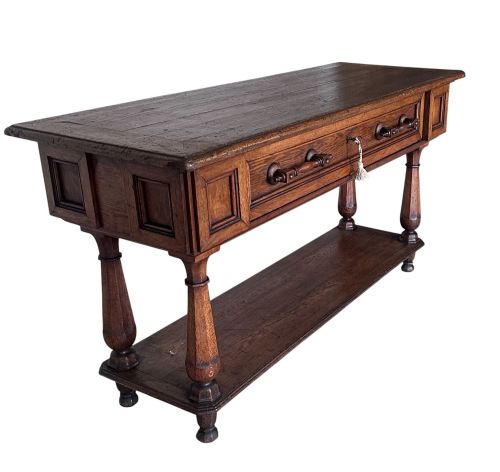
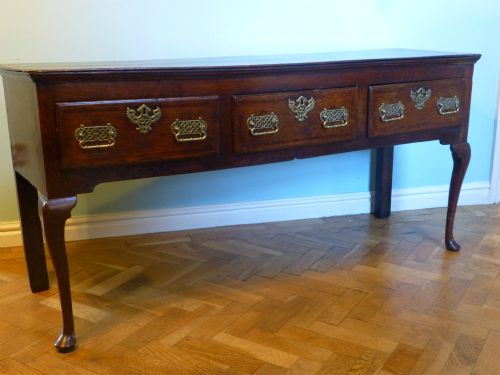
The pieces listed here lean heavily toward oak construction, drawing on English, Welsh, Scottish, French, and Hungarian origins. They frequently feature drawer arrangements, pot boards, or cabriole legs suited to domestic service.
Buyers seeking a country oak hallway table typically encounter sturdy side tables and dresser bases adapted from kitchen and dining origins to function as welcoming hallway furniture.
What varies in quality
Subtlety of proportion and timber selection set finer examples apart from later mass-produced items. Grain pattern, board width, and the integrity of the original joints dictate structural longevity.
The handling of secondary materials, such as brass hardware and leather inserts, indicates the relative ambition of the workshop. Refined leg turnings and precise drawer fits separate superior baseline carpentry from utilitarian utility work.
A Hungarian pig bench sits quietly among the oak tables, proving that rustic utility seating easily finds a second life holding hallway post.
The Country Oak Hallway Table Glossary
- Dresser base
- A low utilitarian table fitted with drawers and occasionally a lower shelf or pot board, originally used for serving food in kitchens before entering the hallway.
- Pot board
- An open lower shelf built between the legs of a dresser base, traditionally designated for storing heavy pots and pans.
- Cabriole leg
- A furniture leg that curves outward at the knee and tapers inward toward the foot, drawing on classical furniture traditions.
- Demi-lune
- A half-moon shape utilised in console tables designed to sit flush against an entrance wall.
- Refectory
- A long narrow table style adapted here into sturdy benches and serving formats drawing on tavern and monastic origins.
Country Oak Hallway Table: Frequently Asked Questions
Where should I place a country oak hallway table?
These tables suit narrow entranceways, landings, and passages where surface space is needed without blocking movement. Their shallow depth allows them to sit comfortably against plaster walls.
Pair them with functional items like umbrella stands or mirrors to complete an entrance arrangement while maintaining clear floor pathways.
How do I distinguish eighteenth century from Edwardian oak tables?
Eighteenth-century examples display hand-cut joinery, pegged framing, and timber surfaces shaped by early tools. Their patination develops from centuries of domestic handling.
Later Edwardian and revival pieces often utilise more uniform machine-sawn boards and standardised hardware while imitating earlier regional styles.
Can these tables hold heavy daily items?
Solid oak construction provides inherent structural rigidity designed for heavy domestic service. Dresser bases and serving tables were built to support substantial loads.
Routine placement of keys, lamps, and post causes no strain to these sturdy hardwood frames.
What maintenance does a timber hallway table need?
Regular dusting with a dry cloth keeps the surface clear. Occasional application of quality beeswax maintains the moisture and natural lustre of the oak grain.
Avoid placing untreated timber directly next to active heat sources to prevent board movement.