


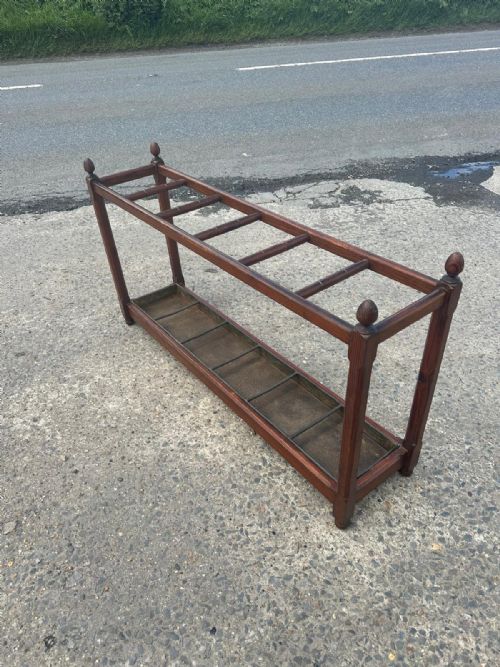
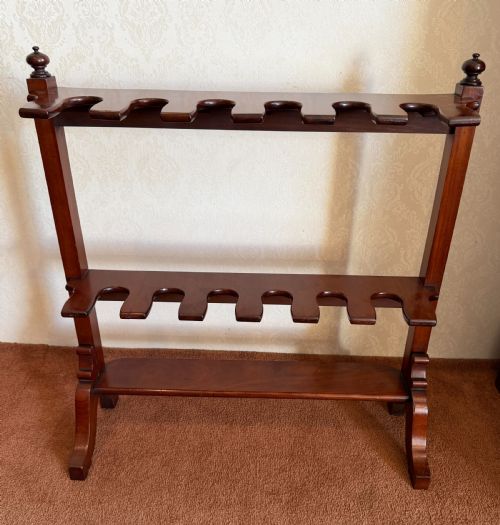
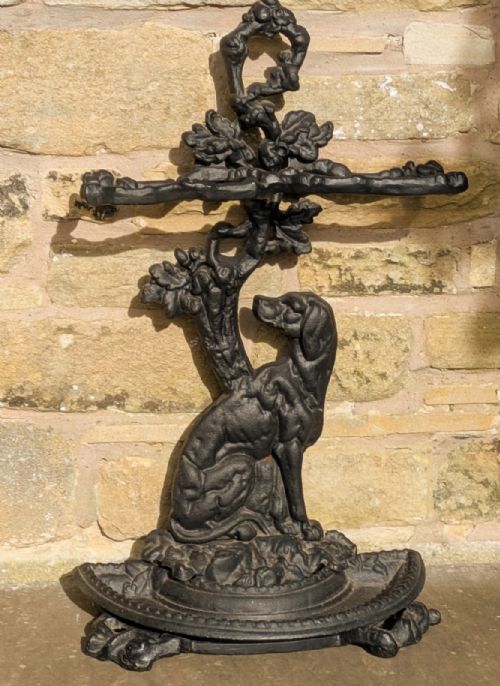


Country House Stick Rack
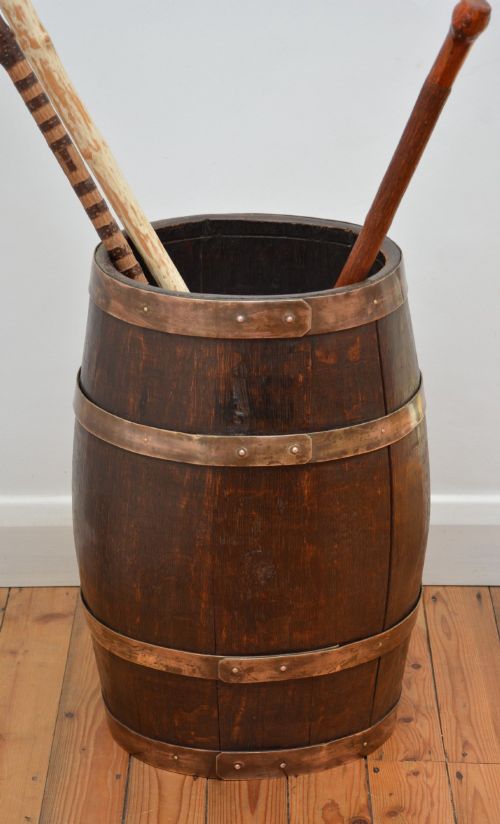
A country house stick rack is a sturdy hall furnishing designed to hold walking canes, riding crops and wet umbrellas with functional elegance.
Country House Stick Rack
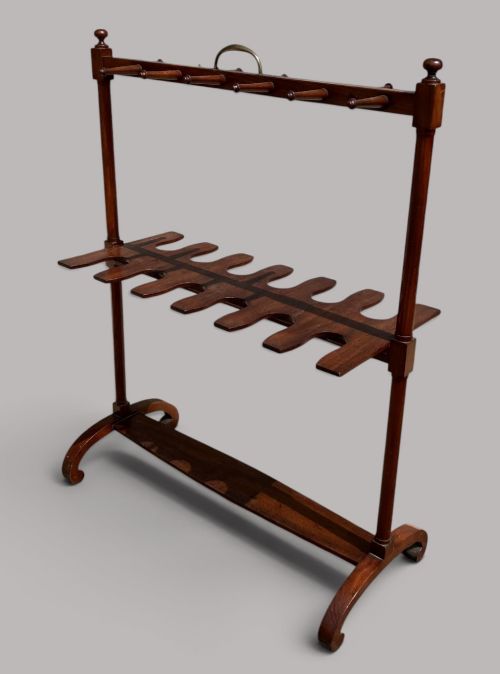
A country house stick rack serves as a practical entryway piece for organising walking aids and wet weather gear. Buyers encounter formats ranging from simple division stands to elaborate hall furniture incorporating boot storage and whip holders.
The pieces on this page span the Regency, Victorian and Edwardian eras, alongside later interpretations from the early twentieth century. Common stylistic expressions include Gothic Revival, Arts and Crafts and utilitarian English country house designs.
Formations vary from compact demi-lune oak units to large twenty-four division stands and heavy cast iron figures. Origins encompass Scottish and English workshops, reflecting the diverse requirements of large domestic estates.
Materials and construction
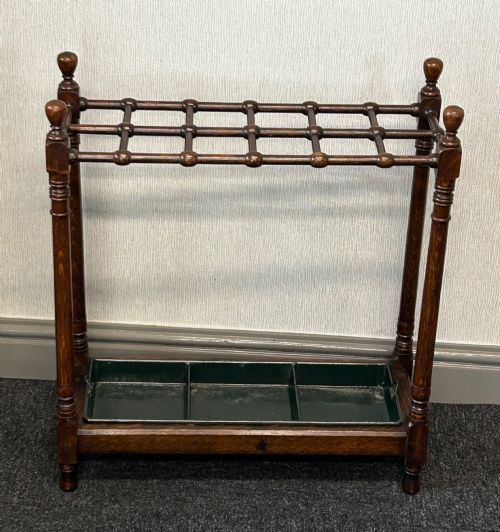
Cabinet makers utilised dense hardwoods such as oak, mahogany and pitch pine to withstand the daily moisture and weight of heavy walking gear. These timber frames often feature fielded panels, turned spindles and robust corner joints.
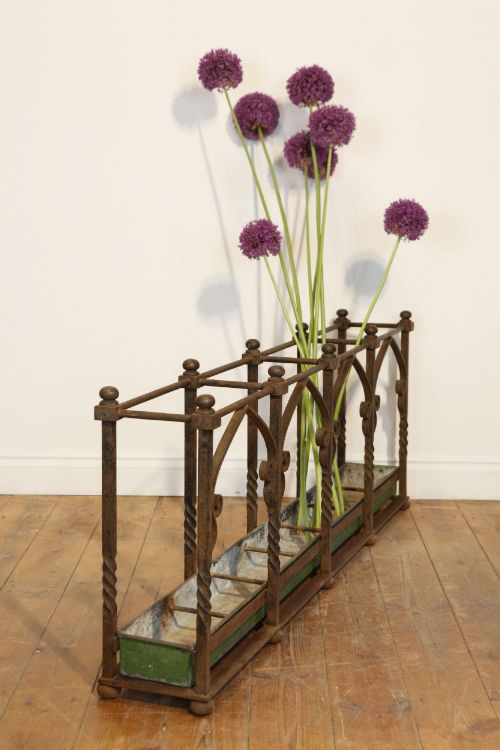
Metal components introduce durability through cast iron frames, brass rails and zinc drip trays designed to catch rainwater. The integration of metal with timber provides structural stability for handling heavy umbrellas and riding boots.
Country House Stick Rack Retail Price Guide 2026
Typical asking prices for country house stick rack among the pieces listed under this phrase on Sellingantiques today, from the lower quarter to the upper quarter. They describe what is for sale here now, not the wider market.
Listings feature items built from oak, mahogany, pitch pine, cast iron, brass and zinc across the Regency, Victorian and Edwardian periods.
Judging build and character
Quality rests upon the integrity of the joinery and the retention of original drip trays, which frequently suffer from corrosion or replacement over time. Superior examples display thoughtful timber selection and secure division framing that resists the loosening effects of heavy use.
The presence of maker attribution, such as documented London firms or notable foundry marks, distinguishes standard utilitarian output from pieces commissioned for prominent country residences. Original surface patination on both the timber and metal elements further elevates the standing of an individual piece.
Heals of London·Coalbrookdale
The Country House Stick Rack Glossary
- Demi-lune
- A half-moon shape characteristic of hall furniture designed to sit flush against an entryway wall. This configuration maximises floor space while providing adequate depth for umbrella storage.
- Pitch pine
- A resinous North American pine utilised for its durability and prominent grain pattern. Victorian cabinet makers favored it for functional hallway pieces requiring moisture resistance.
- Gothic Revival
- An architectural and decorative style drawing inspiration from medieval forms. Pieces embodying this aesthetic often feature pointed arches, tracery and robust proportions.
- Cast iron
- An alloy melted and poured into moulds to create rigid decorative frameworks. It appears frequently in heavier umbrella stands and sculptural animal figures designed to anchor the base.
- Drip tray
- A removable metal basin positioned at the base of a stand to catch water from wet umbrellas. Zinc and brass versions protect underlying flooring from moisture damage.
Country House Stick Rack: Frequently Asked Questions
Where should I place a stick rack?
These pieces suit entrance halls, boot rooms and corridors where outdoor gear gathers naturally. Their narrow footprint allows them to sit comfortably against hallway walls without obstructing passage.
Ensure adequate clearance around the stand so wet umbrellas and walking sticks can be retrieved easily without disturbing surrounding furniture.
How do I protect timber from wet umbrellas?
Most traditional stands rely on integrated metal drip trays to catch moisture before it reaches the wooden base. Emptying and drying these trays regularly prevents standing water from damaging the interior.
Applying a suitable wax polish to the surrounding wood creates a natural barrier against incidental splashes and damp atmospheric conditions.
What is the difference between an umbrella and stick stand?
Umbrella stands typically feature wider circular or square divisions designed to accommodate fabric canopies and handles. Stick stands often incorporate narrower apertures, divider grids, or supplementary racks for whips and riding boots.
Many period examples combine both functions within a single piece of hall furniture to serve multiple household pursuits.
How can I tell a Victorian stand from an Edwardian one?
Victorian examples often favour heavier proportions, darker woods like mahogany, and ornate Gothic or decorative cast iron detailing. They frequently incorporate substantial umbrella capacities and deep drip pans.
Edwardian pieces tend toward lighter oak frames, simpler Arts and Crafts lines, and more restrained geometric divisions reflecting changing domestic tastes.