


Country House Low Chair
A country house low chair offers deep seating and low proportions, built for relaxed lounging in traditional sitting rooms.
Country House Low Chair
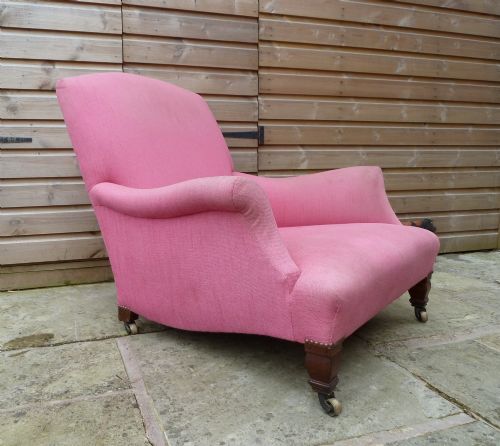
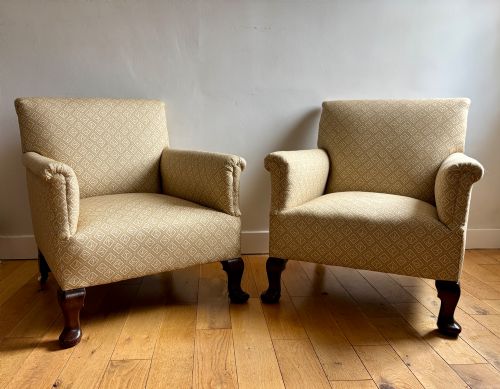
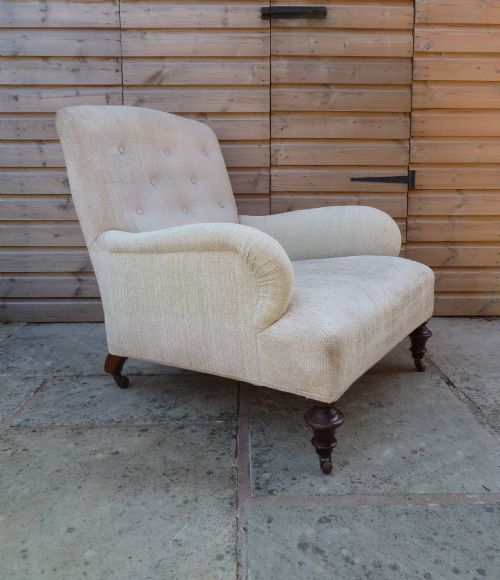
When you search for a country house low chair, you look at deep-seated, upholstered armchairs designed primarily for comfort rather than formal posture. The version you are most likely to meet on this page dates from the nineteenth century or the Edwardian period, often reflecting the distinctive upholstered forms associated with Howard and Sons.
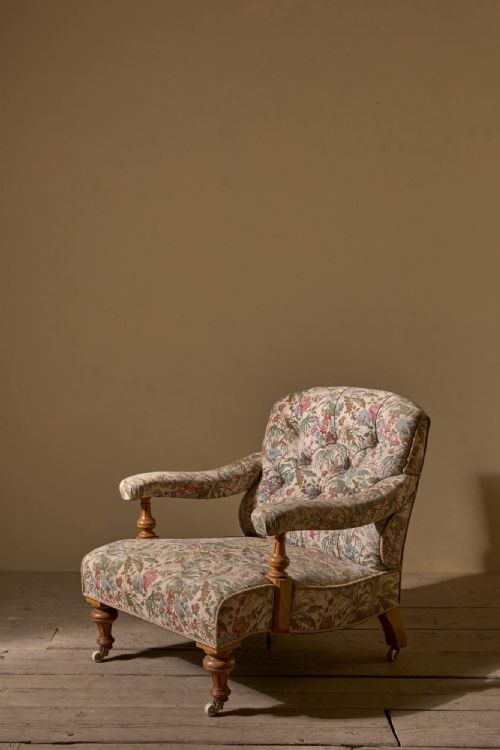
These pieces encompass club armchairs, slipper chairs, and low open armchairs originating from English and Scottish country houses. Makers such as Howard and Sons, Hindley and Sons, and Whytock and Reid shaped this tradition, producing low-slung frames covered in ticking, heavy fabric, or carpets.
The aesthetic prioritises sprawling ease, low centres of gravity, and generous proportions suited to relaxed domestic interiors. While some examples display Victorian or Edwardian stylistic traits, the core function remains uninterrupted lounging.
How they were made
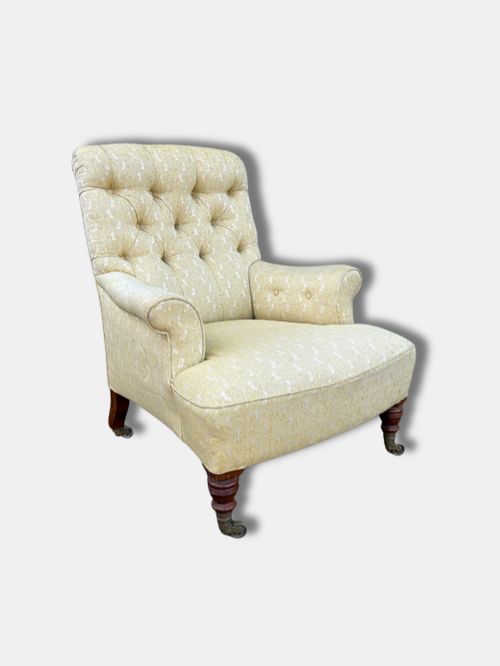
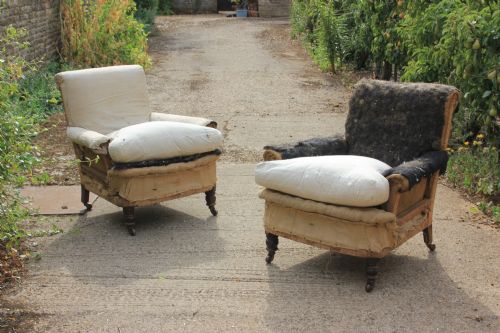
The frames rely on sturdy timbers such as mahogany and assorted hardwoods, providing a solid internal skeleton hidden beneath layers of upholstery. Metal components like brass often appear in castors, allowing these heavy, deep chairs to move smoothly across floorboards.
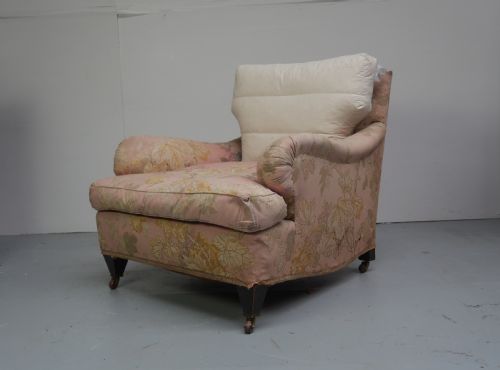
Upholstery technique defines the construction, utilising hessian as a foundation material to support thick stuffing and sprung seats. Traditional workshops covered these frames in durable fabrics, ranging from plain grey ticking to patterned carpets and bespoke textiles.
Several chairs arrive upholstered in recycled Turkish carpets, proving Victorian ancestors also loved upcycling.
What varies in quality
The integrity of the internal wooden frame and the resilience of the traditional upholstery build separate the finest examples from standard ones. Superior pieces retain their original tension and supportive depth, whereas lesser specimens suffer from sagging foundations or compromised internal timber.
Provenance and maker attribution elevate certain items significantly, particularly those bearing stamps or paper labels from esteemed workshops like Howard and Sons or Gillows. Craftsmanship in the joinery and the selection of high-grade covering materials further distinguish exceptional chairs from ordinary production.
Howard and Sons·Whytock and Reid·Hindley and Sons·Gillows·Waring and Gillow·Holland and Sons
The Country House Low Chair Glossary
- Club Armchair
- A deeply upholstered, low-slung seat designed for maximum comfort and relaxation in a library or drawing room. These pieces usually feature generous proportions and sprung arms.
- Slipper Chair
- A low-seated upholstered chair originally designed for bedrooms to allow women assistance with footwear. They sit close to the floor with minimal exposed woodwork.
- Ticking
- A tightly woven, durable cotton or linen fabric traditionally used as a hard-wearing cover for mattresses and upholstered furniture. Grey ticking frequently appears on country house seating.
- Smokers Bow
- A low wooden Windsor-style armchair with a curved back rail and turned spindles, commonly found in nineteenth-century domestic and institutional settings.
Country House Low Chair: Frequently Asked Questions
How do I identify a Howard style armchair?
Look for low proportions, deep sprung seats, and scrolled arms that prioritise comfort above strict formality. Many bear specific upholstery details and low wooden legs fitted with brass castors.
Original pieces often carry maker stamps on the back legs or castors, distinguishing them from later interpretations made in the same manner.
What fabrics were originally used on these chairs?
Traditional upholstery materials included heavy wools, printed cottons, and utilitarian grey ticking. Workshops also utilised decorative carpets, such as Ushak rugs, for distinctive statement pieces.
Over time, many chairs received replacement coverings while retaining their original internal stuffing and webbing.
Are these chairs suitable for daily sitting?
These pieces were built for heavy domestic use in country houses and remain exceptionally sturdy for daily lounging. Their deep seats and robust hardwood frames handle frequent use well.
Buyers should check the internal webbing and springs to ensure the seat retains proper support for regular sitting.
How do I tell Victorian from Edwardian examples?
Victorian models often feature slightly more upright proportions and heavier woodwork, sometimes displaying Gothic Revival or spoon-back influences. Edwardian versions tend towards even lower, wider seats focused entirely on relaxed lounging.
Construction methods and textile choices also help differentiate the decades, though the overarching aesthetic remained consistent.