




Country House Counter
These country house counter pieces bring honest utility and robust character to a room, offering tactile timber forms that anchor a traditional interior.
Country House Counter
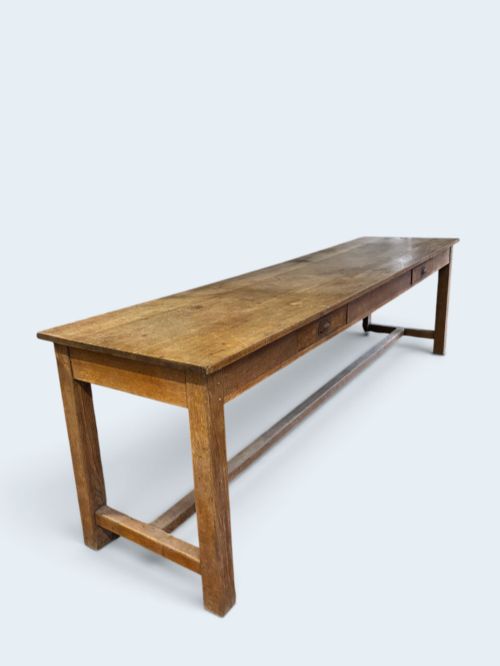
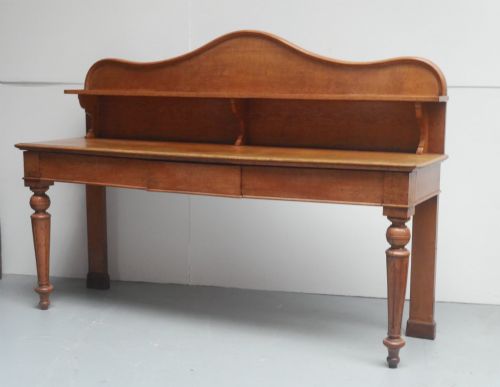
When you search for country house counter items, you are looking at utilitarian furnishings built for domestic service, hospitality and trade across large estates and public houses. These utility objects range from serving tables and reception bars to tavern stools and counter bells, shaped by practical necessity rather than decorative excess.
You are most likely to meet nineteenth century items fashioned from native hardwoods, alongside early twentieth century iterations designed for hospitality or country pursuits. The forms vary from large oak serving boards to modest elm seat stools and solid beech seating.
The aesthetic is rooted in English country and Victorian rustic traditions, where visible grain and honest construction take precedence over polished refinement. Each piece carries the marks of daily use within rural homes, taverns and estate kitchens.
How they were made
Makers utilised native British timbers such as oak, elm, sycamore, beech and pine, selecting each wood for its specific density and resilience under heavy daily service. Solid oak and elm provide the structural integrity required for large serving tables and sturdy tavern seating.
Joinery techniques prioritize mechanical strength, employing thick turned legs, pegged joints and solid plank construction to withstand relentless daily use in busy domestic environments and public houses. Metal elements like iron and brass appear where mechanical function demands, seen in counter bells and structural braces.
Country House Counter Retail Price Guide 2026
Typical asking prices for country house counter among the pieces listed under this phrase on Sellingantiques today, from the lower quarter to the upper quarter. They describe what is for sale here now, not the wider market.
A stag horn cribbage board brings a touch of Victorian parlour gaming to the collection of utility objects.
What varies in quality
The distinction between standard utility items and superior examples lies in the choice of timber and the proportion of the form. Heavier timbers like solid oak and well figured elm elevate serving tables and stools above ordinary pine equivalents.
Subtlety of turning on stool legs and the integrity of untouched surface patination separate honest vernacular pieces from heavily restored or altered items. The presence of original working brass hardware, as found on bells and greeting stations, adds integrity to the piece.
The Country House Counter Glossary
- Serving table
- A large utilitarian table used in estate dining rooms or kitchens for food preparation and service. These pieces typically feature solid oak construction and generous surface areas.
- Tavern stool
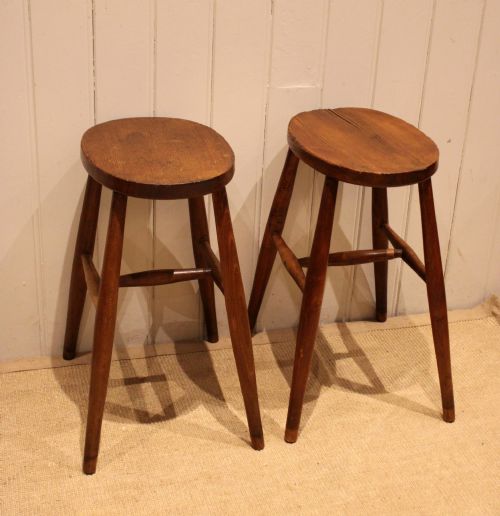
- A sturdy seating form constructed for public house or domestic use, usually featuring an elm seat supported by turned beech or sycamore legs.
- Reception bar
- A specialised counter station designed for greeting and hospitality within a country house setting. These larger fixtures incorporate architectural presence and dedicated functional surfaces.
- Counter bell
- A desktop or service bell utilised in large households to summon staff or signal attention. These items are frequently cast in brass with striking mechanisms.
- Cribbage board
- A traditional gaming board used for scoring the card game cribbage, often fashioned from natural materials such as wood or horn.
Country House Counter: Frequently Asked Questions
What defines a country house counter?
These items encompass utilitarian furnishings built for service, hospitality and domestic administration in large estates and traditional properties. They combine honest timber construction with practical design.
Materials typically include native woods like oak, elm and beech, chosen for durability rather than decorative display. The forms reflect daily life in Victorian and early twentieth century rural settings.
How were these serving tables used?
Serving tables provided essential surface area for food preparation, plating and hospitality within estate kitchens and dining rooms. Their robust timber tops handled heavy daily service.
They stood against walls or within reception areas, designed to support substantial weight while maintaining a steadfast presence in busy domestic environments.
Where do tavern stools originate?
Tavern stools served public houses and domestic spaces alike, offering stable seating constructed from local hardwoods. Elm was frequently chosen for the seat due to its split resistance.
Turned beech or sycamore legs provided reliable support, creating unpretentious seating designed to withstand decades of heavy use in public rooms.
How do I care for antique timber?
Maintain these wooden pieces by keeping them away from direct heat sources and sudden humidity changes. Simple dry dusting preserves the natural surface patination.
Avoid harsh chemical cleaners that strip the historic finish, applying a natural wax only when the timber appears dry to touch.