


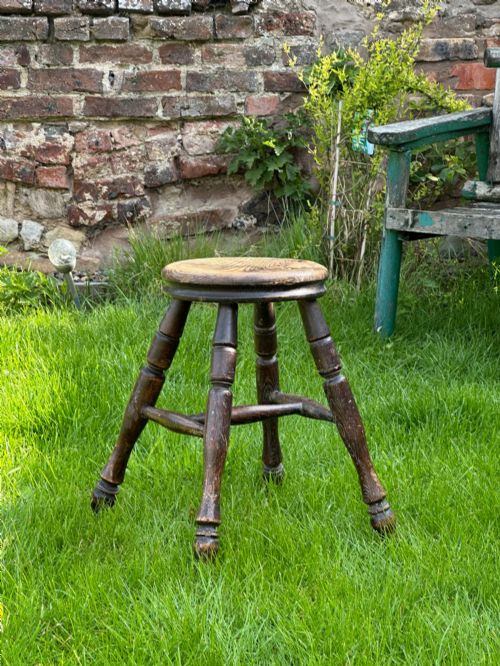


Country Hearth Stool
These country hearth stool pieces bring honest vernacular utility and solid timber warmth right to your fireside.
Country Hearth Stool
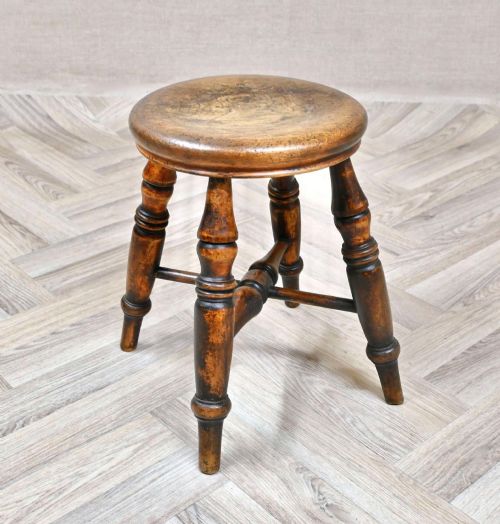
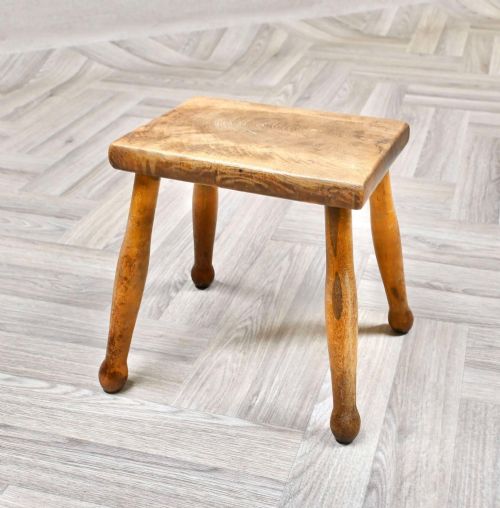
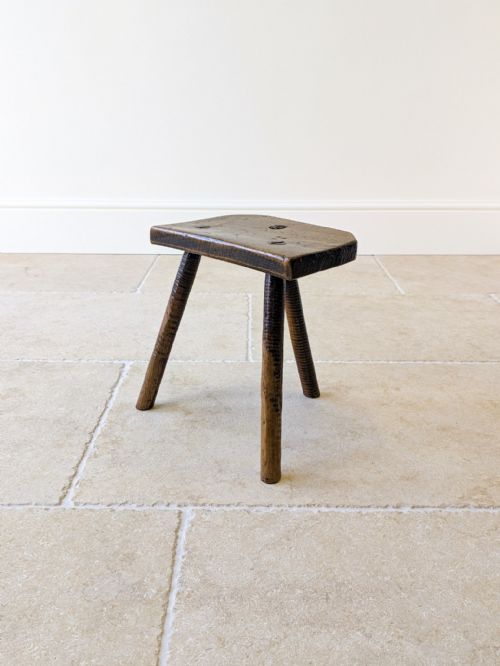
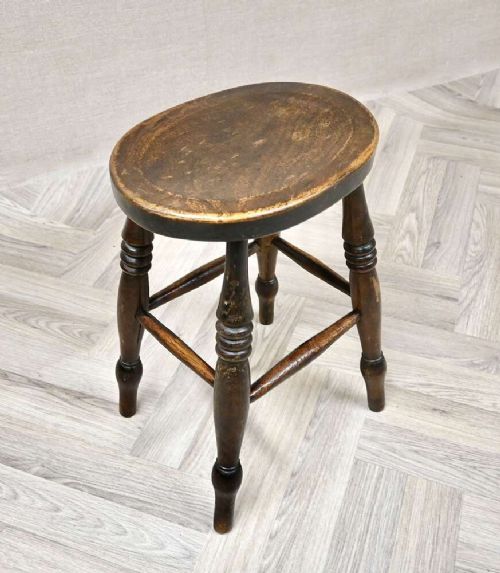
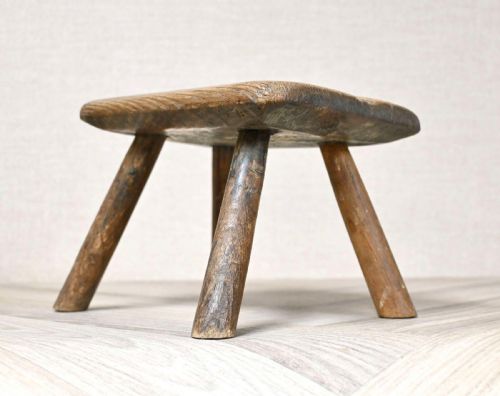
A country hearth stool serves as a low seat or footrest positioned near the fireplace, designed for warmth and comfort in traditional rooms. When searching for a country hearth stool, buyers typically encounter sturdy wooden forms that reflect domestic life from past centuries.
The pieces listed here span the eighteenth and nineteenth centuries, alongside Edwardian examples, capturing the durable styles of traditional vernacular furniture. Oak and elm predominate, often paired with rush or shaped timber seats tailored for daily household use.
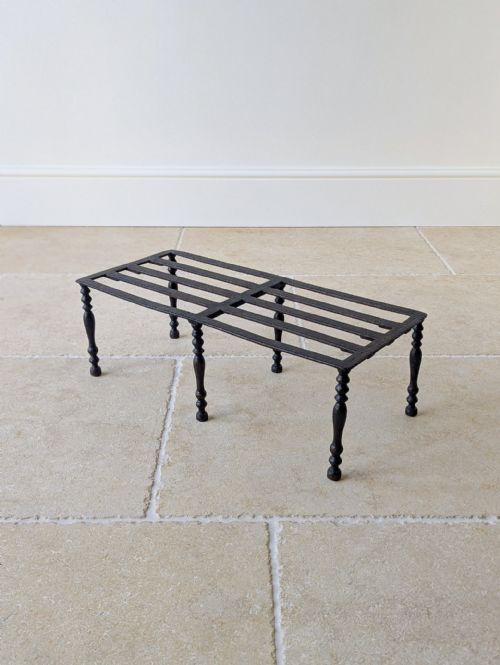
Simple low stools sit alongside specialised hearth accessories such as wrought iron footmen and brass trivets. These variations highlight the practical demands of historic firesides, where seating and plate warming met in one compact object.
Materials and construction
Maker construction relies heavily on native hardwoods like oak, elm, beech, and mahogany, selected for their strength and grain character. Timbers are shaped into solid oval or rectangular seats, supported by turned legs or cabriole forms.
Seating surfaces often incorporate woven rush or cane, adding texture and resilience to simple wooden frames. Metal elements utilise wrought iron and brass, particularly in hearth footmen and trivets designed to withstand direct fireplace heat.
Country Hearth Stool Retail Price Guide 2026
Typical asking prices for country hearth stool among the pieces listed under this phrase on Sellingantiques today, from the lower quarter to the upper quarter. They describe what is for sale here now, not the wider market.
The selection spans the eighteenth century through the Edwardian era, encompassing both wooden stools and metal hearthware.
Quality and proportion
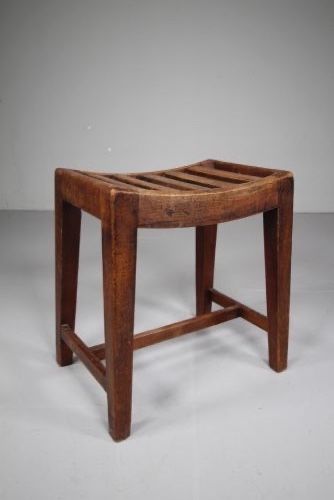
Quality rests in the balance of timber selection and the retention of honest surface wear from centuries of domestic use. Better examples display carefully shaped seats, such as slatted mahogany or figured elm, rather than purely utilitarian boards.
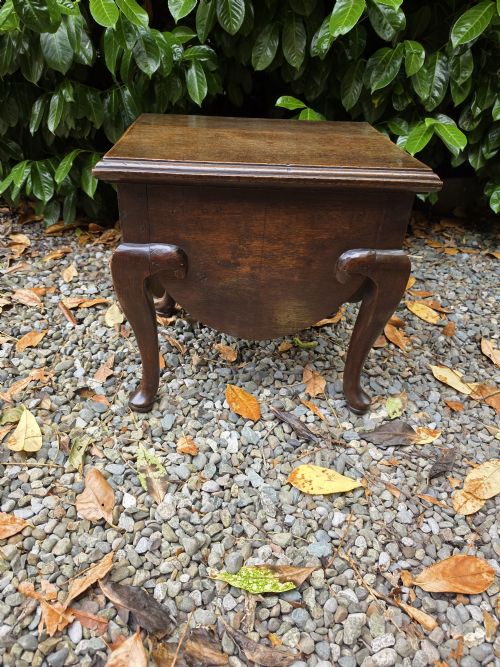
The refinement of the joinery and leg form distinguishes standard vernacular pieces from finer Georgian interpretations. Cabriole legs or neatly turned supports elevate a simple stool into a more deliberate stylistic statement.
The Country Hearth Stool Glossary
- Vernacular
- Everyday furniture made by regional artisans rather than high-style cabinetmakers. These items prioritize local materials and practical function over grand ornament.
- Footman
- A metal stand placed by the hearth to warm plates or kettles. They are usually fashioned from wrought iron or brass.
- Cabriole leg
- A furniture leg that curves outward and then tapers inward, ending in a pad or foot. This form appears on finer eighteenth-century seating.
- Rush
- Dried marsh grass woven into durable seat pads. It offers a firm yet flexible surface for traditional stools.
Country Hearth Stool: Frequently Asked Questions
Where did people use these stools?
These pieces sat directly by the fireplace or hearth to provide low seating close to the warmth. Households also utilised them as footrests or small stands.
Their compact size allowed them to be tucked away easily when not in use.
How do I date a stool?
Dating relies on wood species, tool marks, and leg styles such as cabriole supports or simple turned legs. Eighteenth-century examples often feature different timber preparation compared to later Victorian pieces.
Construction methods inside the joints offer further clues to the period of manufacture.
Can I use them daily?
Most solid timber and rush examples remain sturdy enough for regular seating or as footrests. Checking the frame stability ensures safe everyday utility.
Placing them away from extreme central heating prevents the old wood from drying out too quickly.
What is a hearth footman?
A hearth footman is a metal stand placed near the fire to keep food or plates warm. They are typically made of wrought iron or brass.
These accessories formed an essential part of historic fireplace arrangements.