



Country Garden Artwork
Country garden artwork captures pastoral scenes in watercolour and oil, offering buyers a glimpse of Edwardian and Victorian rural life.
Country Garden Artwork
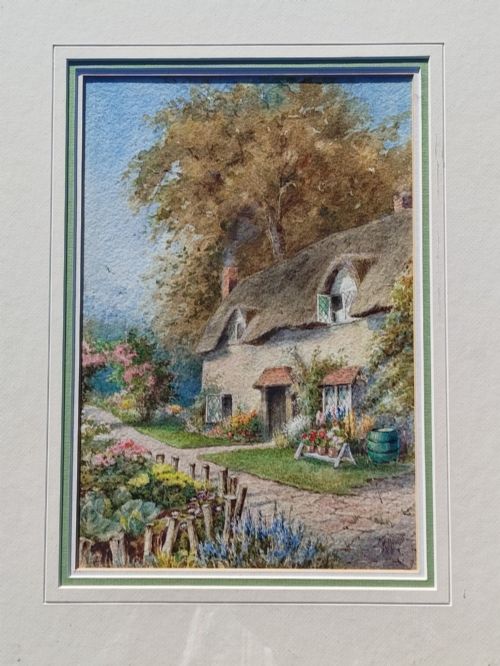
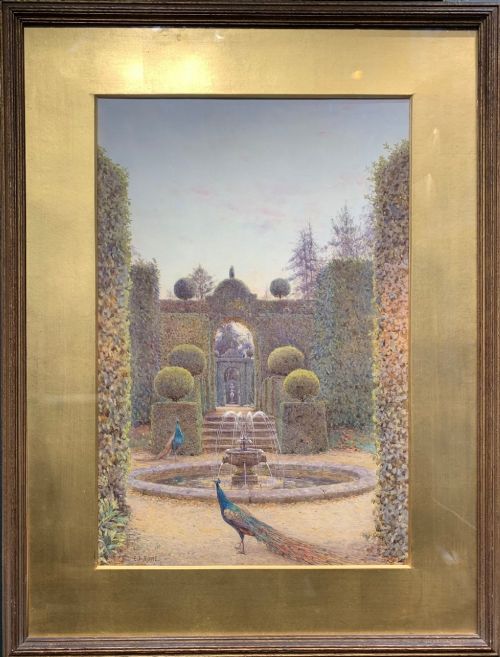
Country garden artwork consists of paintings depicting floral scenes, cottages, and rural landscapes set across the nineteenth and twentieth centuries. These pieces reflect British Impressionist and Edwardian styles, focusing on outdoor spaces and domestic country life.
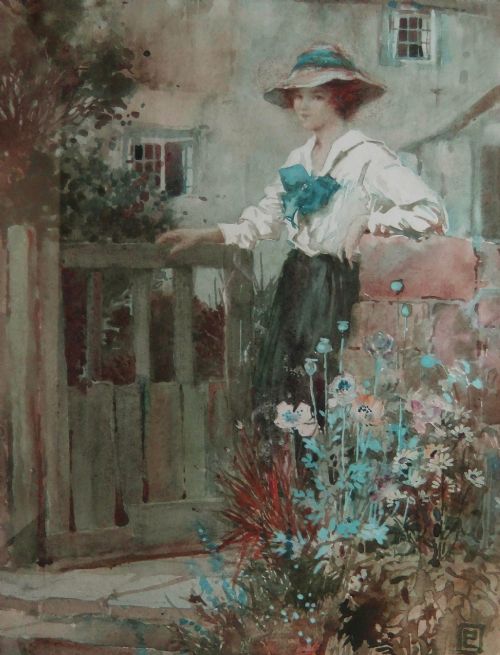
Buyers will most frequently encounter watercolours and oil paintings on paper or canvas dating from the Victorian era through the 1940s. Many depict specific subjects such as walled gardens, cottage gates, and figures outside country houses.
Materials and Techniques
Artists utilised watercolour pigment on paper or oil paint on canvas to capture the natural light and colours of rural settings. Works are often mounted behind glass and framed in wood.
Brushwork ranges from the detailed realism seen in nineteenth-century portraiture to the looser applications characteristic of British Impressionism and Edwardian pastoral scenes.
Country Garden Artwork Retail Price Guide 2026
Typical asking prices for country garden artwork among the pieces listed under this phrase on Sellingantiques today, from the lower quarter to the upper quarter. They describe what is for sale here now, not the wider market.
Several paintings record domestic animals keeping a watchful eye over gardeners and tenants.
Assessing Quality
The strength of the composition and the handling of light distinguish finer works from simpler topographical records. Skilled handling of watercolour pigment creates depth and luminosity that elevates a garden scene beyond mere illustration.
The skill of the artist in rendering architectural elements alongside botanical detail dictates the standing of a piece within its period. Provenance and attribution to named painters also define the upper tier of these works.
Ernest Arthur Rowe·Percy Lancaster·Arthur Hopkins·Rowland Henry Hill·Theresa Stannard·Owen Bowen·Ernest Higgins Rigg·William Hatherell·Samuel Sidley·David Woodlock·Herbert Royle·John Abernethy Lynas-Gray·Thomas Nicholson Tyndale·Arthur Claude Strachan·John Emms·Henry John Sylvester Stannard·Benjamin D Sigmund·Beatrice Parsons·George Frederick Nicholls·William Greaves·Ralph Hedley·Lilian Stannard·Fred Merriman·John F Pasmore
The Country Garden Artwork Glossary
- Watercolour
- A painting method in which the paints are made of pigments suspended in a water-based solution. This technique allows for translucent washes of colour.
- Impressionism
- A style of painting that focuses on the accurate depiction of light and its changing qualities. British practitioners adapted this approach to capture domestic gardens.
- Mixed Media
- An artwork utilising more than one medium or material. These pieces combine elements such as watercolour pigment and bodycolour.
- Provenance
- The chronology of the ownership or location of a historical object. A documented history supports the attribution of antique fine art.
Country Garden Artwork: Frequently Asked Questions
What periods do these paintings cover?
The available selection spans from the Victorian nineteenth century through Edwardian pastoral works up to the 1940s.
Most pieces date from the early decades of the twentieth century, reflecting a strong output of British Impressionism.
How should I care for watercolour paintings?
Watercolours are sensitive to light and should be hung away from direct sunlight to prevent the pigments from fading.
Keep them in stable environmental conditions behind protective glass to guard the paper against moisture.
What subjects appear in these works?
Common subjects include cottage gardens, herbaceous borders, country houses, and rural figures engaged in daily tasks.
Artists frequently documented specific locations across Britain, capturing domestic pets and farmyards alongside floral displays.
Are these works signed by the artists?
Many of the listed paintings bear the signatures or attributions of recognised period artists and painters.
Unsigned examples are typically attributed to period schools based on their style and technique.