



Country Garden Art
Country garden art captures rural life through watercolours, oils, and weathervanes spanning the Victorian era to the mid-twentieth century.
Country Garden Art
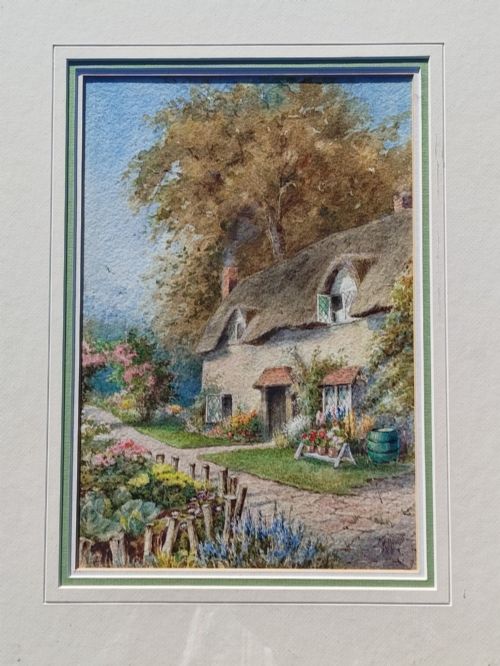
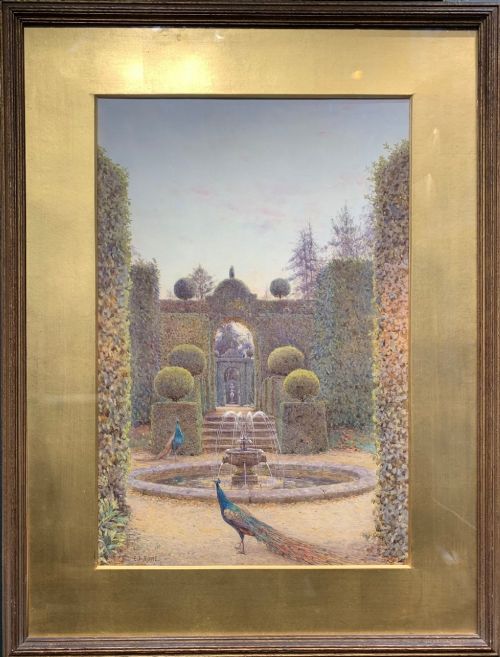
Country garden art centres on paintings and weathervanes depicting rural properties, cottages, and cultivated grounds. These works record pastoral scenes through the lenses of British Impressionism, Edwardian Pastoral, and Victorian Rural Genre styles.
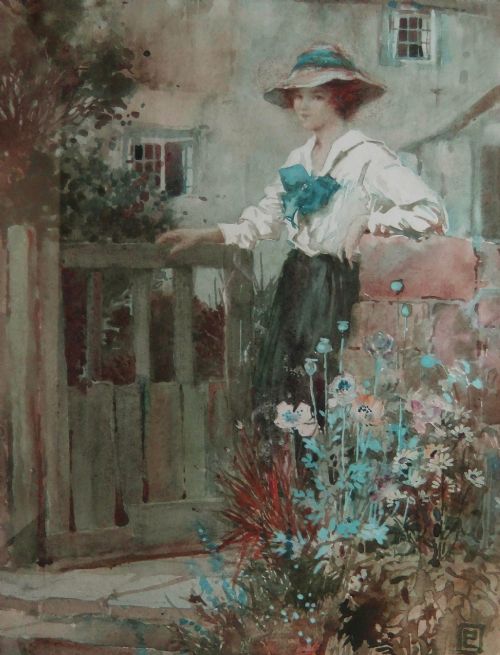
Watercolours and oil paintings on canvas or paper form the majority of the works encountered. Scenes often incorporate domestic animals, figures engaged in quiet outdoor tasks, and floral borders set against traditional English architecture.
Originating largely from the nineteenth and early twentieth centuries, these pieces document an idealised view of countryside living. Collectors find works by named regional artists alongside pieces produced by the English School.
Materials and methods of execution
Artists relied upon watercolour pigment applied to paper, or oil paint worked onto canvas, to capture the shifting light of domestic grounds. Mixed media and silhouette metalwork appear alongside these traditional painted formats.
Supports range from heavy woven canvas stretched over wooden frames to absorbent water colour paper. Pigments were layered to render the dense textures of herbaceous borders, stone cottages, and gravel pathways.
Country Garden Art Retail Price Guide 2026
Typical asking prices for country garden art among the pieces listed under this phrase on Sellingantiques today, from the lower quarter to the upper quarter. They describe what is for sale here now, not the wider market.
Mediums documented in the inventory include oil paint, watercolour pigment, glass, paper, canvas, and wood.
Differentiating quality across works
Quality rests upon the artist's ability to handle natural light and atmospheric depth within the garden setting. Works by established painters demonstrate more deliberate brushwork and confident composition than anonymous school pieces.
The preservation of the pigment, particularly in watercolours exposed to light, affects the visual integrity of the scene. Strong provenance and clearly documented attribution to a known painter elevate the standing of an individual canvas.
Ernest Arthur Rowe·Percy Lancaster·Rowland Henry Hill·Theresa Stannard·Owen Bowen·Ernest Higgins Rigg·William Hatherell·Samuel Sidley·David Woodlock·Herbert Royle·Arthur Claude Strachan·John Abernethy Lynas-Gray·Thomas Nicholson Tyndale·John Emms·Henry John Sylvester Stannard·Benjamin D. Sigmund·Beatrice Parsons·George Frederick Nicholls·William Greaves·Ralph Hedley·Lilian Stannard·Fred Merriman·John F. Pasmore
The Country Garden Art Glossary
- Watercolour pigment
- A colourant ground with a water-soluble binder, used extensively on paper to create luminous rural landscapes. It reacts sensitively to environmental light over time.
- Oil on canvas
- Pigment suspended in drying oil and applied to a stretched woven fabric support. This medium permits rich impasto and deep tonal layering.
- Victorian Rural Genre
- A painting style focusing on the everyday activities of country people within domestic and agricultural settings. These works often narrative domestic scenes near cottages.
- British Impressionism
- A late nineteenth and early twentieth century movement capturing transitory effects of light and colour outdoors. Artists working in this mode prioritised loose brushwork over rigid academic finish.
- Weathervane
- An architectural instrument placed on a roof to show wind direction, frequently fashioned as silhouette folk art. Metal cutouts often depict historical figures or rural occupations.
Country Garden Art: Frequently Asked Questions
What periods do these pieces span?
The available selection reaches from the Georgian era through the Victorian period and into the mid-twentieth century. Most examples originate between nineteen hundred and nineteen forty.
Edwardian and late nineteenth-century watercolours form a particularly strong component of the current selection.
How should I care for a watercolour?
Watercolours require careful placement away from direct sunlight to prevent pigment fading on the paper. Glazing with protective glass helps shield the delicate pigments from atmospheric moisture and pollution.
Framing should utilise acid-free mounts to prevent the paper support from degrading over decades of display.
What subjects appear most frequently?
Cottage gardens, thatched dwellings, and herbaceous borders dominate the visual record of these works. Figures engaged in quiet domestic tasks, such as feeding hens or knitting outside, frequently inhabit the foregrounds.
Architectural studies of historic country houses and pastoral landscapes complete the primary subjects recorded by these artists.
How do oil paintings differ from watercolours here?
Oil paintings utilise pigment bound in oil on canvas or wooden supports, offering heavier texture and deeper colour saturation. Watercolours employ translucent washes on paper that rely on the white ground for luminosity.
Oils generally prove more resilient to environmental light exposure than works executed on paper supports.