




Country Farmhouse Sideboard
A country farmhouse sideboard brings robust utility and honest charm to an interior, built for daily work in kitchens and dining rooms.
Country Farmhouse Sideboard
A country farmhouse sideboard encompasses practical utilitarian furniture designed for storage and food preparation in domestic spaces. These pieces serve as functional workhorses of the traditional kitchen, dining room, or pantry.
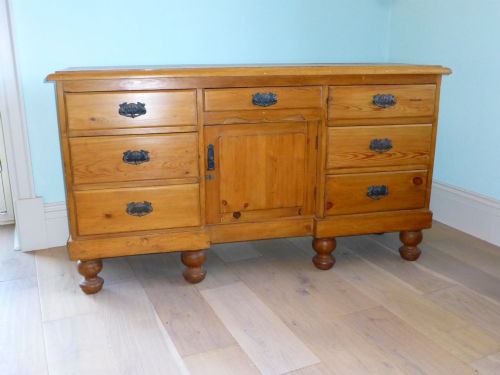
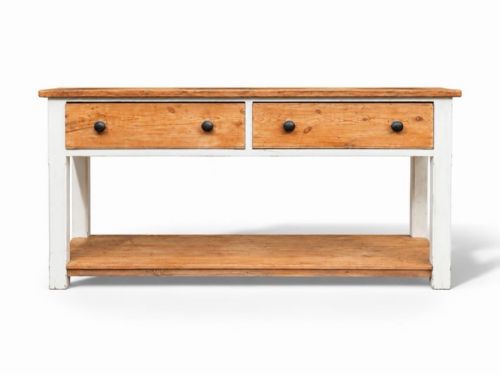
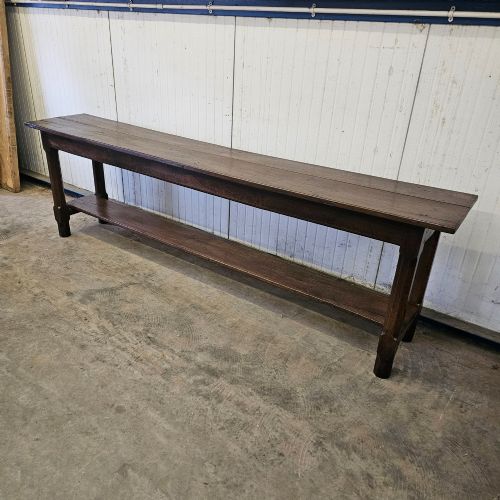
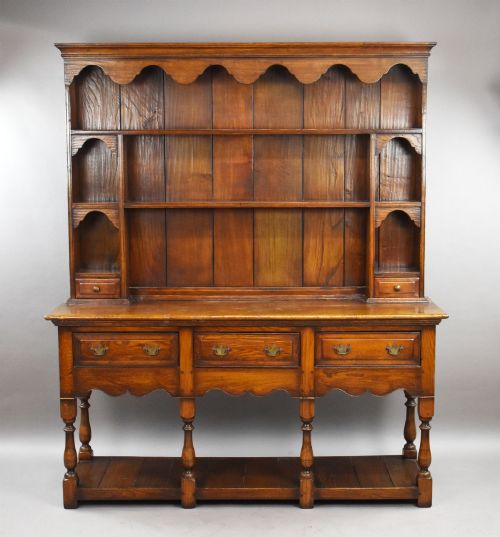
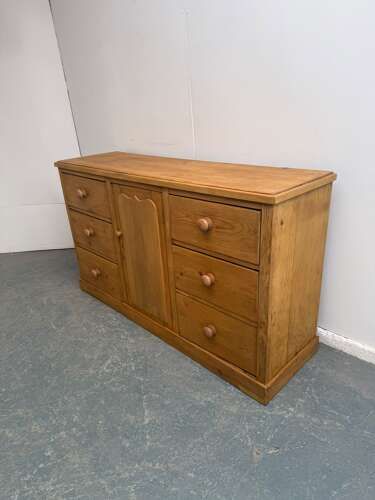
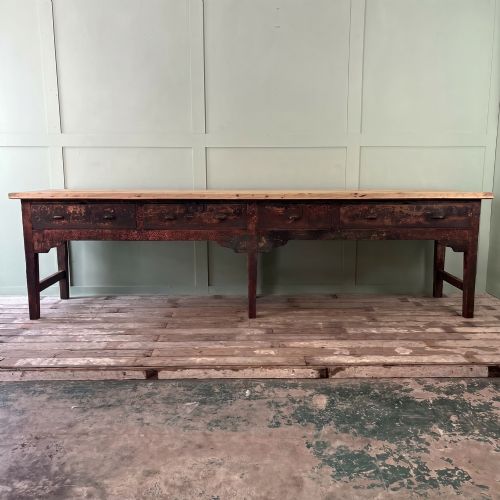
The versions most commonly encountered on this page include pine and oak dresser bases, potboards, and serving tables from the nineteenth century. These utilitarian forms feature deep drawers, lower pot shelves, and sturdy timber tops built to withstand heavy daily use.
Regional variations span English, Scottish, and French country traditions, incorporating local timbers such as cherrywood alongside standard pine and oak. Each origin brings distinct proportions and structural habits to the standard sideboard format.
Materials and construction methods
Makers relied primarily on solid pine and oak for these functional pieces, selecting timbers for strength and availability. Iron and brass hardware such as drawer pulls and hinges provided durable working components.
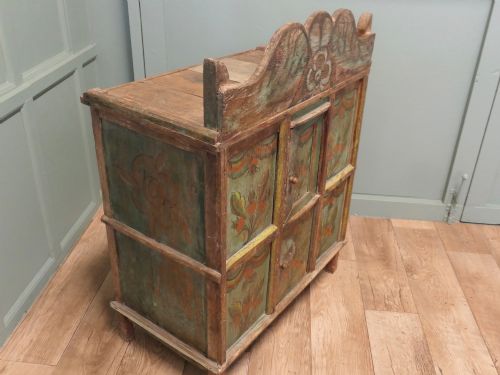
Surfaces frequently show original paint, waxed finishes, or bleached timber patinations developed through decades of domestic service. Joinery prioritises robust utility over decorative refinement, employing solid planks and sturdy framing to endure heavy loads.
Country Farmhouse Sideboard Retail Price Guide 2026
Typical asking prices for country farmhouse sideboard among the pieces listed under this phrase on Sellingantiques today, from the lower quarter to the upper quarter. They describe what is for sale here now, not the wider market.
Distinctions in build and survival
Quality separates pieces retaining their original structural timbers and untouched surface finishes from those altered by aggressive modern sanding or replacement boards. The integrity of the potboards, drawer runners, and joints dictates the long-term utility of the furniture.
Proportion and scale distinguish standard workshop output from monumental country house examples, with finer pieces displaying thoughtful timber selection and balanced hardware placement.
The Country Farmhouse Sideboard Glossary
- Dresser base
- The lower section of a kitchen dresser, typically featuring a combination of drawers and cupboards or an open potboard beneath.
- Potboard
- An open slatted lower shelf fitted beneath a serving table or dresser base, traditionally used for storing heavy pots and pans.
- Serving table
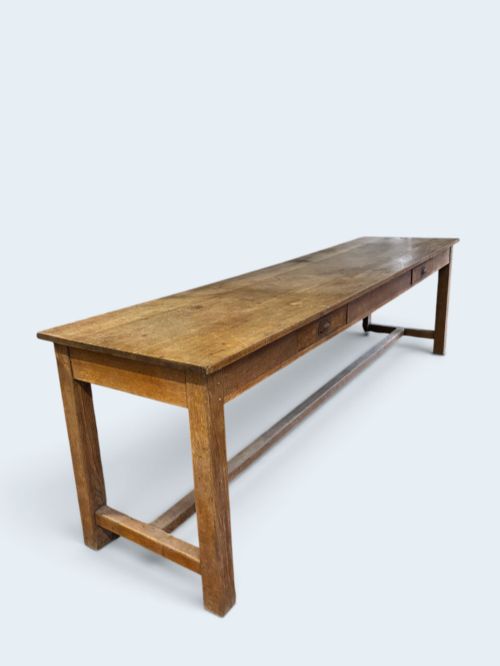
- A long, narrow table designed for food preparation and the service of meals in country kitchens and dining spaces.
- Original paint
- Surface decoration applied during the period of manufacture that has survived without later stripping or complete repainting.
- Waxed finish
- A protective treatment applied to timber surfaces to nourish the wood and produce a soft, low-sheen lustre over time.
Country Farmhouse Sideboard: Frequently Asked Questions
What is a country farmhouse sideboard used for?
These pieces provide substantial storage and surface space for kitchen and dining environments. They accommodate tableware, linens, and culinary equipment while offering a sturdy top for food preparation or serving.
Historically, the lower shelves and drawers held heavy pots, dry goods, and everyday utensils required by busy rural households.
How do I care for a waxed pine sideboard?
Maintain the timber by applying a traditional beeswax paste periodically to nourish the wood and protect against moisture. Avoid placing hot dishes or wet items directly onto untreated or waxed surfaces.
Clean gently with a dry or slightly damp cloth, avoiding harsh chemical cleaners that strip the historic finish.
Where were these sideboards made?
Makers constructed these practical pieces in regional workshops across England, Scotland, and France. Local vernacular traditions heavily influenced the timber choices and construction details.
Rural joiners adapted standard utility forms to suit the specific needs of country houses, farmsteads, and dairies.
How do I identify a nineteenth-century piece?
Examine the timber boards for hand-sawn marks, irregular thicknesses, and signs of genuine age in the drawer construction and joints. Hand-forged iron or brass hardware often indicates older manufacture.
Surface paturation, including deep waxing and wear around frequently touched areas, develops naturally through long domestic use.