

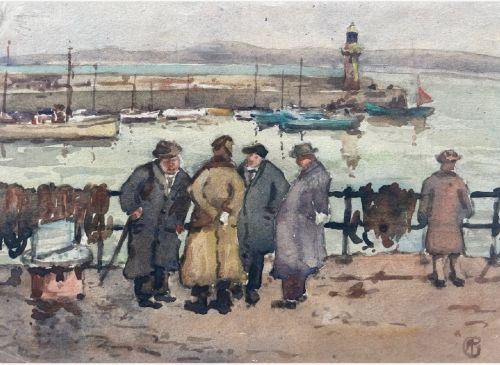


Cornwall Landscape
These cornwall landscape works capture the rugged light and maritime character of the region through Victorian, Edwardian, and twentieth-century interpretations.
Cornwall Landscape
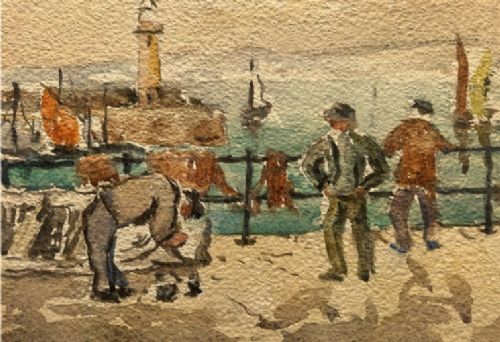
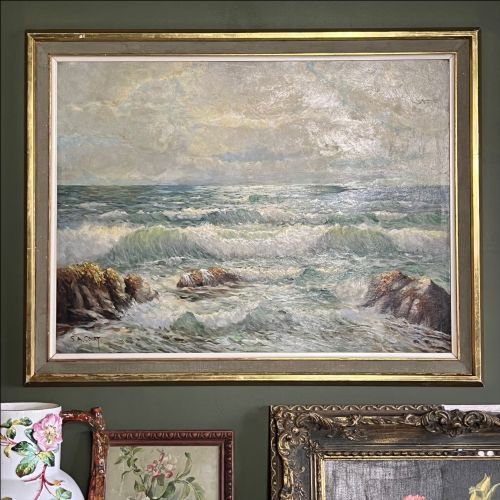
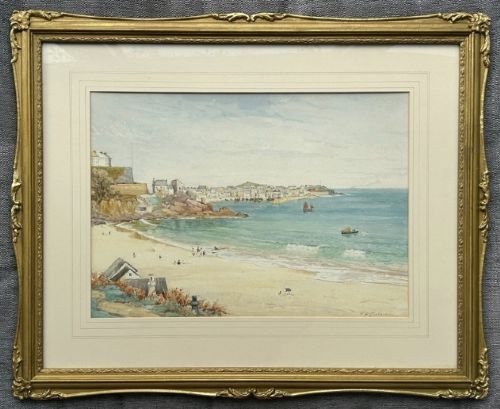
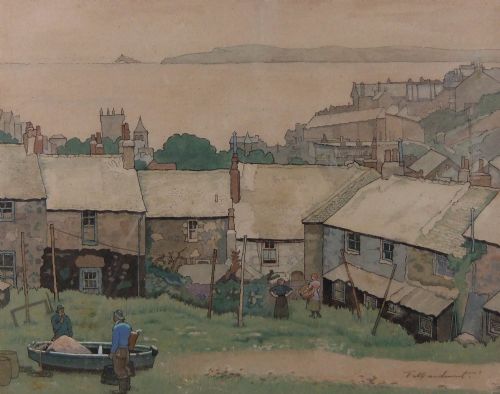
A cornwall landscape transports the viewer directly to the southwest peninsula, focusing on familiar motifs such as St Ives, Polperro, and Mevagissey harbour. These pieces range from nineteenth-century coastal scenes to mid-twentieth-century St Ives School compositions, recording the distinct geography and changing light of the coastline.
Most examples encountered here are works on paper or canvas, depicting maritime views, village scenes, and rocky shores under varying atmospheric conditions. Painters utilised the region's topography to explore natural light, capturing low tides, harbour walls, and open waters.
The selection encompasses diverse artistic responses, shifting from traditional Victorian fine art to British Impressionism and post-impressionist handling. Each piece records a specific coastal or inland pocket, offering a direct view into the local topography of past decades.
How they were made
Artists typically worked with oil paint on canvas or watercolour on paper, frequently painting en plein air to capture the immediate atmospheric conditions of the coast. Some creators also employed pastel drawing or woodblock print techniques to render local textures.
Support materials range from stretched canvas and fine paper to traditional wood frames and gilt wood surrounds. These frames often complement the period of the painting, preserving the work in its historical context.
Cornwall Landscape Retail Price Guide 2026
Typical asking prices for cornwall landscape among the pieces listed under this phrase on Sellingantiques today, from the lower quarter to the upper quarter. They describe what is for sale here now, not the wider market.
Several artists packed their watercolours against sudden Cornish sea mists, capturing damp harbours just before the sun broke through.
What varies in quality
Quality rests primarily on the artist's ability to render light, atmosphere, and spatial depth within the Cornish topography. Stronger pieces demonstrate confident brushwork and a distinct personal style, particularly within Impressionist and St Ives School examples.
The choice of medium and the preservation of the surface also influence the piece, with well-maintained watercolours and stable oil on canvas works holding their visual impact more clearly over time.
Sidney A Court·William Banks Fortescue·Thomas Maidment·George F Pennington·Edward Matthew Elliott·Gyrth Russell·George Turland Goosey·William Pitt·Ernest F Hill·Frederick Stuart Richardson·William Lambert Bell·Jack R Mould·Walter Sweet·Hendrik Yan Wolter·S J Lamorna Birch·Herbert James·Cuthbert Crossley·William Edward Webb·Arthur Joseph Meadows·John Baragwanath King
The Cornwall Landscape Glossary
- En plein air
- Painting outdoors to capture direct natural light and atmospheric effects. This technique allows the artist to record fleeting weather shifts along the coastline.
- St Ives School
- A group of artists associated with the Cornish town of St Ives, noted for developing modernist and impressionist approaches to landscape. Their work often reflects the unique coastal light.
- Watercolour painting
- A method where pigments are suspended in a water-based solution on paper. It requires precise control to achieve transparent washes and crisp detail.
- Gilt wood
- Wood covered with a thin layer of gold leaf or gilt finish, commonly used for period frames. It adds a traditional decorative border to the artwork.
Cornwall Landscape: Frequently Asked Questions
What periods do these paintings cover?
The works span from the late nineteenth century through the Edwardian era into the mid-twentieth century, including various modernist developments.
This broad timeline shows how artistic interpretations of the coastline shifted from traditional realism to impressionistic treatments.
Where are the depicted locations?
Most scenes focus on specific Cornish coastal spots, particularly St Ives, Polperro, Mevagissey, Mousehole, and St Michael's Mount.
These working harbours and rocky points provided enduring inspiration for generations of visiting and resident artists.
How should I frame these artworks?
Many pieces retain their original or period-appropriate wood and gilt frames, which suit the traditional character of the paintings.
When framing works on paper or unmounted canvases, choose conservative moulding that respects the historical period of the piece.
Are watercolours fragile?
Watercolours on paper require protection from direct sunlight to prevent fading of the delicate pigments over time.
Displaying them away from intense light sources ensures the paper and pigments remain stable and clear.