




Cornish Seascape Art
Cornish seascape art captures the rugged cliffs, bustling harbours and Atlantic light of the West Country through the eyes of visiting and resident painters.
Cornish Seascape Art
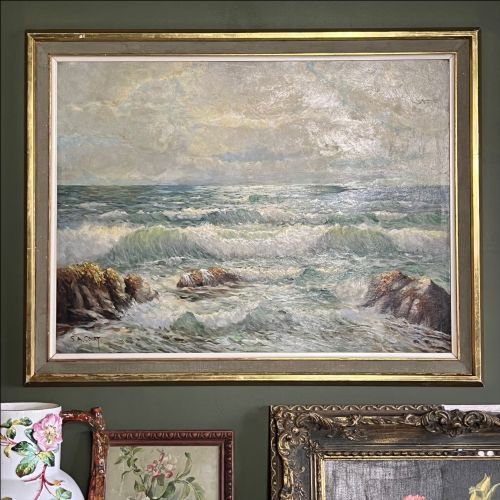
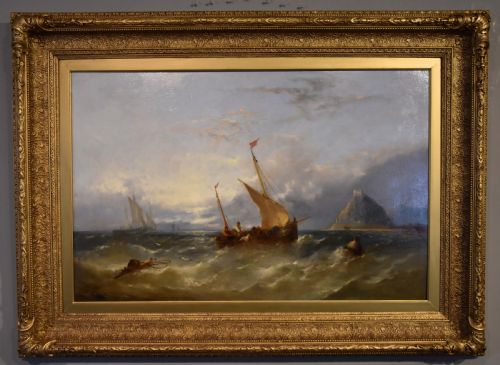
When you search for cornish seascape art, you encounter oil paintings and watercolours depicting coastal scenes from St Ives, Polperro, Mevagissey and Mount's Bay. These works record the maritime life, fishing luggers and dramatic tides of the Cornish peninsula across successive decades.
The pieces on this page most often take the form of framed oil paintings on canvas and delicate watercolours on paper. They span from the Victorian period through Edwardian realisms and into mid-century British school interpretations.
Painters gravitated towards specific coastal pockets, capturing harbour walls at low tide or fishing boats weathering rough waters. Each canvas or paper sheet preserves a distinct atmospheric shift in the south-west light.
How they were made
Artists applied oil paint and watercolour to stretched canvas or paper, frequently working en plein air to capture transient weather conditions along the shoreline. Pigments were brushed with varying fluidity, ranging from thick impasto on canvas to translucent washes on paper.
Many works are housed in their original gilt wood frames, protecting the edges of the canvas or paper behind glass where watercolours are concerned. The physical materials reflect the working methods of artists painting outdoors in damp coastal environments.
Cornish Seascape Art Retail Price Guide 2026
Typical asking prices for cornish seascape art among the pieces listed under this phrase on Sellingantiques today, from the lower quarter to the upper quarter. They describe what is for sale here now, not the wider market.
Several painters packed their watercolours and set up easels directly on the harbour rocks of Polperro, dodging incoming tides.
What varies in quality
Quality rests in the handling of light on water and the assurance of brushwork, distinguishing hurried sketches from finished compositions by established regional painters. Works that successfully render the specific atmosphere of St Ives or Polperro demonstrate superior observation.
The integration of the artwork with its period frame also alters the visual impact. Original gilt wood framing appropriate to the painting complements the tonal balance of the coastal scene.
Sidney A Court·William Banks Fortescue·William Henry Williamson·Edward Matthew Elliott·Charles Napier Hemy·Richard Harry Carter·Gyrth Russell·George Turland Goosey·Charles Sim Mottram·Ernest F Hill·Frederick Stuart Richardson·Hendrik Yan Wolter·S J Lamorna Birch·Herbert James·William Edward Webb
The Cornish Seascape Art Glossary
- En plein air
- Painting outdoors to directly observe the landscape and changing light. This French term describes the working method used by artists along the Cornish coast.
- Trawling lugger
- A traditional two-masted fishing boat common in West Country waters. These vessels frequently appear as focal points in maritime paintings of the period.
- Impasto
- Paint applied thickly to a canvas, standing out from the surface. Artists utilised this technique to render the texture of crashing waves and foam.
Cornish Seascape Art: Frequently Asked Questions
What periods do these paintings cover?
The selection spans from the Victorian era, through Edwardian marine art, and into the mid-twentieth century. Artists worked across these decades to document the changing maritime trades and topography.
Earlier pieces often reflect Victorian fine art traditions, while later works lean towards British Impressionism and Post-Impressionism.
Which Cornish locations appear most often?
St Ives and Polperro are frequently depicted, alongside Mevagissey, Penzance and St Michael's Mount. These harbours and landmarks drew landscape painters seeking dynamic tides and working fleets.
Views extend from specific harbour walls to open coastal waters and rocky strands.
Are these works painted on canvas or paper?
Both supports appear across the collection. Oils are typically executed on canvas or wood panels, capturing the weight of the sea and sky.
Watercolour paintings are worked on paper, often preserved behind glass within traditional frames.
How do I care for a framed maritime painting?
Keep works out of direct sunlight to prevent the fading of watercolours and the yellowing of old oil varnishes. Stable indoor humidity protects both the canvas and the wooden frames.
Dust gilt frames gently with a soft dry brush without applying liquid cleaners.