
Corner Cupboard Cabinet
When you search for a corner cupboard cabinet, you find timber furniture built to utilise difficult angles and display domestic possessions.
Corner Cupboard Cabinet
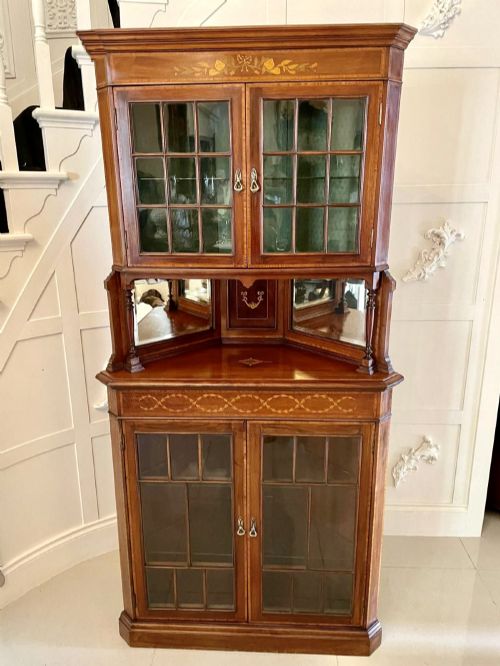
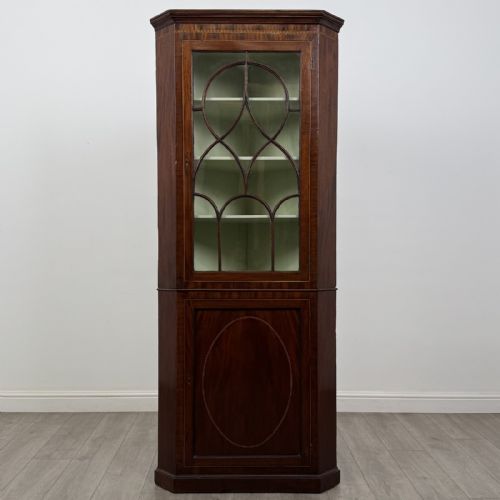
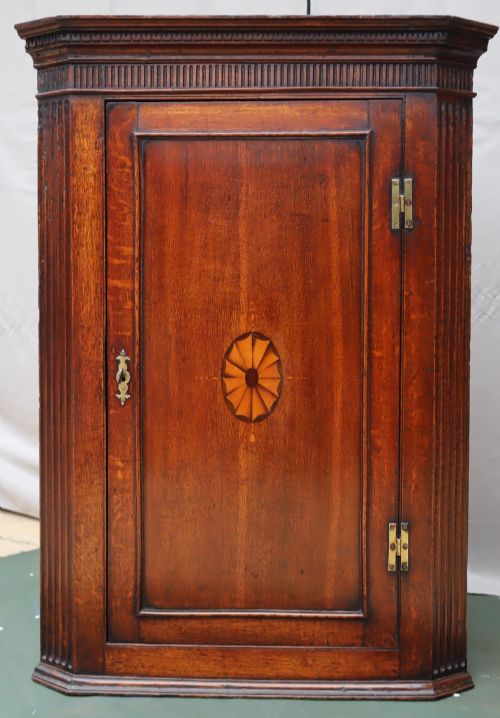
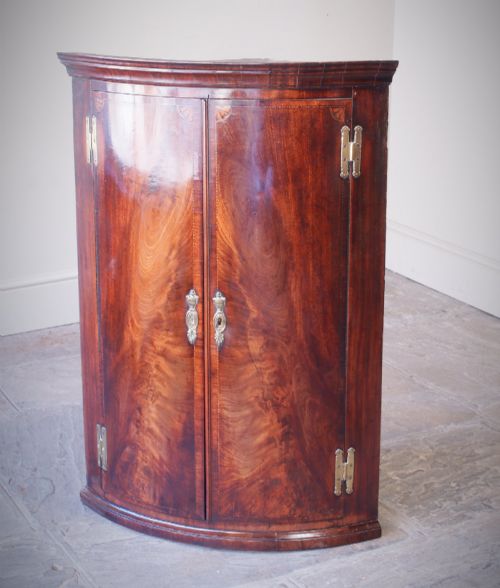
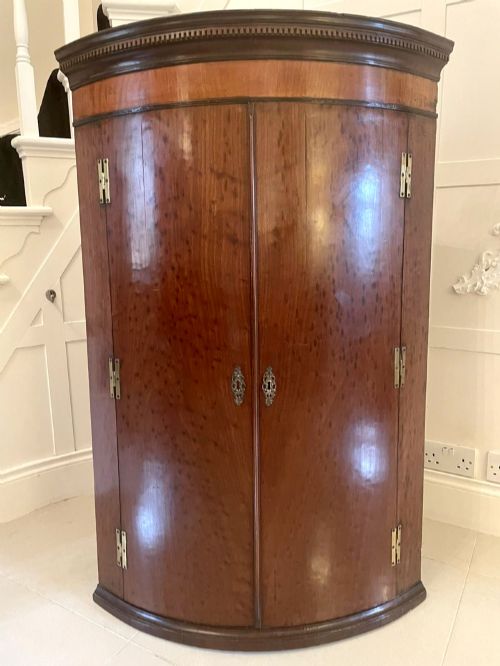
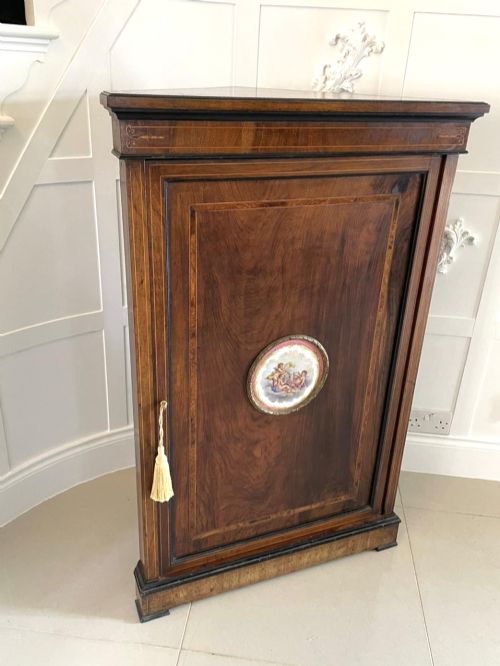
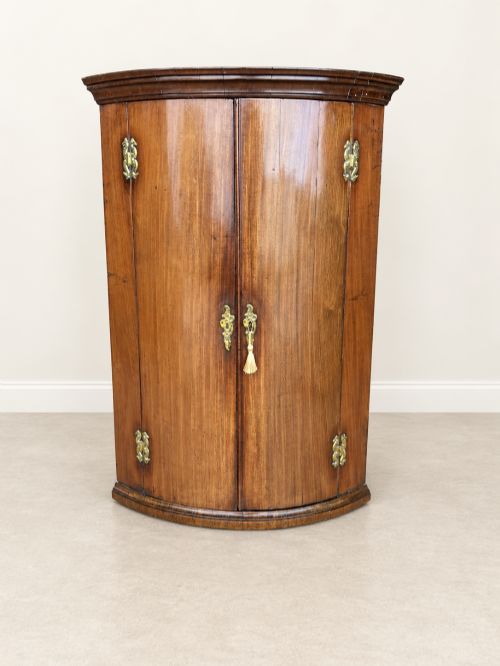
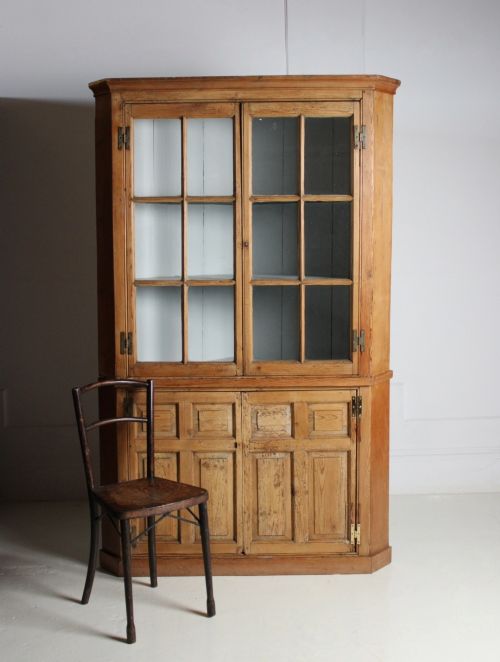
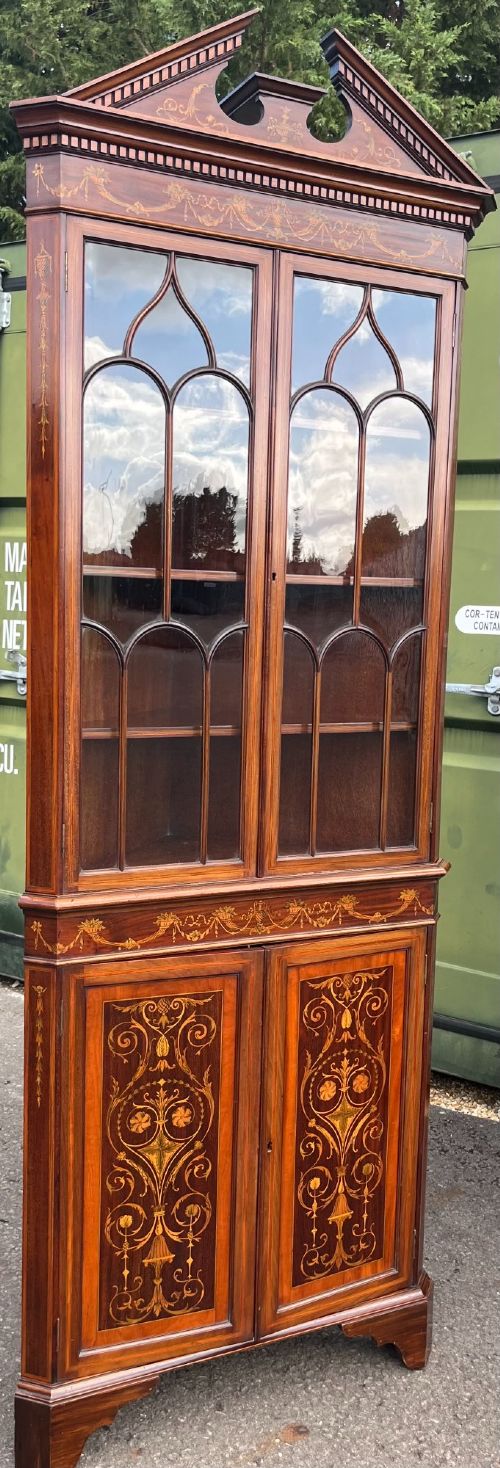
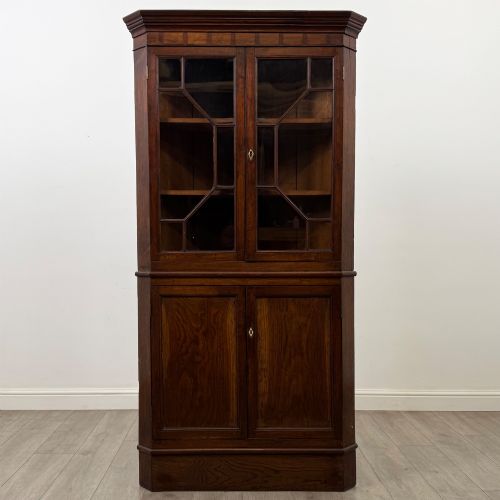
A corner cupboard cabinet groups together timber vessels designed to fit snugly into room junctions, turning awkward angles into functional storage. These pieces appear in tall floor-standing formats, two-part double heights, and smaller wall-hanging versions.
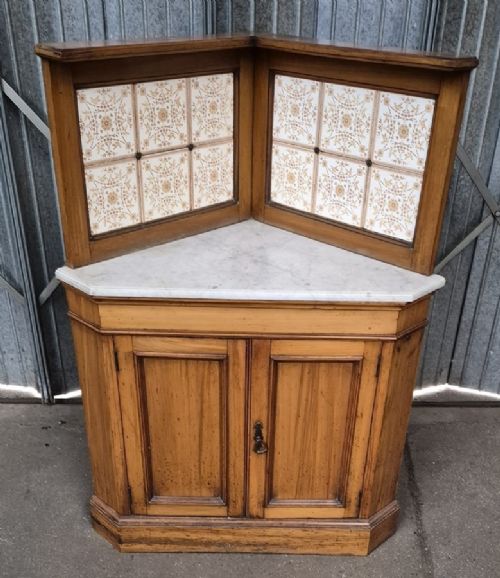
The selections span centuries of British and European craftsmanship, with Georgian and Victorian examples dominating the output. Surviving pieces range from plain country oak and pine washstands to elaborate inlaid mahogany and walnut designs.
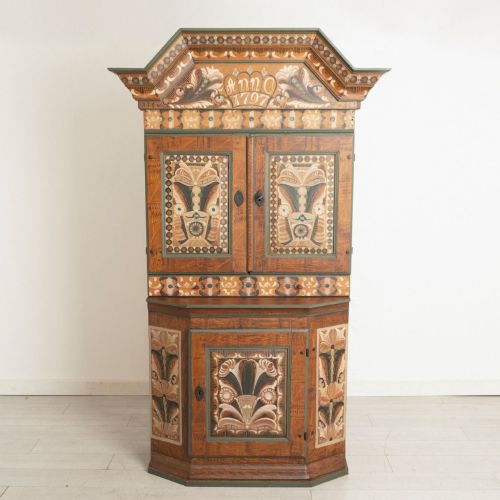
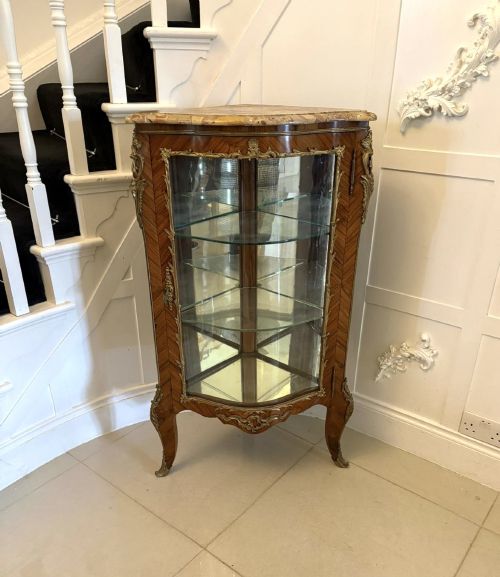
Buyers encounter everything from simple domestic corner cupboards to glazed display cabinets and standing floor units. Regional variations include Welsh oak pieces and imported Continental marquetry or lacquered surfaces.
Materials and Construction
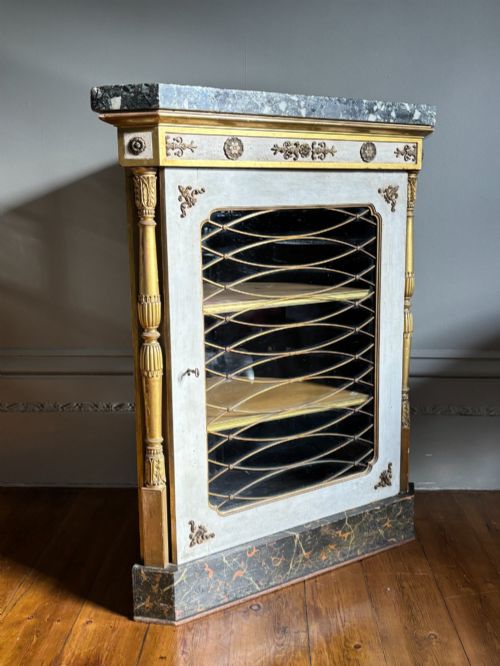
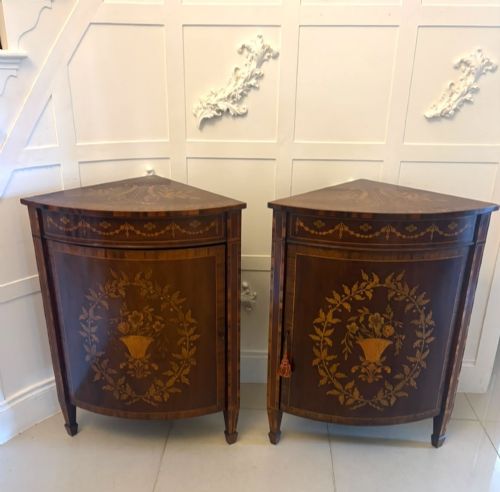
Makers relied heavily on native and imported hardwoods like mahogany, oak, walnut, and pine, often incorporating secondary timbers for internal shelving. Surface enrichment involved satinwood inlay, marquetry, brass hardware, and painted Chinoiserie finishes.
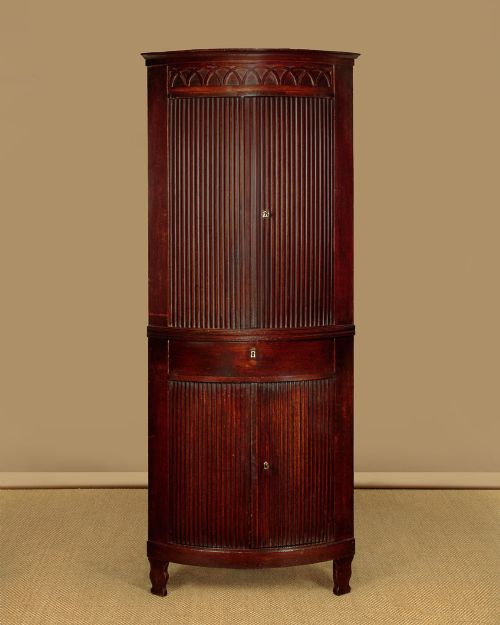
Structural methods included glazed doors with timber astragals, bow fronts formed from curved boards, and multi-part construction for taller floor-standing cabinets. Interior fittings frequently featured shaped wooden shelves, drawers, and candle slides.
Listings feature woods such as mahogany, oak, walnut, pine, satinwood, and elm across Georgian and Victorian periods.
Markers of Distinction
Quality rests in the choice of timber figure, such as plum pudding mahogany or burr oak, paired with crispness in the inlaid marquetry or carved details. Superior examples exhibit balanced proportions, original glazing bars, and intact brass fittings or working keys.
Construction integrity separates standard utility cupboards from high-status furniture, visible in the tightness of corner joints and the retention of original backboards. Surface preservation, whether polished mahogany or aged painted finishes, dictates the visual impact of the piece.
Walker And Sons·Edwards And Roberts
The Corner Cupboard Cabinet Glossary
- Astragal
- Timber moulding bars dividing panes of glass in a cabinet door. These slender strips frame the glazed panels on display pieces.
- Bow Front
- A convex curved cabinet face that swells outward from the corner. This curved profile requires skilled joinery to shape solid timber.
- Marquetry
- Inlaid wood veneers forming decorative patterns or pictures. Craftsmen assemble contrasting timbers to create detailed surface decoration.
- Plum Pudding Mahogany
- A specific grain pattern in mahogany resembling the texture of a traditional pudding. This figured timber commands attention for its mottled depth.
- Hanging Corner Cupboard
- A wall-mounted storage unit designed to be secured across a room junction. These lighter pieces keep contents elevated off the floor.
Corner Cupboard Cabinet: Frequently Asked Questions
How do I hang a heavy corner cupboard?
Heavy wall-hanging units require secure fixings into solid masonry or structural studs rather than plaster alone. Because these cabinets bear significant weight from timber and contents, professional installation ensures stability.
Position the cupboard at a height that allows comfortable access to the upper and lower shelves. Check level alignment carefully so the doors swing shut without binding against the frame.
What is the difference between hanging and standing models?
Hanging models attach directly to wall surfaces, saving floor space and functioning well in smaller rooms or kitchens. Standing models rest on the floor, offering greater capacity and often featuring two-part construction for easier transport.
Floor-standing versions frequently include lower cupboards or stands that elevate the display area. Wall-hanging variants focus purely on upper room angles, keeping the floor entirely clear beneath them.
How do I care for antique mahogany finishes?
Maintain polished mahogany surfaces with gentle dusting using a soft, dry cloth. Avoid placing timber furniture near direct heat sources or strong sunlight, which can dry out the wood and fade the finish.
Apply a quality beeswax periodically to nourish the grain and protect the polish. Avoid modern silicone sprays, as they build up residue and harm the aged patina.
Can I use these cabinets for modern display?
Glazed front versions provide an ideal setting for ceramics, glassware, and collections while keeping dust away. The internal shaped shelves accommodate varied heights of decorative objects.
Solid door cupboards conceal everyday clutter effectively in hallways, dining rooms, or bathrooms. Their angular footprint transforms neglected corners into practical storage zones.