


Copper Street Lamp
These copper street lamp examples bring genuine historic character to exterior walls and gardens, offering robust illumination forged in heavy metal.
Copper Street Lamp
A copper street lamp typically takes the form of an exterior wall light, gate post light, or hanging outdoor lantern rooted in nineteenth-century and early twentieth-century design. Buyers searching for a copper street lamp seek authentic architectural salvage that served municipal or domestic thoroughfares in Victorian, Edwardian, and industrial contexts.
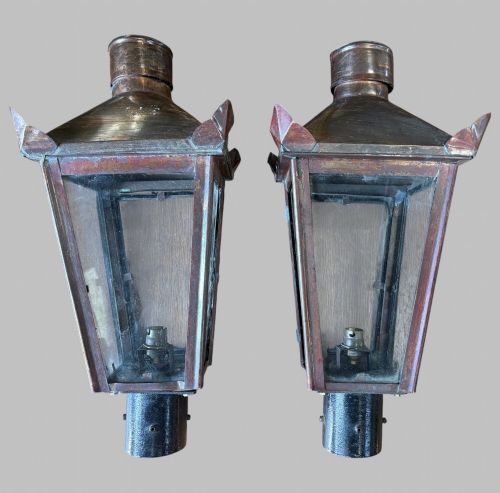
The pieces on this page span the Victorian era through the nineteen-forties, appearing as single lanterns or matched pairs. Most examples originate from the nineteenth century or nineteen-thirty, often featuring conversions from early gas lighting systems to modern electrical fittings.
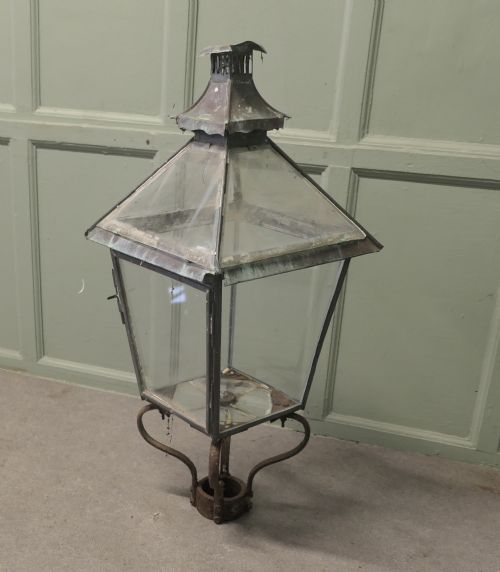
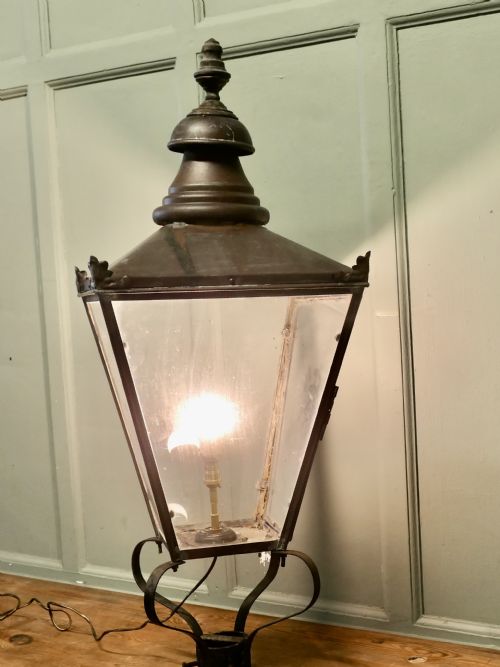
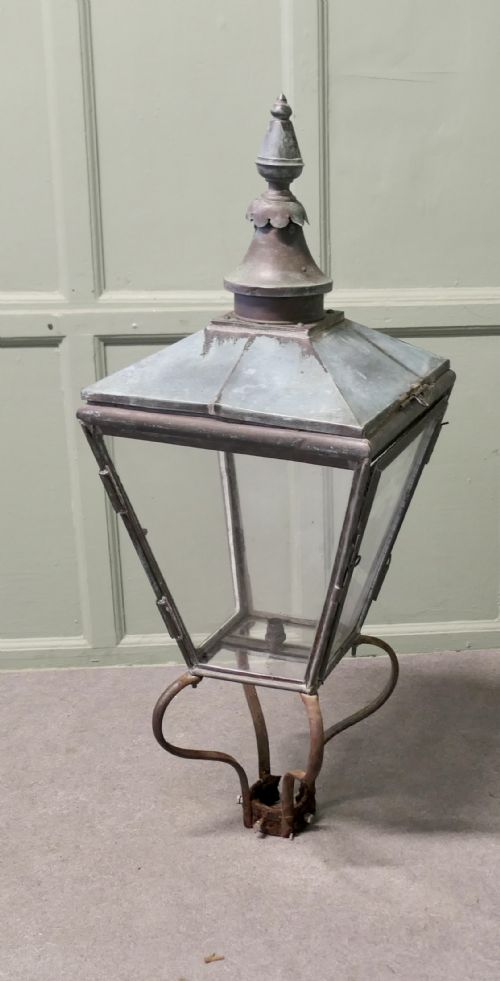
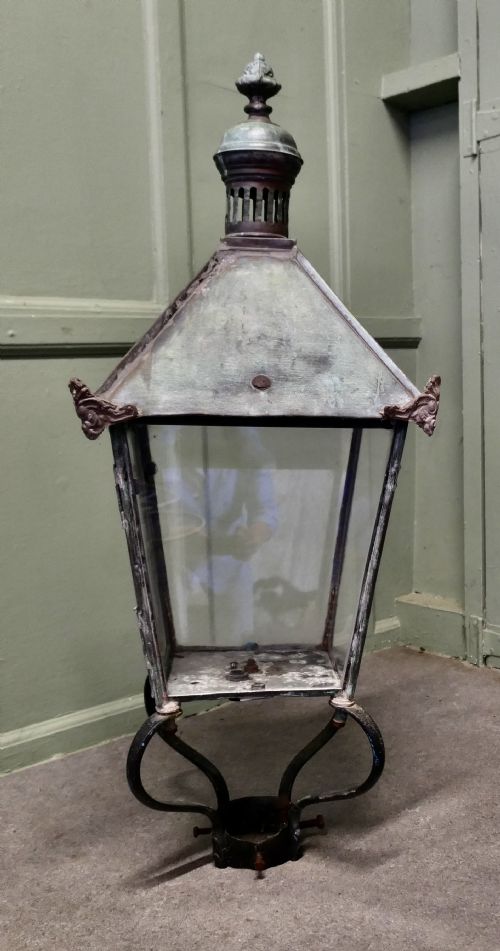
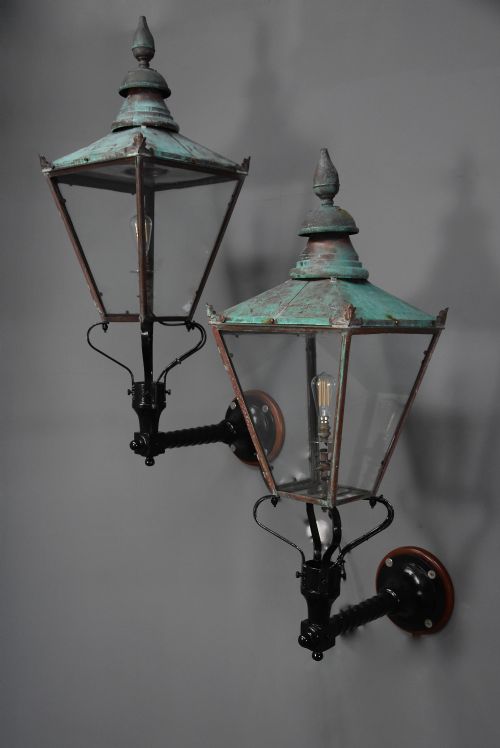
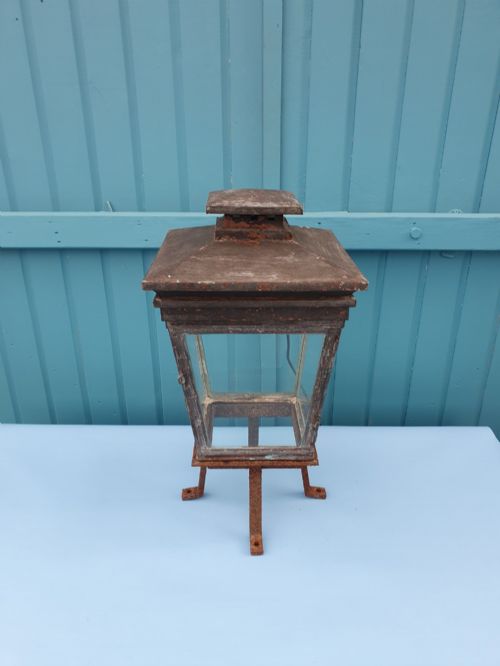
Forms vary from simple square glass-topped boxes to large Windsor style lanterns supported on spiral twist brackets. Surviving items frequently combine copper sheet bodies with iron or cast iron components intended to withstand exposed outdoor placement.
How they were made
Maker construction relies on sheet copper folded and soldered or riveted into rigid geometrical lantern frames, combined with structural elements of cast iron and wrought iron for brackets and bases. Glass panes are fitted into the metal channels to protect the internal burner or bulb while diffusing light across outdoor spaces.
Surviving surfaces often display traces of original paint or natural verdigris accumulated over decades of exposure to weather. Wall brackets utilise twisted iron or heavy metal arms designed to bear the considerable weight of large copper lanterns.
Listings feature copper combined with cast iron, wrought iron, and glass across Victorian and twentieth-century periods.
What varies in quality
Quality separates simple utility fixtures from sophisticated architectural examples by the complexity of the metalwork and the integrity of the original hardware. Superior lanterns incorporate heavy-gauge copper, elaborate cast iron brackets, and intact multi-pane glazing.
The presence of maker attribution, such as stamped foundry names or specific regional provenance like Edinburgh and Bradford, elevates a piece above standard anonymous street lighting. Surviving matching pairs also command attention through balanced proportions and uniform patination.
A Foster And Pullen Bradford
The Copper Street Lamp Glossary
- Gas conversion
- A lighting fixture originally manufactured to burn town gas that has been adapted to house electrical wiring and lamp holders. This process preserves the antique exterior housing while meeting modern domestic safety standards.
- Verdigris
- The green patina formed naturally on copper and brass through prolonged atmospheric exposure. Collectors value this stable chemical layer for its protective qualities and authentic aged appearance.
- Post lantern
- An outdoor lighting fixture designed to mount directly onto the top of a gate pier, stone pillar, or dedicated metal post. These units illuminate driveways, pathways, and property boundaries.
- Spiral twist bracket
- An ornamental wall mount featuring forged iron twisted into a helical shape to support heavy outdoor lanterns. This technique adds structural strength alongside decorative Victorian flair.
- Cast iron
- Iron poured into a mould to create rigid structural brackets, bases, and decorative trim. It provides the heavy load-bearing capacity required for large exterior lamps.
Copper Street Lamp: Frequently Asked Questions
Were these lamps originally gas?
Many surviving examples began as municipal or estate gas street lighting before being converted to electricity during subsequent decades. This transition preserves the heavy-duty copper and glass housing while allowing modern use.
Conversion usually involves routing electrical flex through the original burner assembly or base mount. The exterior character remains entirely unaltered by the internal rewiring process.
Can these hang outside?
These lanterns were built for exterior placement on walls, gates, and posts, enduring decades of weather exposure. Their heavy copper and iron construction suits them to garden and porch installation.
Weathering is part of the material history, with copper developing a natural protective verdigris over time. Regular checks on the glass panes and electrical seals help maintain them outdoors.
How do I mount a post lantern?
Post lanterns require a secure vertical mounting surface such as a stone pier, brick pillar, or matching metal post. The base fits over the top of the support structure and secures with mechanical fixings.
Weight distribution is key due to the heavy gauge of Victorian metalwork. Ensuring the bracket or post is firmly anchored prevents wind damage to the fixture.
What styles are available?
The available selection spans Victorian, Edwardian, and industrial aesthetics, including Windsor style designs with spiral brackets. Forms range from simple square glass-topped boxes to large multi-pane post lanterns.
Origins vary from standard domestic hardware to municipal street lighting stamped with regional foundry details. Each style reflects the lighting technology and architectural tastes of its specific decade.