





Copper Hanging Lamp
These copper hanging lamp designs range from sturdy railway lanterns to delicate Art Nouveau pendants, offering warm metalwork and practical overhead illumination for any interior.
Copper Hanging Lamp
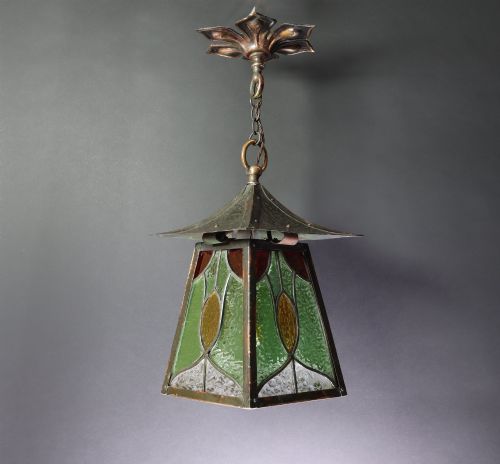
A copper hanging lamp brings industrial utility and decorative warmth to ceilings, drawing on forms made across the Victorian, Edwardian, and mid-century eras. You will encounter pendant lights, multi-arm chandeliers, and enclosed lanterns designed to illuminate porches, hallways, and living spaces.
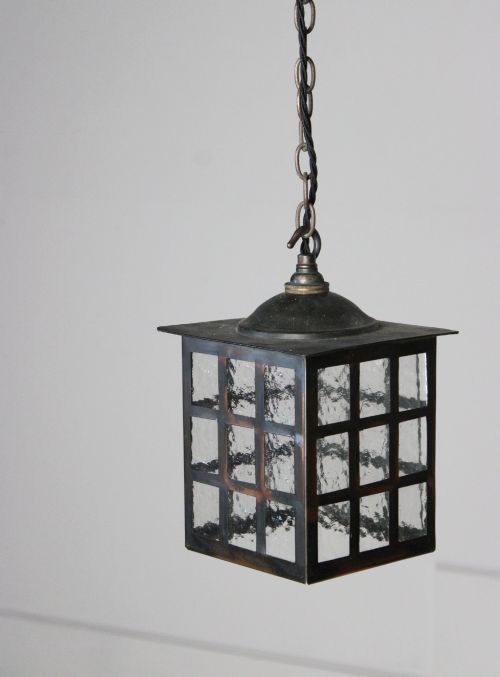
The version you are most likely to meet on this page is the Edwardian or Art Deco lantern, often combining beaten copper with glass panels for directional or diffused light. These pieces reflect historical shifts from functional railway and trade lighting to domestic stylistic revivals.
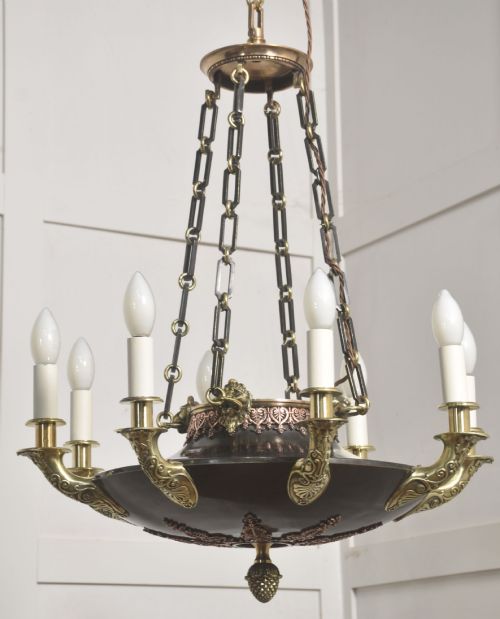
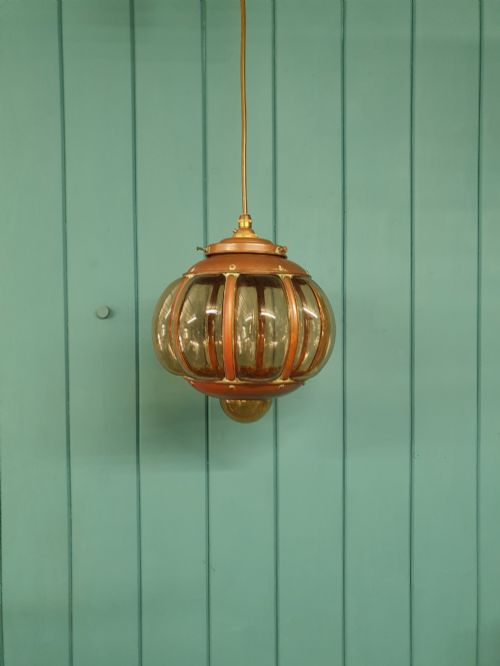
Makers adapted these overhead fixtures for domestic and commercial settings alike, resulting in diverse silhouettes that span from simple industrial domes to elaborate Gothic and Dutch-inspired brass-and-copper chandeliers. Each surviving example demonstrates how utilitarian metalwork evolved into decorative interior focal points.
Materials and construction methods
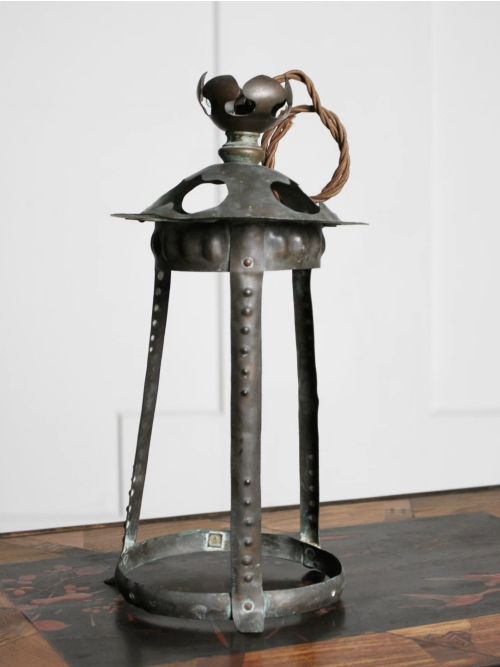
Workshops formed these fixtures primarily from sheet copper and brass, often combining iron or wrought iron brackets for structural support in heavier chandeliers and exterior lanterns. Metalworkers spun, hammered, or soldered the copper bodies into rounded, panelled, or geometric shapes depending on the prevailing style.
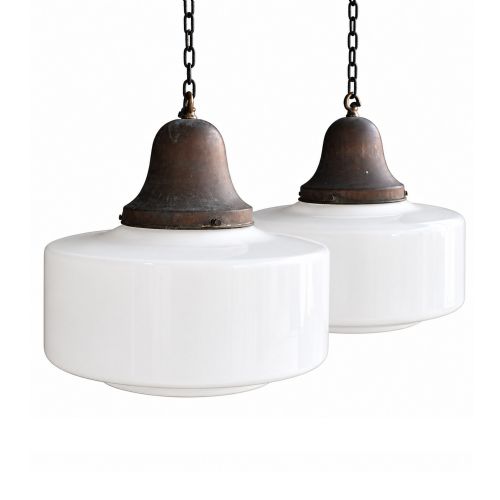
Glass elements form a crucial component of the construction, utilising smoked, frosted, or opaline panes held securely within metal frames to soften the bulb's glare. Artisans integrated these glass shades into pendant lights and hanging lanterns using specialised collars and secured fittings.
Copper Hanging Lamp Retail Price Guide 2026
Typical asking prices for copper hanging lamp among the pieces listed under this phrase on Sellingantiques today, from the lower quarter to the upper quarter. They describe what is for sale here now, not the wider market.
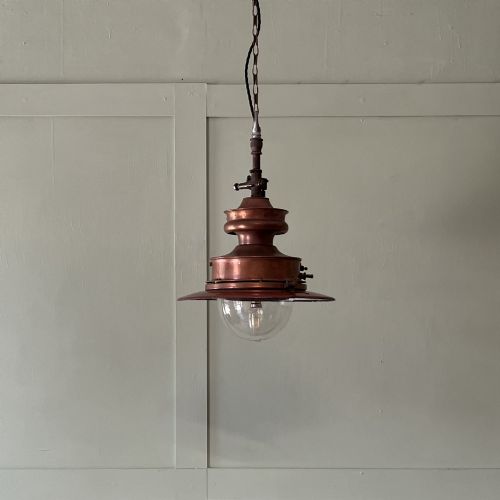
Railway guards once relied on the sturdy predecessors of these very copper lanterns to signal through the soot.
Distinctions in manufacture and finish
The calibre of a piece depends heavily on the weight of the metal gauge used in the body and the precision of the soldered or riveted joints. Heavier copper and substantial brass mounts separate robust commercial or high-end domestic pieces from lighter, mass-produced alternatives.
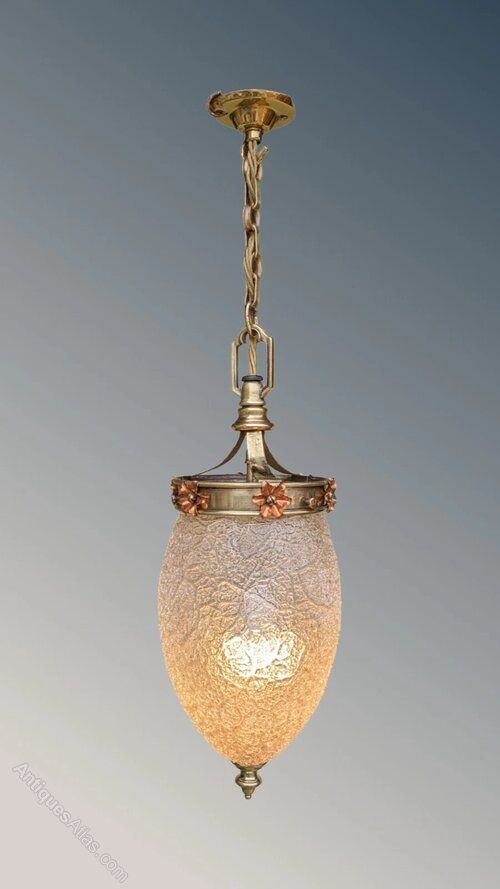
Surface finish and the integrity of the original glass panels also determine the character of the piece, with hand-hammered textures and period-correct smoked or opaline glass indicating finer workshop production. The complexity of the style, from simple industrial shades to detailed Art Nouveau or Gothic Revival work, dictates the level of artisan involvement.
Jean Gauthier
The Copper Hanging Lamp Glossary
- Pendant Light
- A single light fixture suspended from the ceiling by a chain, cord, or metal rod. These fixtures direct illumination downwards or diffuse it evenly through a surrounding shade.
- Chandelier
- A branched, multi-light hanging fixture designed to hold several bulbs simultaneously. They often incorporate mixed metals like brass and copper to enhance their decorative impact.
- Smoked Glass
- Glass treated to have a darkened, translucent appearance that subdues the brightness of the light source. It appears frequently in nautical and industrial hanging fixtures.
- Opaline Glass
- A milk-white glass type valued for its ability to diffuse light softly and evenly without harsh glare. This material is commonly found in hallway pendants and Art Deco fittings.
Copper Hanging Lamp: Frequently Asked Questions
Where should I hang a copper lantern?
These lanterns suit entryways, hallways, and covered porches where their enclosed designs protect the bulb and direct light downward.
They also work well above kitchen islands or dining tables, providing a defined focal point that anchors the room's decorative scheme.
How do I date a copper hanging lamp?
Dating relies on stylistic markers such as the flowing lines of Art Nouveau, the geometric forms of Art Deco, or the heavier utilitarian build of Victorian industrial pieces.
Materials and construction techniques, including the type of glass and the method of joining the metal panels, further help narrow down the era of production.
Are these lamps wired for modern use?
Most surviving pieces have been adapted for contemporary electrical standards while retaining their historical outer shells and original suspension chains.
Buyers should inspect the interior wiring and consult a qualified electrician to ensure the fixture meets current safety regulations before installation.