


Copper Fireside Pot
These copper fireside pot examples are practical hearth vessels shaped by centuries of utility, offering warmth and character to any fireside.
Copper Fireside Pot
When you search for a copper fireside pot, you are looking at heavy metal vessels designed for holding logs, coal, or water beside the hearth. The pieces listed here span the Georgian period, the Victorian era, and the Arts and Crafts movement.
The most common forms you will meet on this page are log bins, coal buckets, cauldrons, and kettles. They originate from British and French country traditions, utilising robust construction for daily use.
Materials and construction
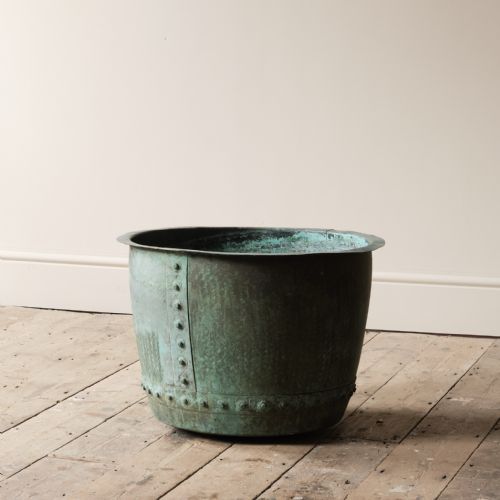
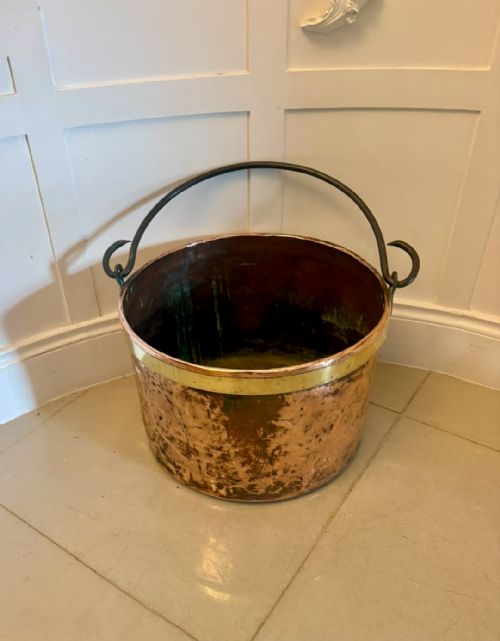
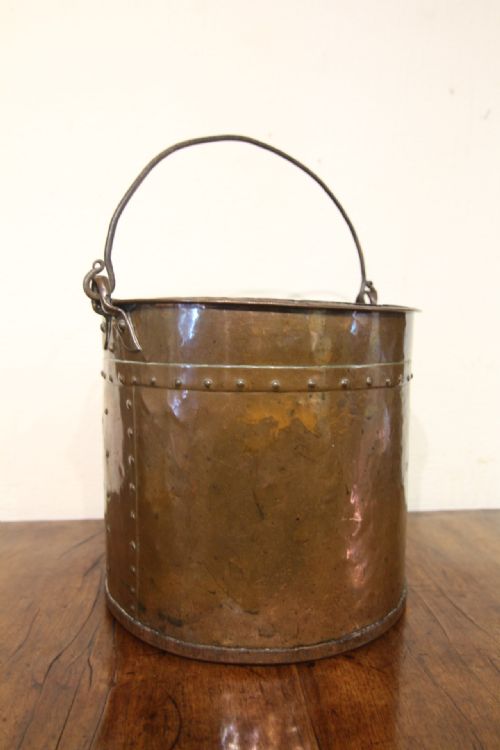
The primary material is sheet copper, often combined with brass fittings and heavy wrought iron swing handles. Rivets secure the seams of larger vessels and buckets, showing the hand of the 19th-century metalworker.
Handles and attachments utilise iron or brass, fixed firmly to the copper bodies to bear the heavy weight of logs or water. Surfaces show the marks of hammering and shaping appropriate to utilitarian workshop production.
Some heavy cauldrons still carry the faint soot marks of 19th-century hearth fires.
Judging quality in copper hearthware
Quality rests in the weight of the metal and the integrity of the construction, distinguishing thick, hand-riveted bodies from lighter stamped alternatives. A heavy gauge of copper ensures the vessel holds its shape under the strain of fuel.
The balance of the wrought iron handle and the neatness of the riveted seams separate utilitarian workshop pieces from simpler domestic items. Surface patination develops naturally over decades of hearth use, marking genuine age.
The Copper Fireside Pot Glossary
- Riveted
- Joined with metal pins hammered flat at the ends. This technique holds the overlapping copper sheets together securely on heavy buckets and cauldrons.
- Swing handle
- A movable bail handle attached to opposite sides of a pot. These are typically forged from wrought iron for strength.
- Cauldron
- A large round vessel with a curved base and a handle for hanging or carrying. They were used near the hearth for heating water or holding fuel.
- Log bin
- A deep cylindrical container designed to hold firewood by the hearth. They often feature riveted seams and sturdy handles for transport.
- Patina
- The surface sheen and colour acquired by copper and iron through age and handling. It reflects the history and use of the metal.
Copper Fireside Pot: Frequently Asked Questions
What were copper fireside pots used for?
These vessels served practical duties around the hearth, holding coal, logs, or water for household tasks. Their robust metal construction made them durable enough for daily loading and carrying.
Over time, many of these utilitarian containers moved from active service to decorative storage beside active or period fireplaces.
How do I clean a copper pot?
Most collectors prefer to leave the natural patination and dark oxidation that builds up on hearth copper over the decades. Cleaning should be minimal to preserve the historic surface character.
If you choose to polish the metal, use a mild cream and a soft cloth to avoid scratching the historical surface or removing the hand-hammered texture.
How can I tell a Georgian piece from a Victorian one?
Georgian pieces often display simpler, heavier hand-beaten construction associated with earlier domestic workshops and kettles. Details like dovetail seams and specific handle attachments can indicate earlier 18th-century work.
Victorian and later 19th-century examples frequently incorporate machine-rolled sheets, specific brass mounts, and heavier riveted bands typical of industrial production.
Can I use these pots for logs today?
These historical copper vessels remain sturdy enough to hold firewood beside a modern or traditional fireplace. Their metal construction easily withstands the weight of logs.
Check the interior and base for stability before loading fuel to ensure the historical joins remain secure.