



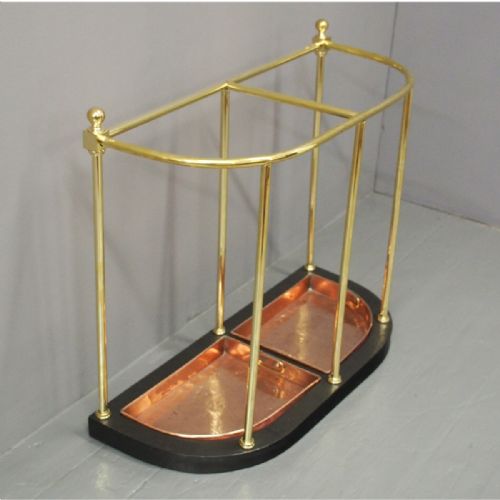
Copper Cane and Stick Stand
These copper cane and stick stand pieces bring warmth and robust utility to hallways, uniting beaten metal with practical daily storage.
Copper Cane and Stick Stand
A copper cane and stick stand provides a designated vessel for walking aids and wet umbrellas within a hallway or entrance. These items appear in domestic settings to manage hallway clutter while introducing metallic texture.
The versions most commonly met on this page span the Victorian period and the Arts and Crafts movement. They combine sheet metal work with timber or iron framing to create sturdy freestanding cylinders and buckets.
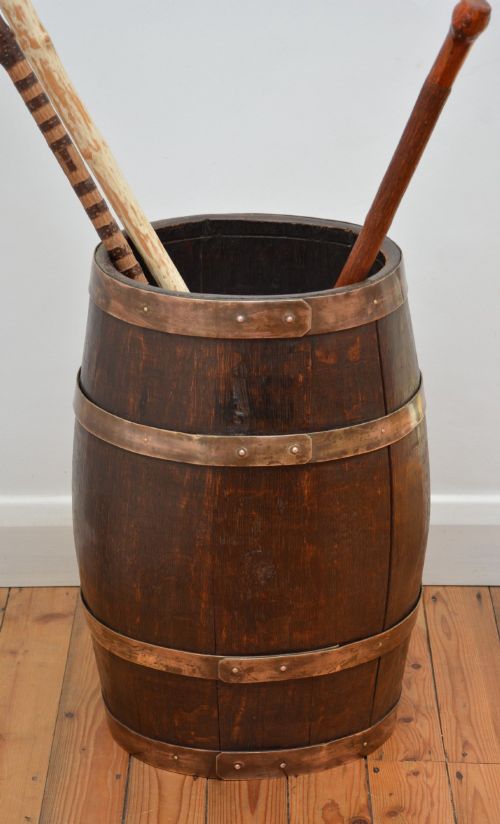
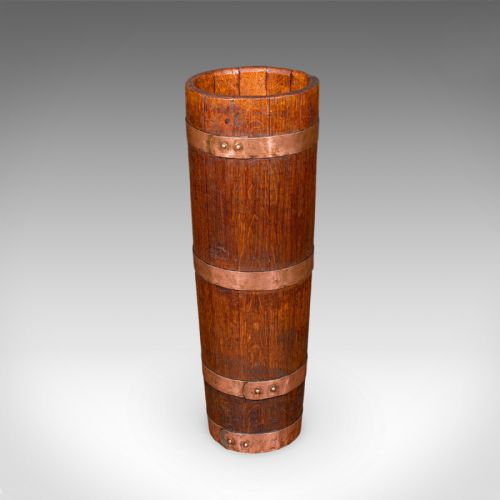
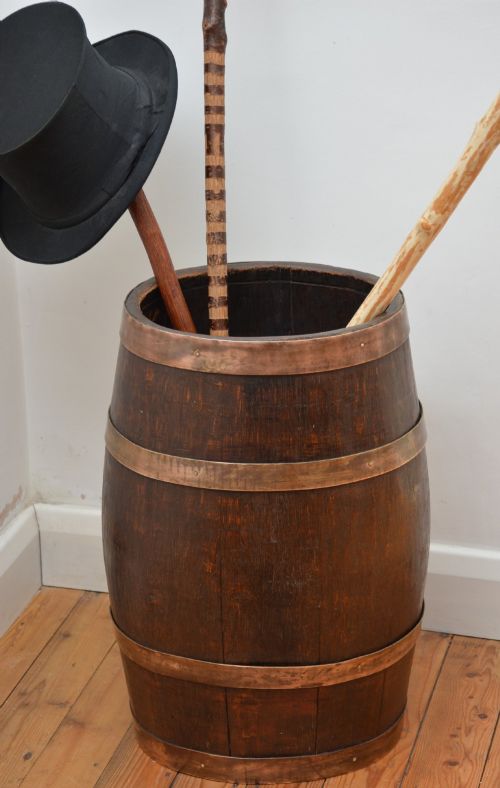
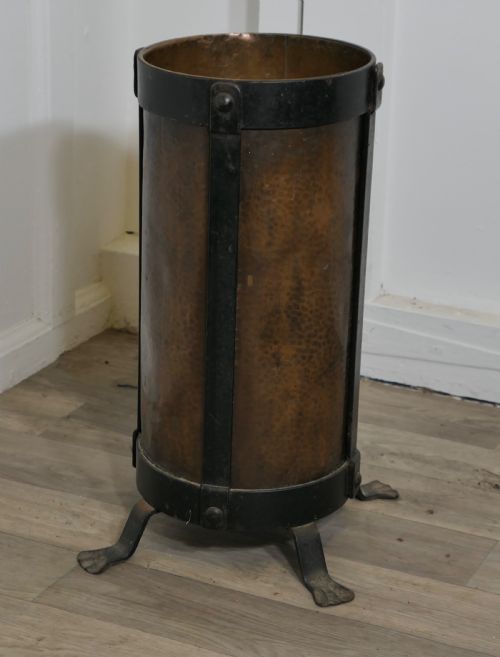
Makers utilised copper alongside brass, oak, and iron to construct these functional pieces. Forms range from coopered wooden barrels bound in metal to pure sheet copper bodies reinforced with wrought iron.
How they were made
Construction relies on joining sheet copper to structural frames of iron or staves of oak. Artisans shaped the metal by hand, securing seams with rivets and binding wooden barrels with iron hoops.
Combination pieces integrate cast iron for stability at the base or rim, ensuring the container withstands the weight of wet umbrellas and heavy walking sticks.
Copper Cane and Stick Stand Retail Price Guide 2026
Typical asking prices for copper cane and stick stand among the pieces listed under this phrase on Sellingantiques today, from the lower quarter to the upper quarter. They describe what is for sale here now, not the wider market.
Listings show pieces spanning the 19th Century, incorporating Victorian and Arts and Crafts styles alongside materials like copper, brass, oak, and iron.
What varies in quality
Quality rests in the gauge of the metal and the integrity of the structural joins. Thicker copper sheet resists denting and holds its form better over decades of daily use.
The refinement of the surface finish and the harmony of mixed materials distinguish standard utility items from more ambitious Arts and Crafts examples. Superior pieces display thoughtful riveting and robust internal framing that anchors the body securely.
The Copper Cane and Stick Stand Glossary
- Coopered
- Constructed from wooden staves fitted together side by side and bound by metal hoops, much like a traditional barrel. This technique provides natural water resistance and structural strength for holding wet items.
- Arts and Crafts
- A design movement valuing hand craftsmanship, simple forms, and visible construction methods over mass production. Pieces from this tradition often feature hammered surfaces and honest joinery.
- Wrought iron
- Iron heated and shaped by a blacksmith using tools, resulting in a fibrous structure with high tensile strength. It appears in handles, frames, and bindings on these metal containers.
- Cast iron
- Molten iron poured into a mould to create rigid structural components or heavy bases. This material adds necessary weight to keep tall containers from tipping over.
Copper Cane and Stick Stand: Frequently Asked Questions
What is a copper cane and stick stand used for?
These vessels hold walking sticks, canes, and umbrellas near an entrance. They keep hallways tidy and protect floors from wet drips.
Traditionally placed in country houses and town halls, they offer accessible storage for outdoor gear right by the front door.
How do I care for a copper cane and stick stand?
Keep the metal dry by emptying any standing water from the base promptly. Dust surfaces gently with a soft cloth to preserve the natural patina.
Avoid abrasive cleaners that strip away the historic finish. Letting the metal age naturally maintains its character.
How do I date a Victorian copper cane and stick stand?
Examine the construction methods, materials, and stylistic cues present in the piece. Victorian examples often incorporate heavy oak staves or distinct Arts and Crafts detailing.
Compare the fixing techniques, such as hand-cut rivets and iron bindings, against known period manufacturing standards.