

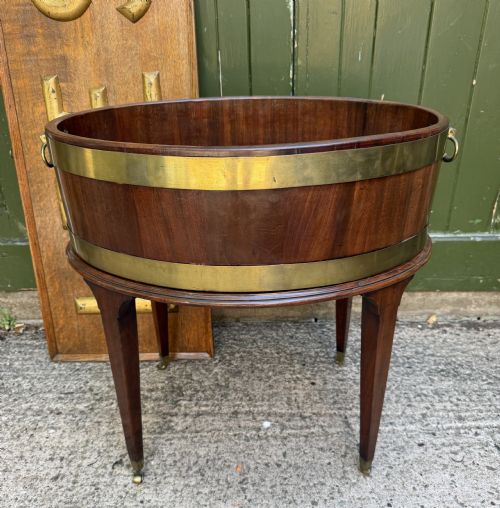


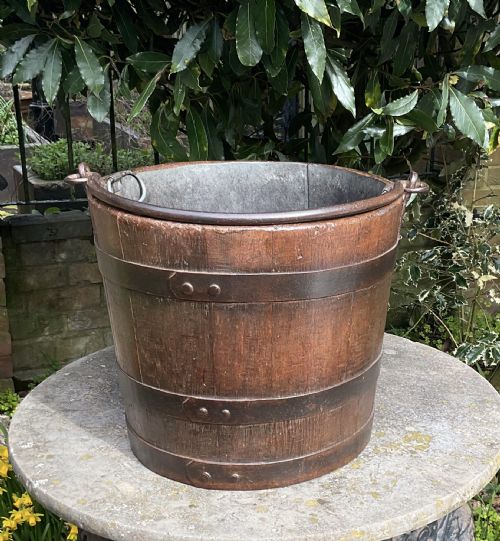


Coopered Wood Planter
These coopered wood planter examples bring traditional staved vessel craft straight into the room as handsome jardinières, wine coolers, and peat buckets.
Coopered Wood Planter
When you search for coopered wood planter, you are looking at sturdy staved vessels built by traditional barrel-making techniques to hold plants, wine, or peat. Most pieces you meet on this page take the form of buckets, barrels, and jardinières fashioned for domestic utility and display.
The selections span George III, Victorian, Edwardian, and later periods, showing how functional utility vessels evolved into decorative home furnishings. Oak and mahogany dominate the forms, frequently paired with robust metal bands that hold the wooden staves tightly in place.
How they were made
Craftsmen built these vessels using curved wooden staves shaped to form a tight cylinder, secured by strong metal bands of brass, copper, or iron. The timber was carefully selected from durable woods like oak and mahogany, ensuring the vessel could handle damp soil and wet contents without splitting.
Many examples incorporate fitted metal liners or carry handles of iron and brass to protect the interior wood from moisture and daily wear. These structural elements reflect the rigorous joinery and cooperative metalwork characteristic of nineteenth-century barrel and bucket production.
Coopered Wood Planter Retail Price Guide 2026
Typical asking prices for coopered wood planter among the pieces listed under this phrase on Sellingantiques today, from the lower quarter to the upper quarter. They describe what is for sale here now, not the wider market.
The forms span traditional wine coolers, Dutch tea stoves, peat buckets, and everyday well buckets.
What varies in quality
The finesse of the stave shaping and the tightness of the timber joints separate standard utility items from finer decorative pieces. Superior examples display carefully matched wood grain across the staves and precise blacksmithing on the metal bindings.
The presence of original hardware, such as brass bands, swing handles, and interior liners, elevates an item's integrity. Simpler vernacular work sits at the other end, valued for rustic charm rather than refined cabinetmaker execution.
The Coopered Wood Planter Glossary
- Coopered
- The method of constructing vessels from wooden staves bound together by hoops or bands. This technique originates from barrel and cask making.
- Jardinière
- An ornamental pot or stand for holding plants or flowers. These items often feature decorative metal mounts and handles.
- Stave
- One of the narrow vertical strips of wood that form the sides of a coopered vessel. Staves are bevelled to fit closely together.
- Peat bucket
- A traditional vessel used to hold peat fuel near a hearth, frequently repurposed as a planter or decorative bin.
- Wine cooler
- A large vessel lined to hold bottles and ice, sharing the same staved construction and metal banding as planters.
Coopered Wood Planter: Frequently Asked Questions
What is a coopered wood planter?
A coopered wood planter is a vessel constructed from curved wooden staves bound with metal hoops, originally made as barrels, buckets, or peat bins.
Over time, many of these sturdy containers found new life holding potted plants and florals inside domestic rooms.
How were these vessels used originally?
These staved items served various practical household tasks, from cooling wine at the dining table to storing peat near the fireplace.
Their robust construction made them ideal for holding heavy, damp materials without leaking or losing structural integrity.
How do I care for a wooden planter?
Protect the interior wood by using appropriate waterproof liners when housing live plants and damp soil.
Apply suitable wax or polish occasionally to maintain the lustre of the oak, mahogany, or walnut staves.
How do I identify the period?
Examine the timber species, the style of the metal bands, and the overall form to gauge the date of manufacture.
Georgian and George III pieces typically show refined mahogany and fine brass work, while later Victorian and Edwardian examples often utilise robust oak.