





Coopered Oak Stand
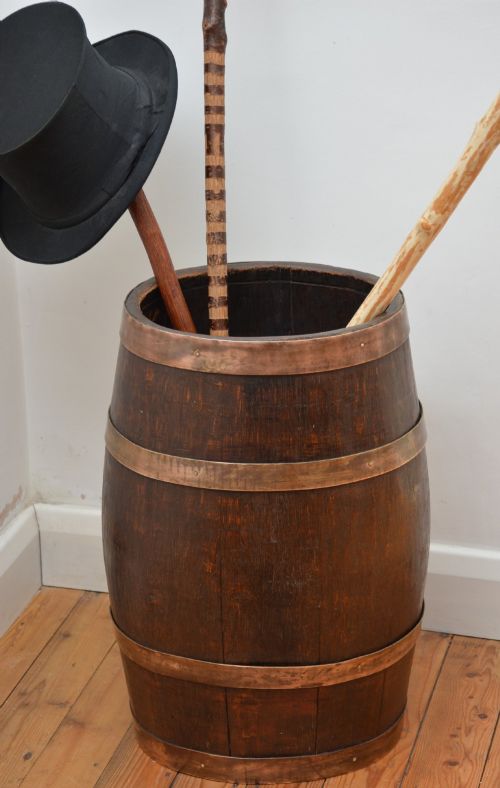
A coopered oak stand brings robust utility and traditional craftsmanship to an entrance hall, offering a sturdy vessel for walking sticks and umbrellas.
Coopered Oak Stand
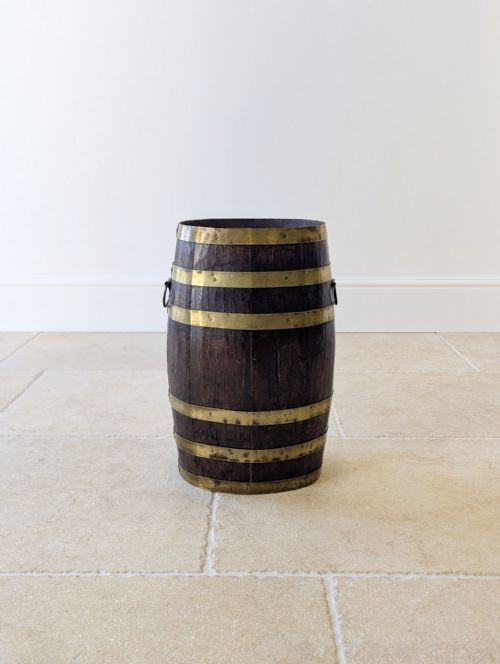
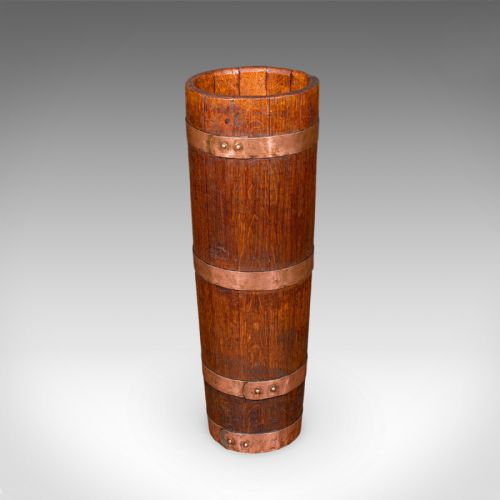
A coopered oak stand is a cylindrical or oval vessel designed primarily as an umbrella or stick stand, though plant holders and jardinieres also appear in this form. These pieces adapt traditional barrel-making techniques to domestic hall furniture, translating large-scale storage into compact hallway accessories.
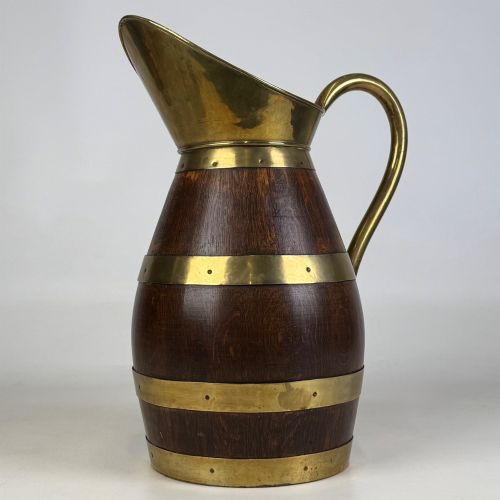
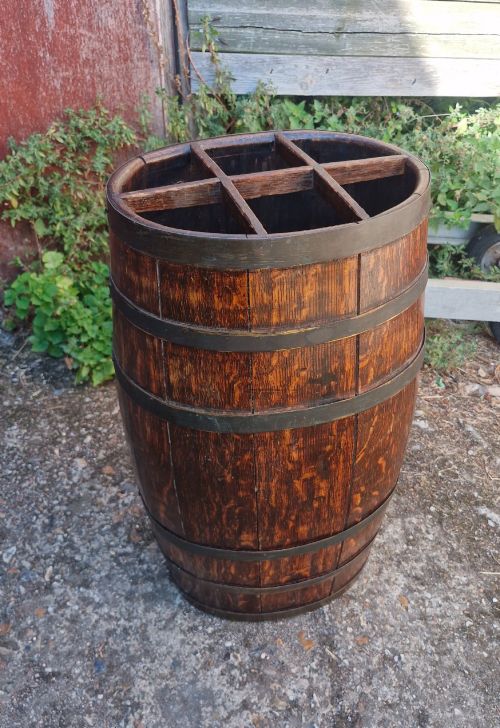
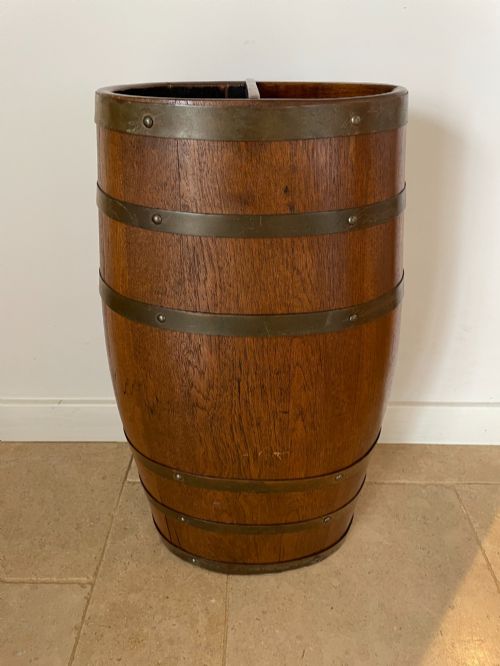
The versions most commonly found here date from the Victorian and Edwardian eras, spanning the mid-nineteenth century through to the early decades of the twentieth century. They range from small, straight-sided barrels to large cone-shaped vessels and oval forms fitted with interior loops for keeping canes in order.
Rooted in English country house traditions, these stands often display functional metal hardware designed to reinforce the timber staves. The typical piece combines utilitarian timber construction with decorative metal bands, serving a practical purpose while maintaining a rustic aesthetic.
Construction and materials
These stands are constructed using traditional coopering methods, where individual vertical wooden staves of oak are fitted together tightly to form a self-supporting hollow vessel. The natural grain of the timber provides both structural resilience and visual texture, often complemented by interior wooden stick loops.
To hold the staves under constant tension, makers applied metal bands made of brass, copper, or iron around the circumference of the barrel. These metal braces are frequently secured with rivets or studs, contrasting sharply with the warm tones of the timber.
Coopered Oak Stand Retail Price Guide 2026
Typical asking prices for coopered oak stand among the pieces listed under this phrase on Sellingantiques today, from the lower quarter to the upper quarter. They describe what is for sale here now, not the wider market.
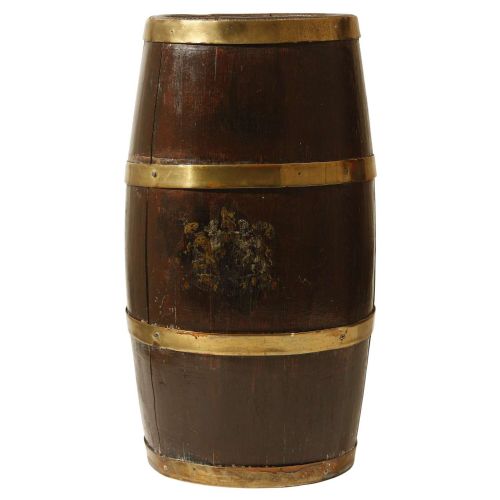
Some sturdy oak barrels come complete with an embossed brass coat of arms, ready to make your hallway feel like an English country estate.
Assessing quality and craftsmanship
Quality in a coopered oak stand rests upon the precision of the stave joints and the thickness of the timber utilised by the maker. Superior examples exhibit tight, seamless joins between the staves that maintain structural integrity without relying on excessive filler or modern adhesives.
R.A. Lister
The Coopered Oak Stand Glossary
- Coopered
- Built using the method of stave construction traditionally employed for barrels, buckets, and casks. The curved wooden staves are tapered and fitted edge-to-edge.
- Stave
- One of the narrow vertical strips of oak that form the sides of a barrel or stand. These pieces are shaped precisely to curve inward toward the base and rim.
- Brass bound
- Fitted with exterior metal bands made of brass to hold the wooden staves firmly in place. This serves both a structural function and a decorative purpose.
- Jardiniere stand
- A decorative vessel designed to hold a potted plant, sharing the same coopered construction as stick stands. These items are frequently lined with metal or ceramic.
- Umbrella loop
- An interior metal or wooden divider fitted inside the rim of the stand to separate individual walking sticks and umbrellas. This keeps longer items upright and orderly.
Coopered Oak Stand: Frequently Asked Questions
What is a coopered oak stand used for?
These vessels were originally designed for entrance halls and boot rooms to hold walking sticks, canes, and umbrellas upright. Their waterproof timber construction made them ideal for catching drips from wet weather gear.
Over time, many of these same barrels have been repurposed as indoor planters and jardiniere stands for ferns and large house plants.
How do I date a Victorian stand?
Victorian pieces typically display heavier timber proportions and hand-hammered brass or copper bands fixed with visible rivets. The joining techniques and the patina of the oak offer clues to their mid-to-late nineteenth-century origins.
Later Edwardian versions often feature lighter construction, machine-finished brasswork, and sometimes maker stamps or more refined decorative mounts.
Are these stands waterproof?
Because they were constructed using traditional barrel-making techniques, these vessels were built to hold moisture without leaking. However, centuries of drying can sometimes cause tiny gaps to form between the oak staves.
If you plan to use an antique stand for live plants or wet umbrellas, it is wise to check whether an interior liner is present to protect the base.
How do I maintain the oak and brass?
The oak timber benefits from occasional applications of natural beeswax to nourish the grain and prevent it from drying out in centrally heated rooms. Avoid exposing the wood to direct sunlight or extreme temperature shifts.
The brass or copper bands can be left with their aged dark patina or gently polished with a soft cloth if you prefer a brighter metallic finish.