



Coopered Cane Holder
A coopered cane holder is a sturdy timber barrel built to keep wet umbrellas and walking sticks tidy in a hallway.
Coopered Cane Holder
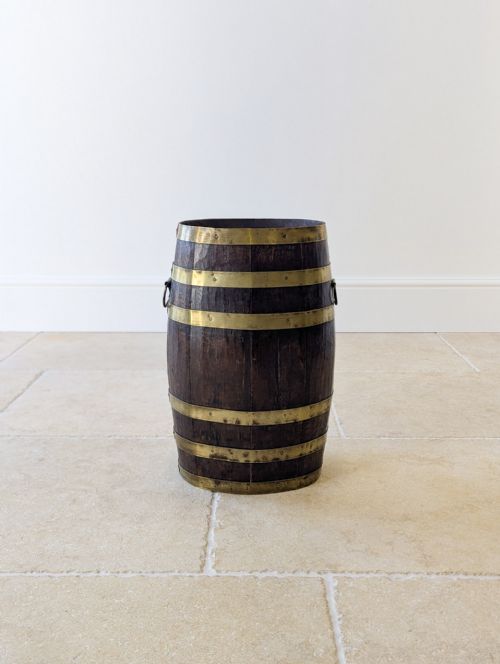
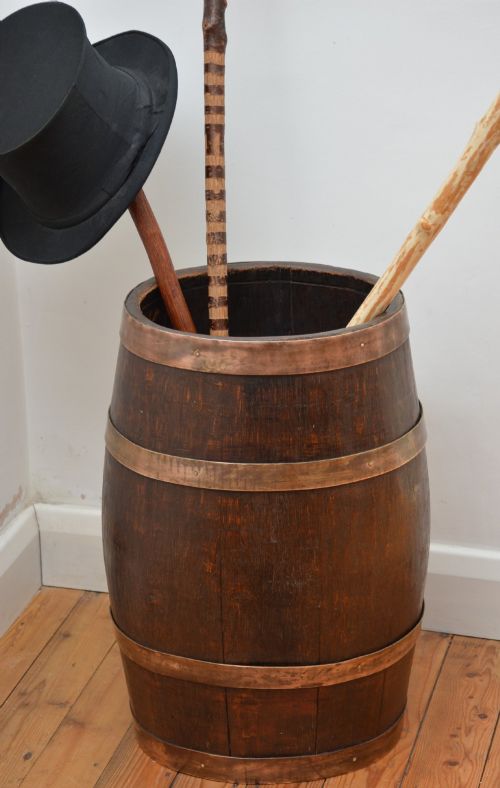
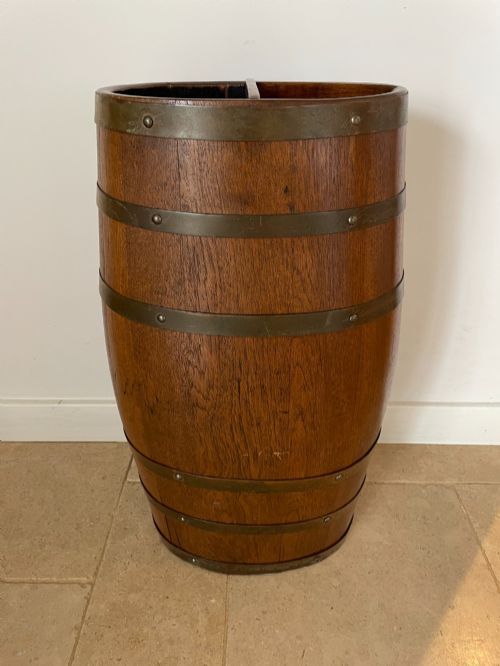
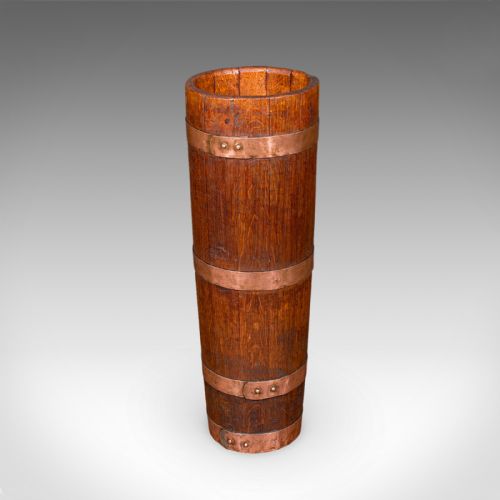
When you search for a coopered cane holder, you are looking at sturdy barrel-form containers designed to hold wet umbrellas and walking sticks in a hallway. The pieces seen on this page predominantly take the form of umbrella stands and stick stands fashioned in the manner of small barrels or casks.
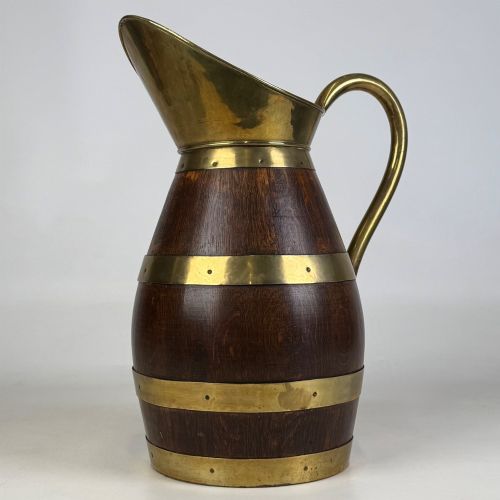
Most examples date from the Victorian period through to the early decades of the twentieth century. You will frequently encounter traditional English country house styles constructed from oak, often fitted with brass or metal bands.
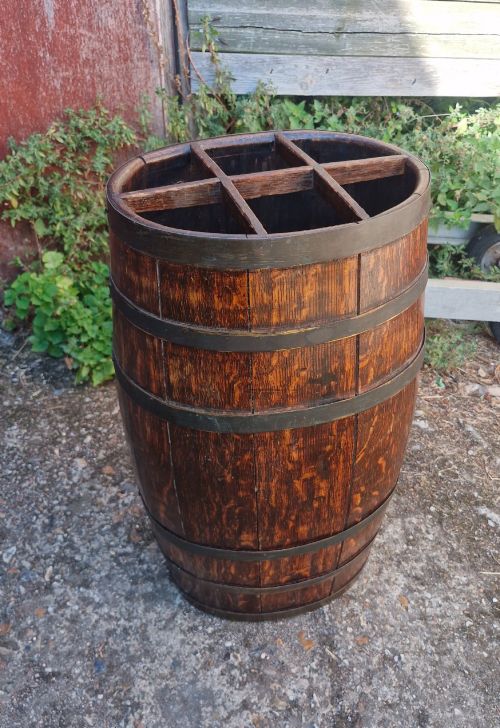
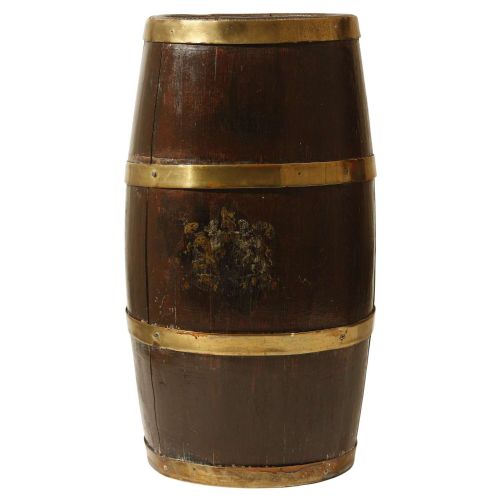
Forms vary from straightforward round barrels to oval shapes, sometimes featuring metal umbrella loops or applied coats of arms. These practical vessels served as essential furniture in entrance halls to protect floors from dripping rain.
Materials and construction
The construction relies on traditional cooperage techniques, assembling vertical wooden staves of oak to form a tight, self-supporting cylindrical or oval vessel. These staves are shaped with bevelled edges so they fit closely together without the use of glue.
To hold the staves under tension and provide structural strength, makers secured them with bands of brass, copper, or iron. Some iterations incorporate painted finishes or applied decorative elements like metal umbrella loops and coats of arms.
Coopered Cane Holder Retail Price Guide 2026
Typical asking prices for coopered cane holder among the pieces listed under this phrase on Sellingantiques today, from the lower quarter to the upper quarter. They describe what is for sale here now, not the wider market.
Listings on this page span from the mid-nineteenth century to the 1930s, featuring oak timber and brass or iron bands in traditional English styles.
Factors of quality
Quality in these stands is determined by the precision of the cooperage work and the thickness of the timber staves used in the barrel. Finer examples display tight, seamless joints between the oak staves and heavy gauge metal bracing.
The choice of secondary materials also separates standard utility pieces from more decorative household items. Substantial brass banding and well-formed structural loops indicate a higher standard of manufacture compared to simpler iron-bound versions.
The Coopered Cane Holder Glossary
- Coopered
- Constructed from wooden staves shaped and fitted together side by side to form a curved vessel, exactly like a barrel. This traditional woodworking method allows the container to hold its shape securely.
- Stave
- One of the narrow tapered pieces of oak that are joined edge to edge to make up the sides of a coopered barrel. The precise angle of each stave ensures the overall cylinder remains watertight.
- Band
- A metal hoop, usually made of brass or iron, fitted tightly around the circumference of the barrel to bind the staves together. These bands maintain the structural tension of the piece.
- Umbrella loop
- A metal divider attached to the top of certain stands to keep individual walking sticks and umbrellas separated and upright. This addition prevents the contents from leaning together haphazardly in the hall.
Coopered Cane Holder: Frequently Asked Questions
What is a coopered cane holder?
A coopered cane holder is a wooden barrel-shaped container built by a cooper to store walking sticks and umbrellas. These pieces use tightly fitted staves bound by metal hoops.
They were designed for placement in Victorian and Edwardian entrance halls. Their primary function was to catch rainwater from wet umbrellas while keeping hallways neat.
How do I date a stick stand?
Dating relies on examining the timber, the type of metal used for the bands, and the overall construction style. Victorian and nineteenth-century examples often feature heavy oak and hand-beaten brass.
Later pieces from the early twentieth century may show simpler machine-cut components. Maker details or specific brass accents can also narrow down the manufacturing period.
Were these used for umbrellas or canes?
They served a dual purpose for both walking canes and wet umbrellas in traditional English homes. Country houses needed robust vessels to manage heavy daily foot traffic.
The deep wooden interior accommodated long walking sticks as well as folded cloth umbrellas. Metal loops at the top helped keep the items separated.
Where should I place it at home?
These stands fit naturally in an entrance hall, porch, or boot room where outdoor gear is stored. Their barrel form takes up minimal floor space while offering generous vertical storage.
Ensure the interior base is protected if storing very wet umbrellas to preserve the historic oak timber. They complement traditional and rustic interior schemes particularly well.