



Convertible Brooch Pendant Gold
These convertible brooch pendant gold pieces transition effortlessly between a corsage ornament and a neckpiece, offering two ways to wear a single item.
Convertible Brooch Pendant Gold
When you search for a convertible brooch pendant gold piece, you are looking at dual-purpose jewellery designed to pin to clothing or suspend from a chain. The versions you are most likely to meet on this page span the Victorian and Edwardian periods, stretching from the mid-nineteenth century into the early twentieth century.
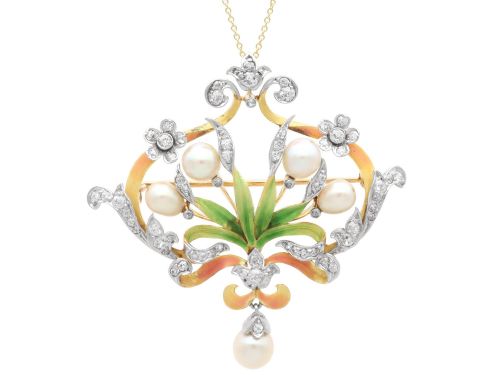
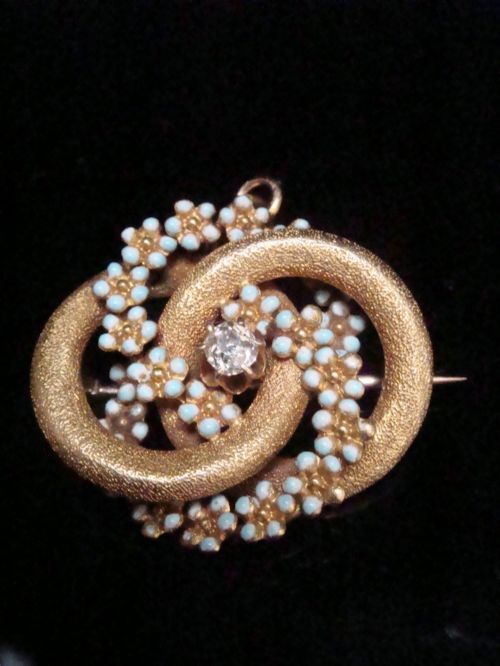
Makers of this era engineered clever detachable fittings, hinged loops, and screw-in pin stems that vanish away when the jewel hangs around the neck. Forms range from naturalistic flowers, butterflies, and flies to symmetrical starbursts, bows, and forget-me-knot lover's knots.
The selection draws on nineteenth-century designs alongside early twentieth-century creations, encompassing everything from elaborate tiara conversions to simpler pendant brooches. Each item bridges day wear and evening attire through a mechanical transformation that remains hidden until activated.
How they were made
Goldsmiths utilised yellow gold in various purities alongside silver and rose gold, often mounting stones in silver-topped gold settings to enhance the whiteness of diamonds. Gemstones such as diamonds, rubies, pearls, opals, garnets, peridots, and tourmalines were secured by hand using claw or collet settings.
Complex mechanisms, including threaded screw fittings and folding loops, were soldered onto the reverse to allow the transition between brooch and pendant without compromising the front design. Master jewellers balanced structural strength with delicate ornamentation, ensuring the hidden hardware withstood regular conversion.
Convertible Brooch Pendant Gold Retail Price Guide 2026
Typical asking prices for convertible brooch pendant gold among the pieces listed under this phrase on Sellingantiques today, from the lower quarter to the upper quarter. They describe what is for sale here now, not the wider market.
Listings feature items from the Victorian and Edwardian eras, incorporating fifteen-carat yellow gold, silver, and platinum.
What varies in quality
The sophistication of the conversion mechanism marks the difference between basic utility and high craftsmanship, with superior examples offering completely seamless transitions that leave no trace of the alternative fitting. The security of the catches, the smoothness of the screw threads, and the rigidity of the pin dictate how well the piece survives daily manipulation.
Gemstone selection and weight dictate the upper tier of the range, particularly when dealing with certified diamonds, natural pearls, and vibrant coloured stones like opal, garnet, or pink tourmaline. The precision of the stone-cutting and the harmonious balance of the overall design elevate certain starbursts and floral motifs above standard workshop output.
The Convertible Brooch Pendant Gold Glossary
- Convertible
- A piece of jewellery engineered with removable or folding components to serve multiple functions, such as shifting from a brooch to a pendant.
- Collet
- A band of metal that encircles a gemstone to hold it in place, common in antique settings before modern prong mounts dominated.
- Cabochon
- A gemstone shaped and polished with a smooth, rounded surface rather than faceted with flat planes.
- Seed pearl
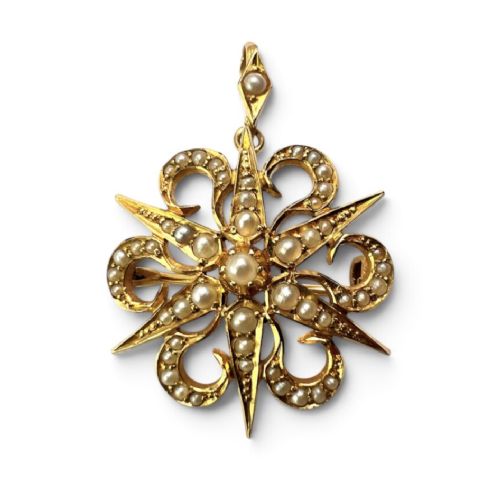
- A very small natural pearl, often drilled and strung or clustered densely to form floral or star patterns.
Convertible Brooch Pendant Gold: Frequently Asked Questions
How do I convert a brooch into a pendant?
Most pieces feature a hidden hinged loop that folds up from the top edge, or a screw-in mechanism that lets you detach the pin entirely. You simply flip the bail upward or remove the sharp pin stem before sliding the jewel onto a neck chain.
Take care to test the hinge gently the first time, as antique mechanisms can stiffen with age. Once the loop is upright, the piece hangs forward correctly against the chest.
Are these pieces safe to wear every day?
While these jewels were built for regular social use in the nineteenth and early twentieth centuries, their delicate mechanics require mindful handling today. Pearls and opals demand particular care to avoid moisture and cosmetics, whilst secure pin catches prevent accidental loss.
Store your piece in a dedicated box when not in use to protect the convertible hardware from bending. Periodic checks by a specialist jeweller ensure the settings and conversion fittings remain secure.
How do I tell Victorian pieces apart from Edwardian ones?
Victorian examples often feature heavier gold weights, deeper gemstone hues like garnet and opal, and motifs such as lover's knots, butterflies, and bold starbursts. The metals can include rich yellow gold and silver-topped settings.
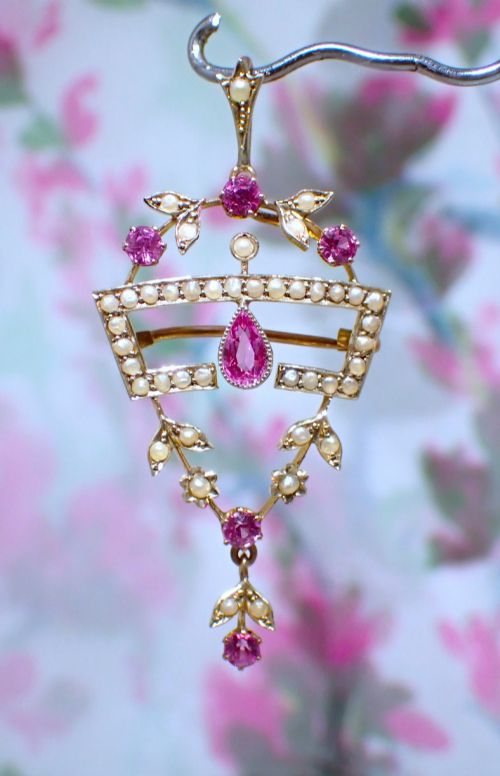
Edwardian items frequently showcase lighter frames in nine-carat or fifteen-carat gold, paired with seed pearls, delicate diamond clusters, and pastel stones like pink tourmaline or peridot. The overall aesthetic shifts toward airier, lace-like platinum and gold work.
What is a starburst brooch pendant?
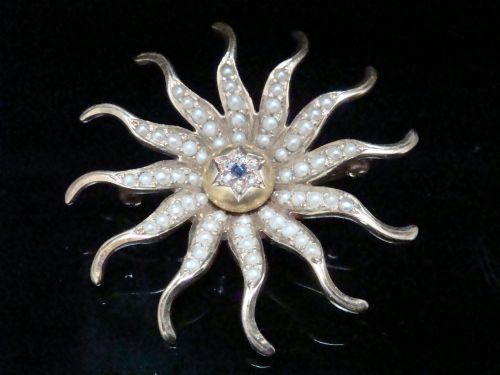
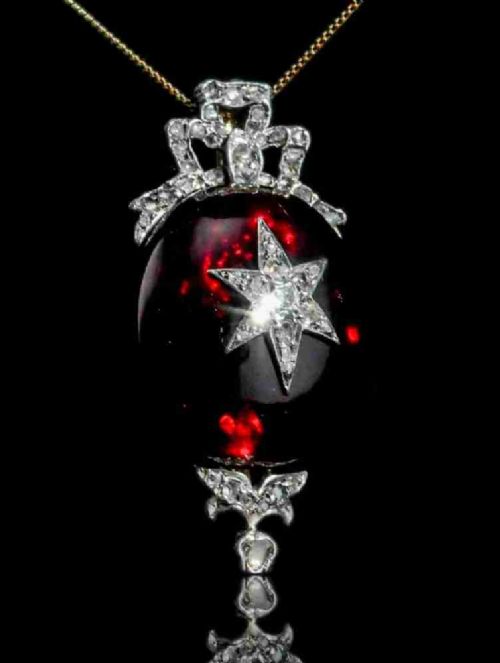
A starburst is a symmetrical design featuring rays radiating outward from a central diamond or gemstone cluster, mimicking a glowing star. In convertible formats, these items often double as tiara elements or high-neck pendants.
The radiating diamond rays catch candle and electric light from multiple angles, making them popular choices for evening galas in the Victorian era.