






Converted Urn Lamps
These converted urn lamps bring together centuries-old vessels and steady modern wiring, offering a warm and distinctive glow to a room.
Converted Urn Lamps
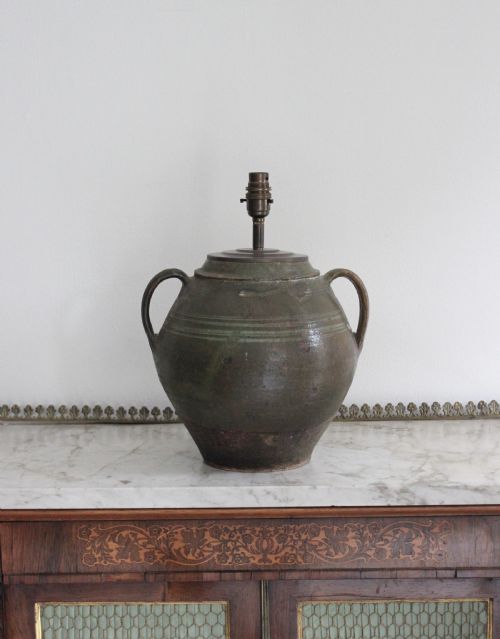
Converted urn lamps take older vessels, vases, ewers, and candlesticks, and adapt them into functional table lamps for modern interiors. When searching for converted urn lamps, a buyer encounters pieces originating from the seventeenth century through to the early twentieth century.
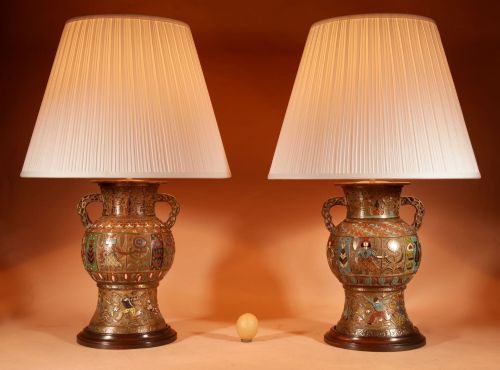
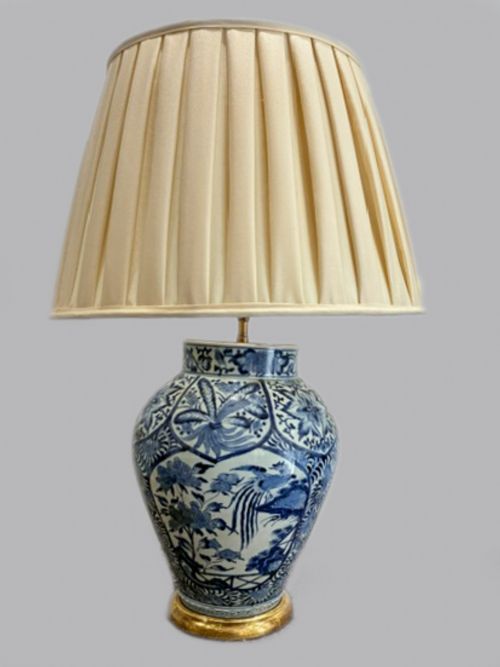
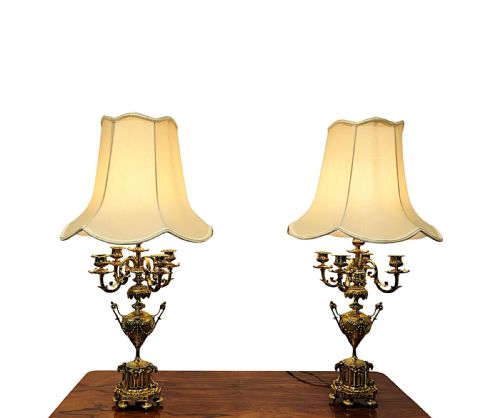
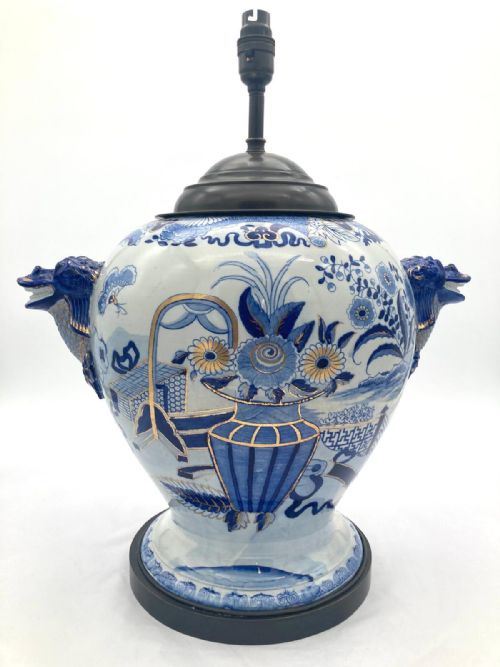
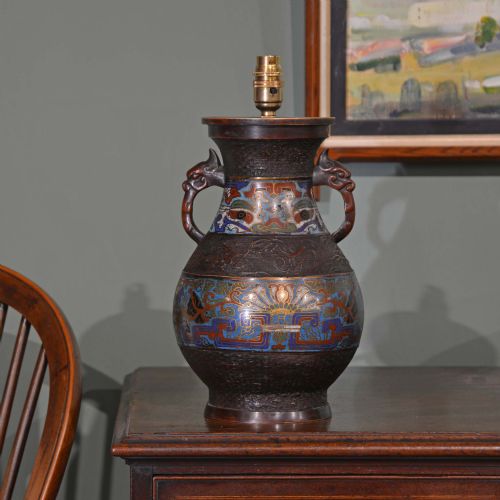
The selection here encompasses diverse traditions, ranging from Japanese Meiji period cloisonné enamel and Dutch Delftware to Regency ironstone and Victorian brass. Most examples derive their core body from porcelain, bronze, brass, or earthenware, paired with fabric shades.
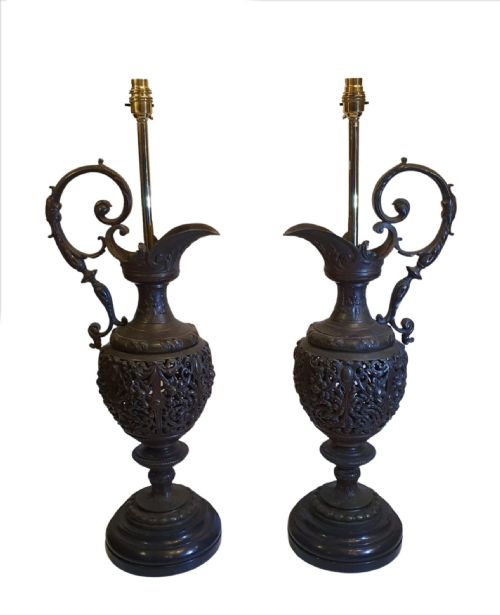
Vessels span various aesthetic styles, including Chinoiserie, Neoclassical, and rustic country designs. Table lamps dominate the form, utilising bodies originally fashioned as vases, ewers, or candlesticks before later adaptation.
How they were made
Makers utilised rigid metals such as bronze, gilt brass, and ironstone alongside delicate ceramics like porcelain, earthenware, and glazed pottery to form the central body of each lamp. Decorative techniques involved hand painting, gilding, and champlevé enamel work.
Conversion work required boring through or mounting the original antique vessel to accommodate electrical wiring while preserving the structural integrity of the historical base. Fabric components were subsequently added to complete the table lamp.
Converted Urn Lamps Retail Price Guide 2026
Typical asking prices for converted urn lamps among the pieces listed under this phrase on Sellingantiques today, from the lower quarter to the upper quarter. They describe what is for sale here now, not the wider market.
Several vases started life holding flowers centuries ago before a clever electrician gave them a second career reading books.
What varies in quality
Quality rests heavily on the integrity of the original vessel and the sympathy of the conversion process. Finer pieces retain crisp hand-painted details, intact enamel, or precise metal casting without compromising the underlying antique.
The balance and proportion of the assembled lamp dictate its presence on a table. Superior examples integrate the electrical fittings seamlessly, whereas lesser conversions display awkward mounts or heavy-handed alterations.
Hicks and Meigh·Samson
The Converted Urn Lamps Glossary
- Champlevé
- An enamelling technique where recessed areas are gouged out of a metal surface, filled with vitreous enamel, and fired. This method creates vibrant, multi-coloured patterns across bronze and brass bodies.
- Cloisonné
- A metalwork technique where thin wire partitions are affixed to a base to form compartments filled with enamel paste. It appears frequently on Japanese Meiji period pieces.
- Baluster
- An architectural form featuring a swelling lower portion tapering towards the top, commonly found in the profile of ceramic vase lamps. This shape provides a stable and visually pleasing foundation.
- Ewer
- A large jug with a wide spout and a handle, originally intended for pouring water but frequently adapted into lighting. These vessels lend an asymmetrical silhouette to table lamps.
- Delftware
- Tin-glazed earthenware produced in the Netherlands, typically featuring blue and white decoration inspired by imported Asian ceramics. Delft vases adapted as lamps display distinctive tin-glazed earthenware bodies.
Converted Urn Lamps: Frequently Asked Questions
How are antique vessels safely converted into lamps?
Conversion generally involves mounting the vase, urn, or candlestick with electrical components designed to fit the existing aperture without damaging the antique body. Careful drilling or secure collar fittings allow wiring to pass through safely.
Modern rewiring ensures the piece meets current electrical standards while retaining the original decorative ceramic or metal exterior.
Where should I place a table lamp of this size?
These lamps suit side tables, sideboards, or large desks where their height and substantial materials can act as a focal point. Their decorative bodies require a surface with enough depth to support the proportions.
Placing them away from heavy foot traffic protects delicate enamel work, hand-painted porcelain, and fabric shades from accidental knocks.
How do I identify the period of the base?
Dating relies on examining the manufacturing marks, glaze characteristics, and metal casting techniques specific to the era, such as seventeenth-century Japanese potting methods or nineteenth-century brass casting. Stylistic cues like Neoclassical motifs or Meiji period cloisonné also indicate the age.
Experts look at wear patterns on the underside and the material composition to distinguish between eighteenth-century earthenware and later reproductions.
Can the fabric shades be replaced easily?
Shades are normally attached using standard fittings that accommodate modern replacements if the original fabric wears out or fails to match your interior. Changing the shade alters the quality of light diffused into the room.
Selecting a neutral fabric often highlights the intricate patterns and colours of the ceramic or bronze base beneath.