




Continental Walnut Bookcase
A continental walnut bookcase brings rich timber and architectural presence to a room, offering practical storage with distinct regional character.
Continental Walnut Bookcase
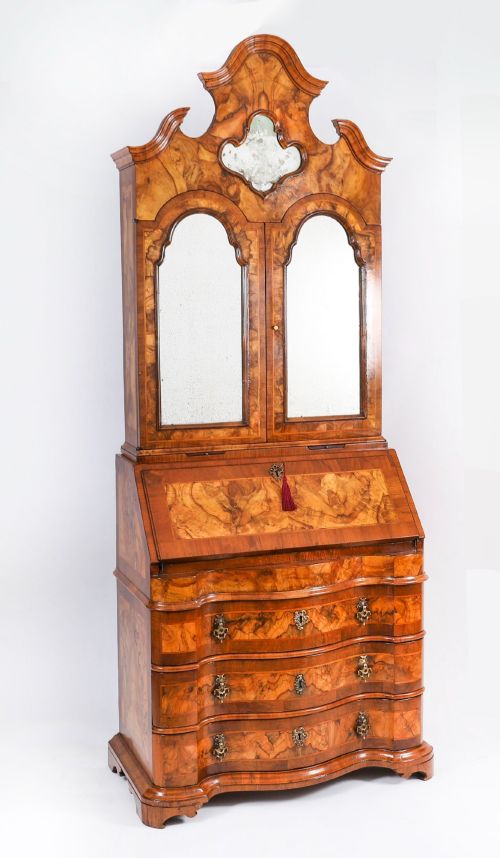
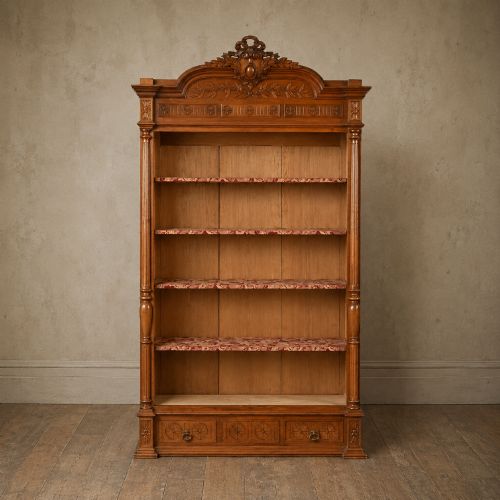
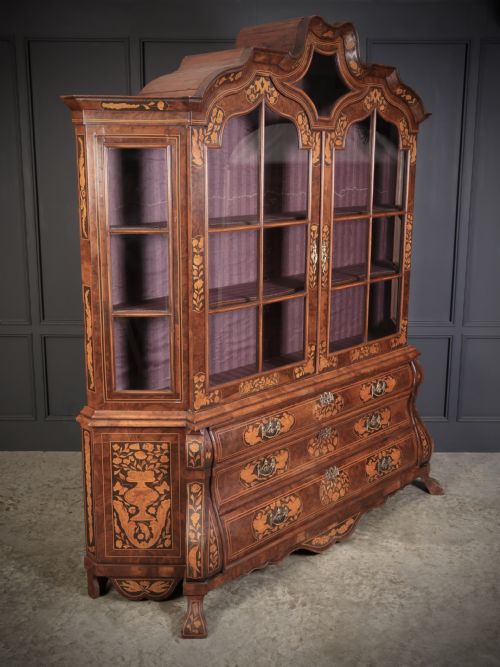
A continental walnut bookcase combines functional shelving with substantial cabinetry, appearing in forms such as open library bookcases, bureau bookcases, and glazed display cabinets. These pieces span the eighteenth century to the early twentieth century, incorporating styles from South German Baroque and Italian Neoclassical to Biedermeier and Victorian periods.
Buyers browsing this selection will most frequently encounter nineteenth-century walnut pieces alongside eighteenth-century Italian and German examples. Forms range from large carved solid wood open library shelves and breakfront bookcases to smaller vitrines and bureau bookcases with fitted interiors.
How they were made
Cabinet makers constructed these pieces primarily using solid walnut and burr walnut veneer, frequently enhancing surfaces with fruitwood inlay and marquetry. Construction methods involve substantial timber foundations shaped into bombe profiles or straight-lined architectural facades.
Glazing and metalwork form integral components of the construction, utilising glass panels for display doors alongside brass and iron hardware. Carved solid wood details define the structural ornamentation across nineteenth-century and earlier continental examples.
Listings feature walnut timber combined with glass, brass, iron, and fruitwood inlay across various nineteenth-century and eighteenth-century forms.
What varies in quality
Quality differences emerge in the execution of the timber work, particularly in how burr walnut veneers and fruitwood marquetry are handled across the surface. Finer examples display meticulous attention to inlay patterns and harmonious grain matching.
The sophistication of the period style dictates the depth of craftsmanship, distinguishing simpler utility pieces from elaborate South German Baroque or Italian Neoclassical commissions. Sculptural carving and the integration of specialised elements like bureau desks or bombe shaping separate standard regional items from exceptional works.
The Continental Walnut Bookcase Glossary
- Bureau bookcase
- A cabinet combining a sloping desk flap over drawers with a shelved upper section for books. This dual-purpose form allows for both writing and storage.
- Bombe
- A swelling, outward-curving contour found on the front and sides of cabinet furniture. It requires advanced woodworking skill to execute successfully in solid wood and veneer.
- Marquetry
- Decorative patterns formed by fitting together thin slices of various woods and other materials onto a structural surface. Fruitwood inlay is frequently utilised in this technique.
- Vitrine
- A glass-fronted cabinet designed for the display of objects or books. These pieces often feature glazed doors to protect the contents while maintaining visibility.
Continental Walnut Bookcase: Frequently Asked Questions
What periods do these bookcases cover?
The pieces span from the eighteenth century through the nineteenth century up to the early twentieth century.
Examples include specific historical periods such as the eighteenth century, the Victorian era, and Biedermeier designs.
What materials feature in the construction?
Primary materials include walnut and burr walnut veneer, complemented by fruitwood inlay and solid wood.
Additional elements such as glass, brass, and iron appear across doors, shelving, and hardware fittings.
What regional styles are available?
Styles encompass South German Baroque, Italian Neoclassical, and Dutch Baroque design traditions.
Nineteenth-century continental and Biedermeier interpretations also appear frequently among the listings.