
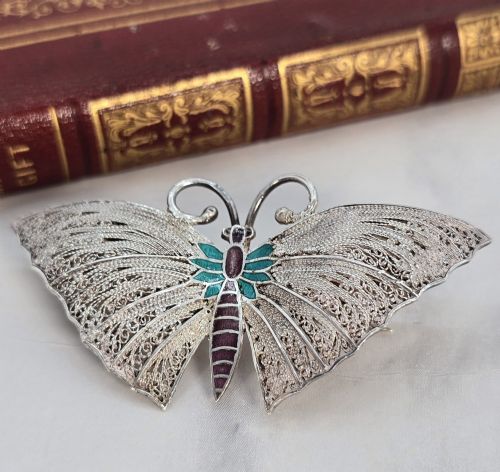


Continental Silver Jewellery
Continental silver jewellery brings together intricate metalwork and enamel pieces from periods spanning the eighteenth century to the art deco era.
Continental Silver Jewellery
Continental silver jewellery encompasses a diverse array of wearable items and personal storage pieces originating from various European workshops and makers. When you browse this selection, you encounter items ranging from brooches and rings to bracelets and pendants.
The objects span multiple distinct eras, drawing upon Georgian, Victorian, and Arts and Crafts design traditions. Art Deco pieces with enamel work also feature prominently alongside earlier eighteenth-century examples.
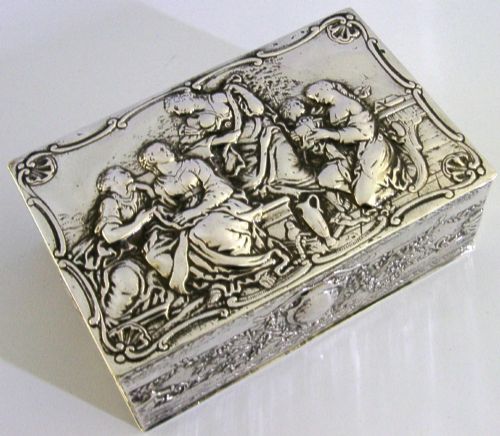
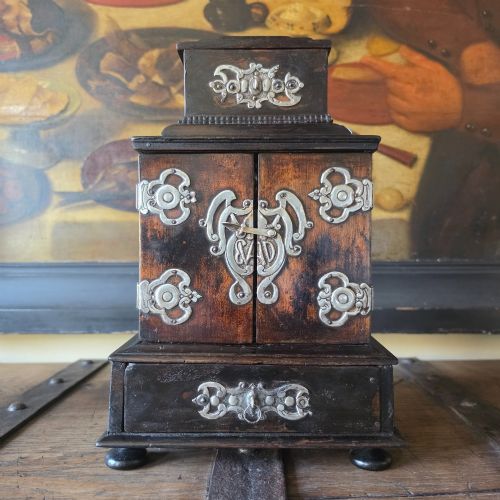
In addition to personal adornments, this category includes functional containers designed for keepsakes. Trinket boxes, jewellery cabinets, and heavy table boxes share the same European silver provenance.
How continental silver jewellery was made
The construction of these pieces relies heavily on solid silver and silvered metal, often enhanced by detailed filigree work. Artisans utilised traditional forming techniques to shape structural elements for boxes, chains, and frames.
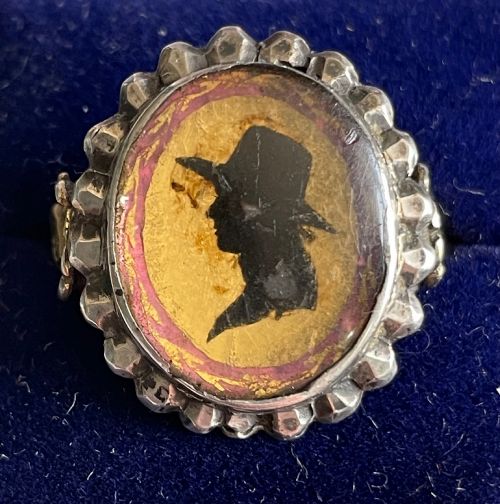
Surface decoration frequently incorporates hand-painted enamel, paste faux gemstones, and cut glass inserts. Walnut and gold also appear as complementary materials in cabinetry and rings from the earlier periods.
What varies in quality
The standard of craftsmanship shows in the precision of the metalwork and the execution of decorative details like hand-painted miniatures. Heavier gauge silver and complex filigree structures distinguish superior items from simpler productions.
Preservation of fragile elements such as enamel panels and paste stones dictates the overall integrity of the piece. Maker attribution and the clarity of period style characteristics further differentiate individual examples.
Posen of Frankfurt and Berlin
The Continental Silver Jewellery Glossary
- Filigree
- Fine wire worked into openwork patterns. This delicate technique appears frequently in continental brooches and decorative silver panels.
- Paste
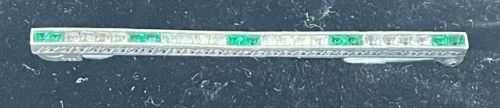
- Glass cut and polished to imitate gemstones. It provides colour and sparkle in vintage bar brooches and rings.
- Enamel
- Vitrified glass fused to metal surfaces through firing. Hand-painted miniature panels utilise this medium for lasting colour.
- Solid silver
- Metal of substantial silver content throughout an object rather than plated base metal. Heavy table boxes and cigarette containers are typically formed this way.
Continental Silver Jewellery: Frequently Asked Questions
What periods do these pieces cover?
The selection includes items from the eighteenth century, the Georgian era, and the Victorian period. Later pieces extend into the nineteen-twenties and nineteen-thirties.
Art Deco and Arts and Crafts styles also represent the later decades of European design.
Are these items only wearable jewellery?
The category extends beyond personal adornment to include functional receptacles for keepsakes. Trinket boxes, jewellery cabinets, and heavy table containers appear alongside rings and brooches.
These larger storage items share the same European silver craftsmanship as the wearable pieces.
What materials besides silver are used?
Makers incorporated hand-painted enamel, cut glass, and paste faux gemstones into various designs. Gold and walnut also feature in specific rings and cabinets.
Silvered metal appears in certain decorative items alongside solid silver.
How do art deco pieces differ?
Art deco items from the nineteen-thirties often feature geometric bar brooches with paste stones and colourful enamel work. Butterfly motifs and miniature painted panels are characteristic of this phase.
Earlier eighteenth and nineteenth-century pieces tend towards neoclassical revival or heavy ornate styling.