






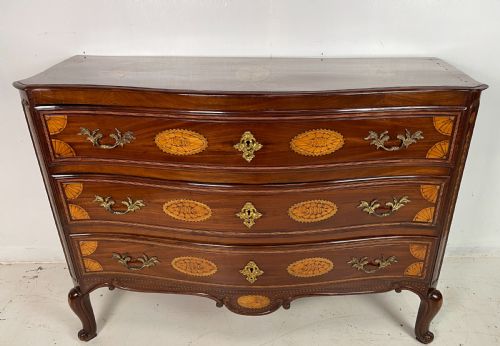


Continental Marquetry Cabinet
These continental marquetry cabinet pieces bring intricate floral veneers and rich walnut timber into a room, offering both storage and striking decorative presence.
Continental Marquetry Cabinet
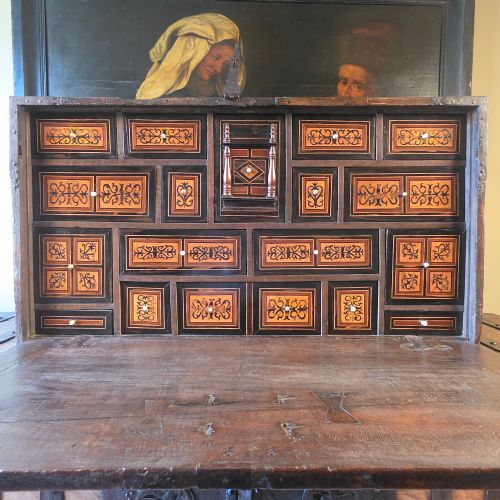
A continental marquetry cabinet encompasses elaborate storage furniture adorned with detailed wood veneers, spanning from seventeenth century German and Dutch works to nineteenth century French commodes and Italian bedside chests. These items take several forms including side cabinets, chests of drawers, bureau bookcases, and armoires.
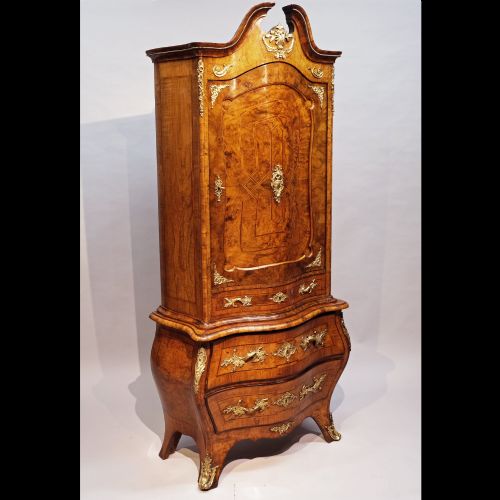
The versions most commonly met on this page date from the eighteenth and nineteenth centuries, often displaying serpentine or bombe shapes. Walnut serves as the primary structural and decorative timber across these examples.
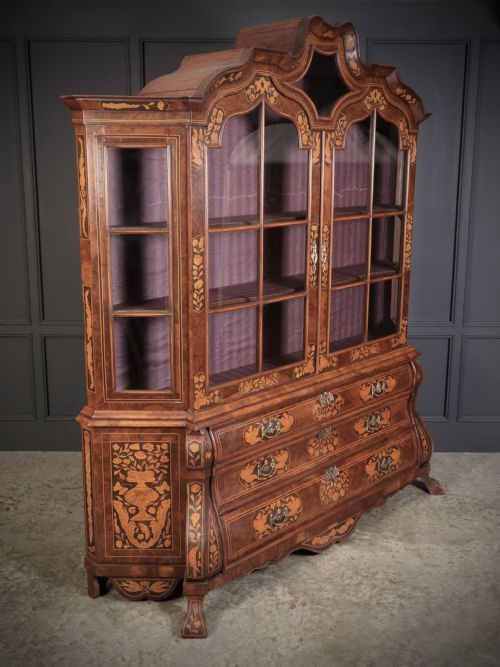
Makers from various European regions applied distinct regional aesthetics, ranging from German baroque designs to French Louis XV styling and Dutch block fronted constructions. Buyers encounter everything from grand bureau-cabinets on stands down to compact bedside cabinets and table top escritoires.
Materials and construction
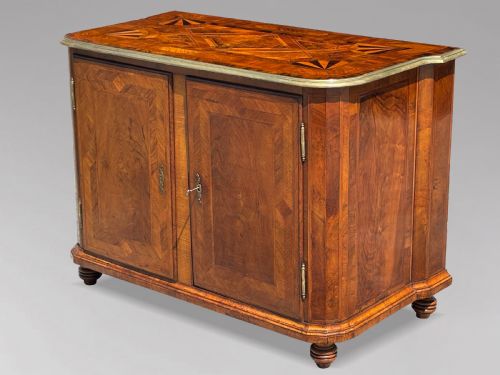
Craftsmen built these pieces using solid and veneered timbers such as walnut, fruitwood, kingwood, and satin birch, often applying burr walnut to create dramatic figured surfaces. Brass mounts, ormolu details, and marble tops frequently complete the construction of the cabinet or chest.
Intricate pictorial and geometric patterns were formed by slicing and fitting fine wood veneers into prepared recesses on the carcass. Metal hardware, iron fittings, and parcel gilt highlights were then added to enhance the structural and visual depth of the furniture.
Continental Marquetry Cabinet Retail Price Guide 2026
Typical asking prices for continental marquetry cabinet among the pieces listed under this phrase on Sellingantiques today, from the lower quarter to the upper quarter. They describe what is for sale here now, not the wider market.
Object types on this page range from grand German armoires and bureau bookcases down to bedside cabinets and table top escritoires.
Evaluating quality and execution
The sophistication of the veneer work dictates the standing of a piece, with complex floral marquetry and well-matched grain patterns separating superior examples from simpler designs. Precision in the execution of serpentine and bombe contours also marks out the higher tier of cabinetmaking.
The choice of secondary woods and the integration of quality mounts, such as cast ormolu or Carrara marble tops, indicate the original investment in the furniture. Preservation of the surface timber and the crispness of the inlaid details remain central to the assessment of these cabinets.
The Continental Marquetry Cabinet Glossary
- Marquetry
- Decorative veneer work arranged in pictorial or geometric patterns across the surface of a furniture carcass. This technique allows artisans to picture floral scenes or symmetrical designs using various contrasting woods.
- Bombe
- A swelling, outward-curved profile found on the sides and fronts of chests and cabinets. This curved form requires advanced woodworking skill to shape the timber and fit the corresponding veneer.
- Ormolu
- Gilded bronze mounts applied as decorative ornaments to furniture corners, feet, and handles. The material adds metallic contrast to the timber surfaces.
- Escritoire
- A small writing cabinet featuring a fall front or lid that conceals internal compartments. These desk forms often include small drawers and hidden spaces for correspondence.
- Serpentine
- A furniture front or edge shaped with a central convex curve flanked by two concave curves. This undulating outline gives a fluid movement to heavy timber case pieces.
Continental Marquetry Cabinet: Frequently Asked Questions
How do I clean a marquetry cabinet?
Dust the timber surfaces regularly with a soft, dry cloth to prevent particulate buildup in the veneer joints.
Avoid liquid cleaners and apply a microcrystalline wax periodically to protect the polished wood finish.
Where should I place my cabinet?
Position the piece away from direct sunlight and strong heat sources to prevent the wood veneers from drying and cracking.
Ensure the room maintains stable humidity levels to protect the underlying timber carcass and structural joints.
What periods do these cabinets represent?
The listings include examples spanning from pre-sixteenth century pieces through seventeenth century baroque works down to twentieth century revivals.
Eighteenth and nineteenth century pieces form the largest portion of the available continental selection.
How do I distinguish regional styles?
German and Dutch pieces often feature robust block fronts or architectural bureau cabinet forms with dense floral inlay.
French and Italian examples tend to emphasise flowing serpentine contours, parcel gilt highlights, and rococo revival motifs.