









Continental Landscape Art
Continental landscape art brings European vistas into interior spaces through oil paintings and watercolours spanning multiple centuries.
Continental Landscape Art
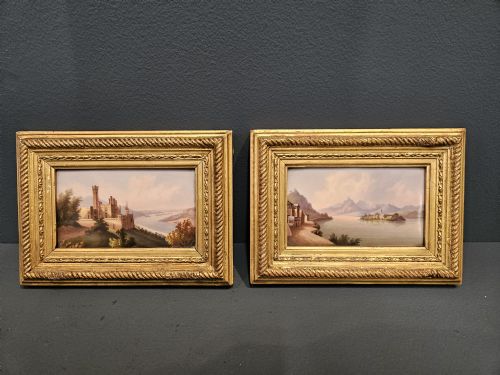
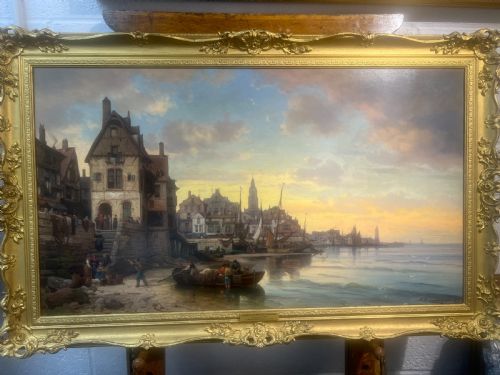
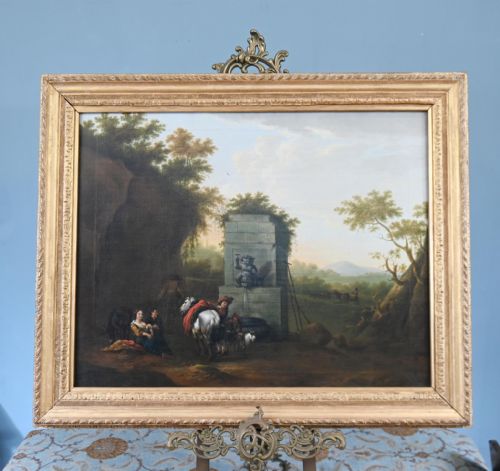
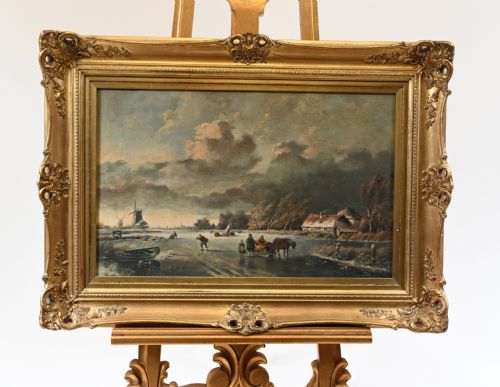
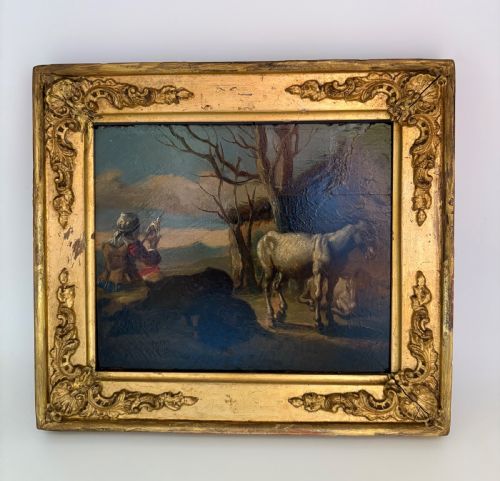
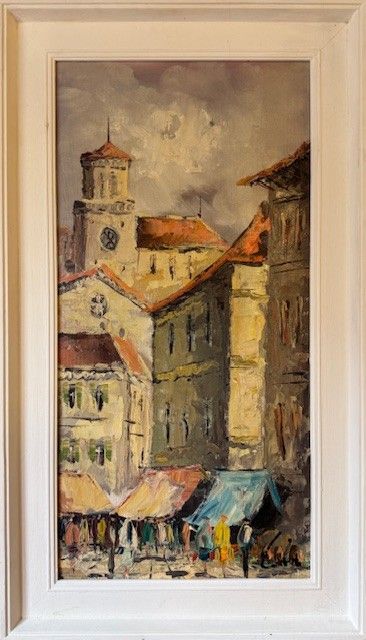
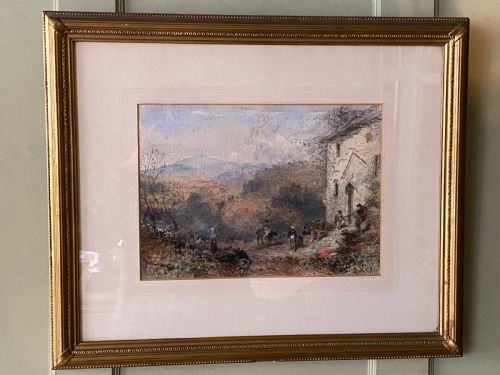
Continental landscape art captures foreign towns, harbours, mountain ranges, and rural scenes painted by European artists across the seventeenth, eighteenth, nineteenth, and twentieth centuries. Buyers seeking continental landscape art will encounter framed canvases, oil on board, watercolours, and porcelain plaques depicting Italianate ruins, Dutch frozen waterways, and French market squares.
Nineteenth-century examples dominate the available selection, ranging in style from Romanticism and Realism to early Dutch School influences and Mid-Century Impressionism. These works frequently arrive in their original giltwood or gesso frames, retaining period character alongside the painted canvas or panel.
Materials and construction
Artists painted primarily with oil paint upon prepared canvas, wooden oak panels, or cardboards, though watercolours on paper also appear. Canvases and panels receive brushwork depicting natural light, architecture, and figures, utilising a palette suited to the specific school or period.
Frames employ wood substrates shaped with gesso and finished with gold leaf or gilt finishes. These frames range from simple mouldings to ornate nineteenth-century giltwood constructions that complement the artwork.
Continental Landscape Art Retail Price Guide 2026
Typical asking prices for continental landscape art among the pieces listed under this phrase on Sellingantiques today, from the lower quarter to the upper quarter. They describe what is for sale here now, not the wider market.
Several Victorian artists evidently spent a great deal of time standing on freezing European quaysides painting townscapes.
Distinctions in quality
Quality rests upon the skill of brushwork, compositional depth, and the handling of atmospheric light within the landscape or townscape. Works by recognised nineteenth-century or Dutch School painters demonstrate superior draughtsmanship in architecture and human figures compared to anonymous school pieces.
The preservation of the original surface, stability of the canvas or oak panel, and the integrity of the period gilt frame influence the desirability of the piece. Clean surfaces free from heavy retouches distinguish better-preserved works from those requiring extensive conservation.
Charles Euphraisie Kuasseg·Jan Miel·Philipp Peter Roos·E A Minardo·J W Hogley·William George Meadows·Lewis J Wood·William Raymond Dommersen·Armand Guillaumin·Karel Frans Philippeau·Ludwig Hermann·Allan Douglass Mainds·Christiaan Pieter Snyders·Henry Schafer
The Continental Landscape Art Glossary
- Oil on canvas
- Pigment bound in drying oil applied to stretched fabric. This technique permits rich colour blending and texture.
- Giltwood
- Wood carved and coated with gold leaf or metallic paint. It provides ornamental framing for nineteenth-century paintings.
- Dutch School
- A collective term for seventeenth and nineteenth-century painters working in the Netherlands. They specialised in atmospheric landscapes and frozen winter scenes.
- Grand Tour
- A cultural journey across Europe undertaken by nineteenth-century travellers. They collected architectural views and Italianate landscapes as mementos.
- Gesso
- A plaster mix applied to wooden frames before gilding. It creates a smooth surface for receiving gold leaf.
Continental Landscape Art: Frequently Asked Questions
What periods do these paintings cover?
The selection spans from the seventeenth century through the Victorian era up to the mid-twentieth century.
Nineteenth-century works form the largest group, encompassing Romantic, Realist, and Impressionist approaches.
Are the frames original to the artwork?
Many pieces retain their original giltwood or gesso frames from the period of creation.
These frames often feature gold leaf finishes that match the age and style of the painting.
What mediums are used in these artworks?
Artists utilised oil paint on canvas, wood panels, or boards, alongside watercolours on paper.
Some unusual examples also utilise hand-painted porcelain plaques rather than traditional canvas.
How do I identify a Dutch School painting?
Dutch School works frequently depict flat rural horizons, waterways, winter quays, and muted atmospheric skies.
They rely on tonal subtlety and precise handling of light typical of northern European traditions.