

Console Table with Marble
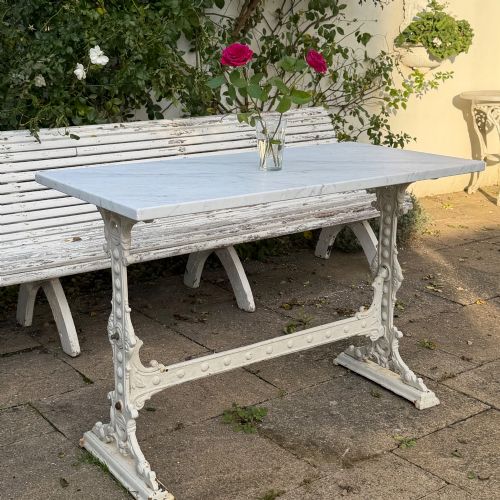
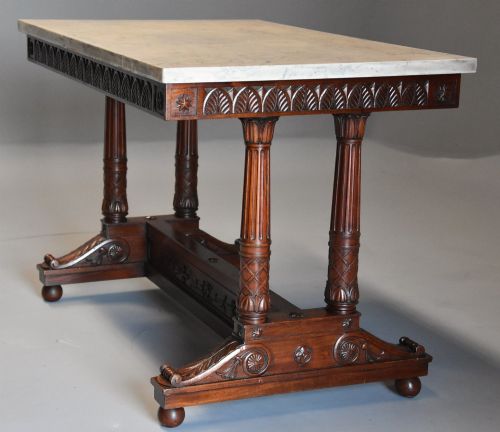
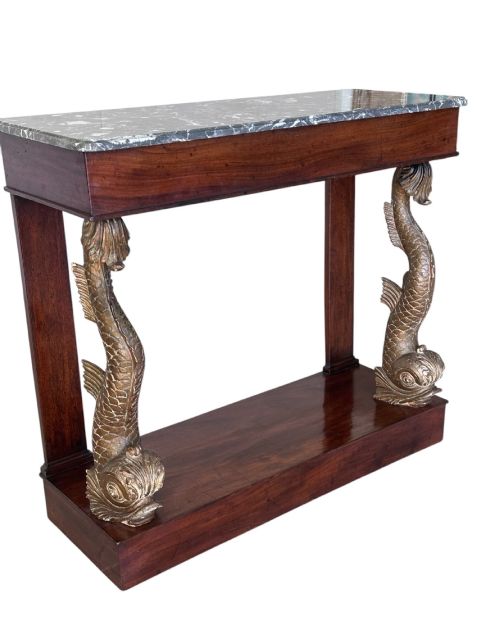
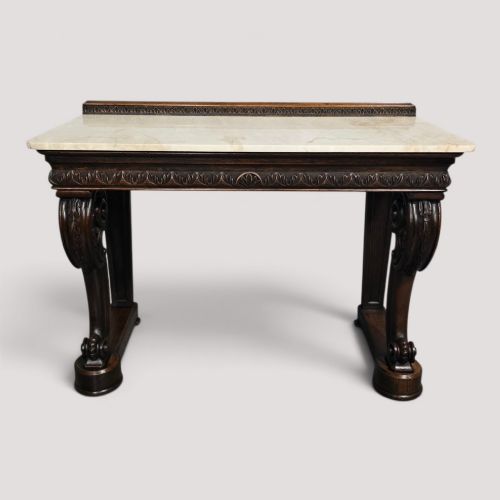
Console table with marble pieces combine solid timber or gilded frames with heavy stone surfaces, built to anchor hallways and reception rooms with a firm, grounded profile.
Console Table with Marble
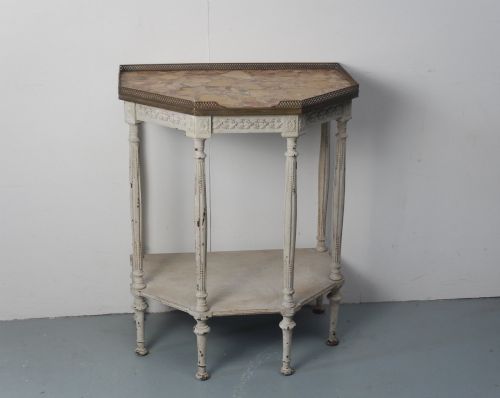
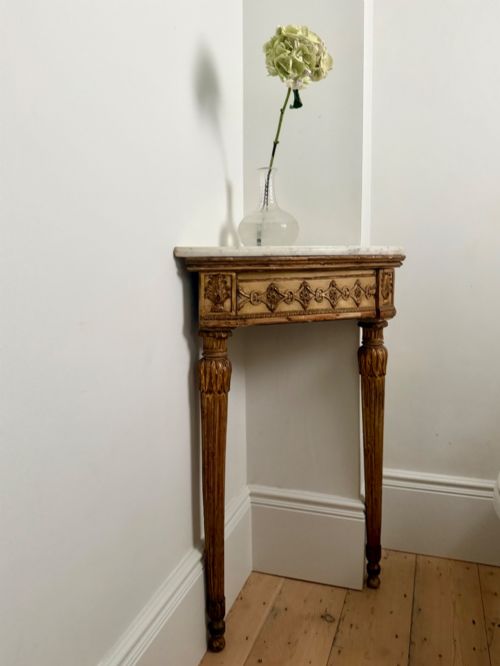
A console table with marble typically arrives as a wall-abutting surface supported by carved wooden legs, giltwood frames, or classical columns. The selection spans 19th-century French and Italian designs alongside Edwardian domestic pieces and earlier Regency formats.
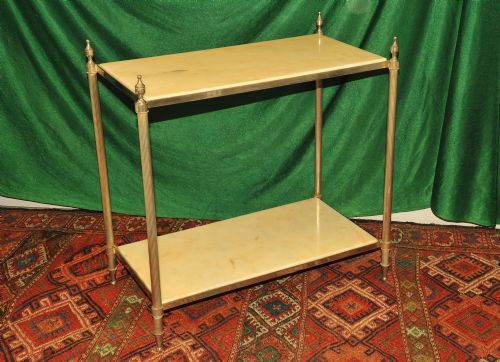
Beyond formal console tables, the category extends to washstands, centre tables, and sideboards fitted with heavy stone panels. These functional variations share the defining trait of a fitted marble, onyx, or granite top set upon a substantial wooden or metal base.
How they were made
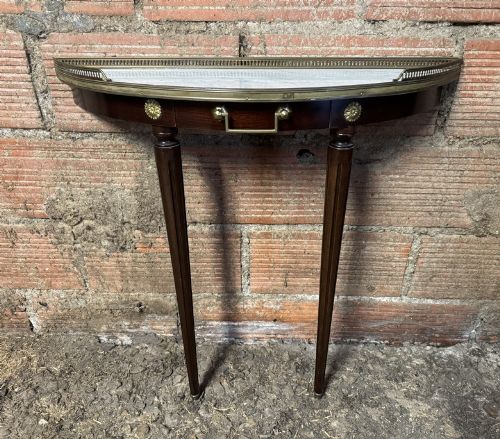
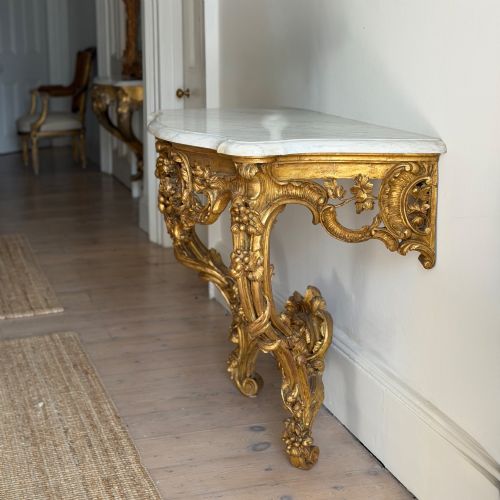
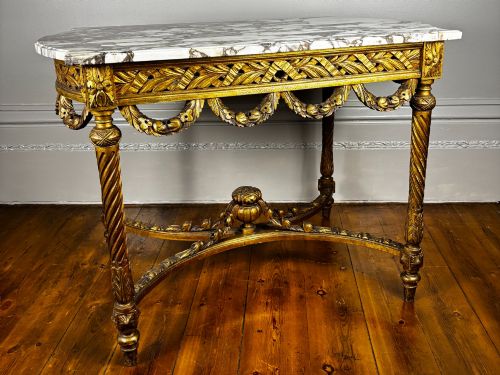
Frames rely on structural timbers such as mahogany, walnut, oak, and pine, frequently shaped into demilune or rectangular footprints. Giltwood and gilt bronze mounts add decorative weight, employing carved wood substrates covered in gold leaf or cast metal elements.
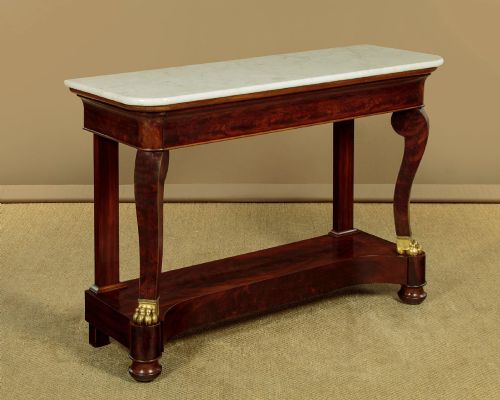
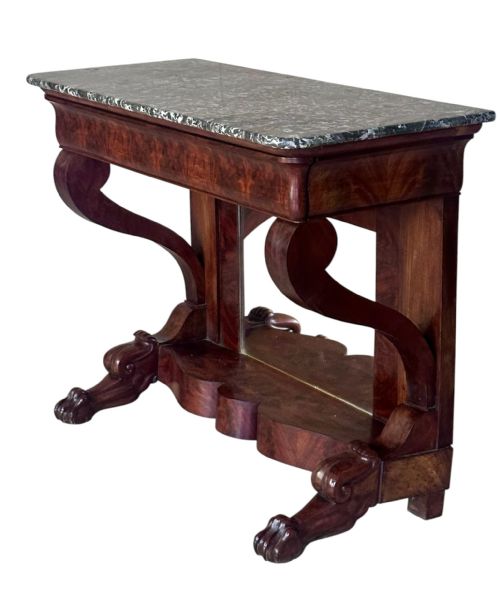
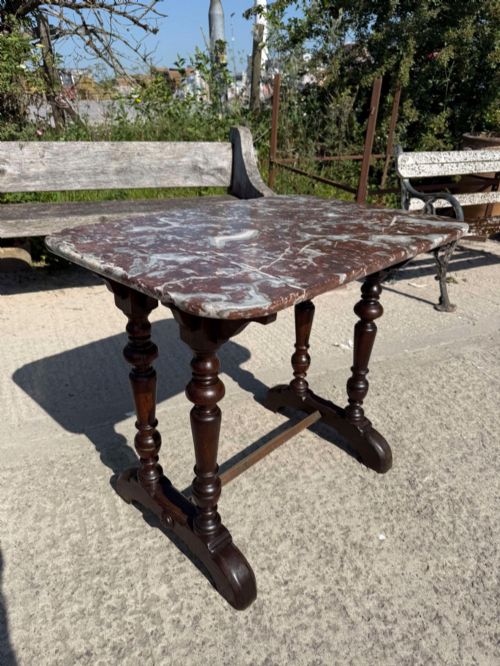
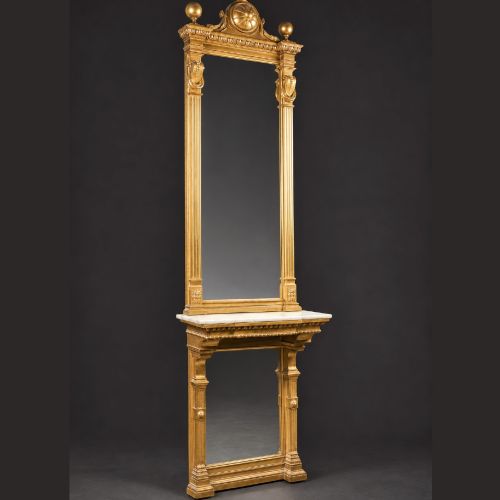
Tops utilise polished stone including carrara, rouge, breccia, and pink salome marble, cut to fit flush within wooden mouldings. Some variants incorporate inset mirror backs or lower shelves supported by columns and lion's paw feet.
Console Table with Marble Retail Price Guide 2026
Typical asking prices for console table with marble among the pieces listed under this phrase on Sellingantiques today, from the lower quarter to the upper quarter. They describe what is for sale here now, not the wider market.
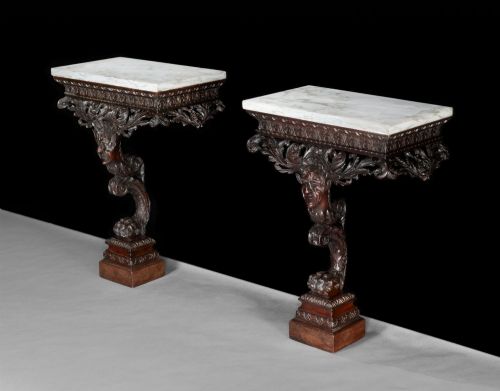
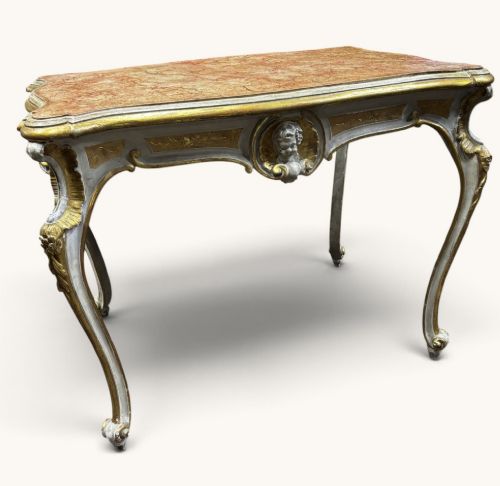
Tables featuring carved putti and lion's paw supports ensure your hallway furniture constantly watches over your coming and going.
What varies in quality
The distinction rests in the crispness of the carving, the selection of the stone, and the integrity of the joinery. Fine examples demonstrate deep hand-carving in wood or giltwork, paired with thick, well-figured marble slabs that sit precisely within their frames.
Secondary woods, the quality of fire-gilt bronze mounts, and the sophistication of subsidiary elements like mirror backs or painted panels separate standard utility furniture from high-workshop cabinet-making.
Amleto Bertoni·Krieger Paris·JACOB
The Console Table with Marble Glossary
- Console table
- A wall-mounted or bracket-supported table designed to stand against a vertical surface, usually topped with stone. They frequently include front legs while relying on wall fixings for stability.
- Demilune
- A half-moon shape used for the footprint of tables and their stone tops, allowing them to sit flush against a wall in tighter spaces.
- Ormolu
- Gilded bronze mounts applied to furniture for decorative effect. The technique involves coating cast bronze in a mercury-gold amalgam and heating it.
- Giltwood
- Timber carved and coated with a thin layer of gold leaf over a prepared gesso ground. This finish appears widely on formal Italian and French frames.
- Breccia marble
- A composite stone made of broken rock fragments embedded in a fine-grained matrix, creating variegated patterns across the table surface.
Console Table with Marble: Frequently Asked Questions
How do I clean a marble top?
Wash the stone gently using warm water and a soft cloth, avoiding acidic cleaners or abrasive scouring pads that dull the polish.
Dry the surface immediately after wiping to prevent water spots from forming on older stone.
Were these tables fixed to walls?
Many formal console tables relied on wall brackets or rear fastenings for stability because the heavy stone top outweighed the slender front legs.
Freestanding variants like centre tables and washstands balanced their weight evenly without requiring wall attachment.
Can the marble top be removed?
Most marble slabs rest loose within the wooden frame, held entirely by their own considerable weight.
Lifting the stone requires at least two people to clear the mouldings safely without chipping the edges.
How do I identify French Empire style?
French Empire pieces feature dark mahogany timbers accented by cast ormolu mounts depicting classical motifs, military trophies, or swans.
The overall silhouette remains symmetrical, heavy, and architecturally strict, reflecting early nineteenth-century neoclassical tastes.